Application
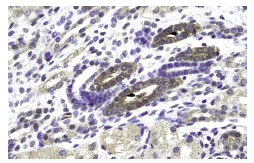
Western blot analysis of nm23-H7 expression in HeLa whole cell lysate.| Product Name | nm23-H7 Antibody (H-278) |
|---|---|
| Antibody Type | Primary Antibodies |
| Modification Notes | nm23-H7, also known as NME7 (non-metastatic cells 7), is a 376 amino acid protein that contains one DM10 domain and belongs to the NDK family. Using magnesium as a cofactor, nm23-H7 functions to catalyze the ATP-dependent creation of nucleoside triphosphates, thereby playing an essential role in metabolic pathways throughout the body. The gene encoding nm23-H7 maps to human chromosome 1, which spans 260 million base pairs, contains over 3,000 genes and comprises nearly 8% of the human genome. Chromosome 1 houses a large number of disease-associated genes, including those that are involved in familial adenomatous polyposis, Stickler syndrome, Parkinson’s disease, Gaucher disease, schizophrenia and Usher syndrome. Aberrations in chromosome 1 are found in a variety of cancers, including head and neck cancer, malignant melanoma and multiple myeloma. |
| Clonality | Polyclonal |
|---|---|
| Isotype | IgG |
| Host Species | Rabbit |
| Tested Applications | WBIPIFELISA |
| recommended for detection of nm23-H7 of mouse, rat and human origin by WB, IP, IF and ELISA also reactive with additional species, including equine, canine and bovine | |
| Species Reactivity | HumanMouseRat |
| Concentration | 1mg/ml |
| Purification | Affinity purified |
| Alternative Names | epitope corresponding to amino acids 100-376 mapping at the C-terminus of nm23-H7 of human origin |
|---|---|
| Tissue Specificity | epitope corresponding to amino acids 100-376 mapping at the C-terminus of nm23-H7 of human origin |
| Entrez Gene | 29922 |
|---|
Application
Western blot analysis of nm23-H7 expression in HeLa whole cell lysate.| Application Notes | recommended for detection of nm23-H7 of mouse, rat and human origin by WB, IP, IF and ELISA also reactive with additional species, including equine, canine and bovine |
|---|
| Form | Liquid |
|---|---|
| Storage Instructions | For short-term storage, store at 4° C. For long-term storage, aliquot and store at -20ºC or below. Avoid multiple freeze-thaw cycles. |
| Storage Buffer | phosphate buffered saline , pH 7.4, 150mM NaCl, 0.02% sodium azide and 50% glycerol. |


