Application
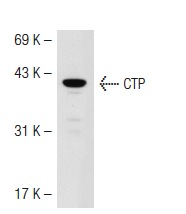
Western blot analysis of CTP expression in Hep G2 whole cell lysate.| Product Name | CTP Antibody (E-17) |
|---|---|
| Antibody Type | Primary Antibodies |
| Modification Notes | CTP (citrate transport protein), also known as Tricarboxylate transport protein, SLC25A1 or SLC20A3, is a 311 amino acid mitochondrial multi-pass membrane protein that primarily functions to transport citrate across the mitochondrial inner membrane. Since it provides a carbon source for sterol and fatty acid biosynthesis, CTP is important for the bioenergetics of hepatic cells. The gene encoding CTP resides within a chromosomal region that is frequently deleted in patients that suffer from DiGeorge syndrome, a disease characterized by susceptibility to infection due to a deficit of T cells, cardiac malformations and tetany or seizures. Playing a significant role in intermediate metabolism, it appears that CTP function may be altered in type I diabetes and some cancers. CTP is highly expressed in adult ovary, gut liver, and testis, as well as in fetal kidney, lung, brain and liver. |
| Clonality | Polyclonal |
|---|---|
| Isotype | IgG |
| Host Species | Rabbit |
| Tested Applications | WBIPIFELISA |
| recommended for detection of CTP of mouse, rat and human origin by WB, IP, IF and ELISA also reactive with additional species, including equine, canine, bovine and porcine | |
| Species Reactivity | HumanMouseRat |
| Concentration | 1mg/ml |
| Purification | Affinity purified |
| Alternative Names | epitope mapping within an internal region of CTP of human origin |
|---|---|
| Tissue Specificity | epitope mapping within an internal region of CTP of human origin |
| Entrez Gene | 6576 |
|---|
Application
Western blot analysis of CTP expression in Hep G2 whole cell lysate.| Application Notes | recommended for detection of CTP of mouse, rat and human origin by WB, IP, IF and ELISA also reactive with additional species, including equine, canine, bovine and porcine |
|---|
| Form | Liquid |
|---|---|
| Storage Instructions | For short-term storage, store at 4° C. For long-term storage, aliquot and store at -20ºC or below. Avoid multiple freeze-thaw cycles. |
| Storage Buffer | phosphate buffered saline , pH 7.4, 150mM NaCl, 0.02% sodium azide and 50% glycerol. |


