Application
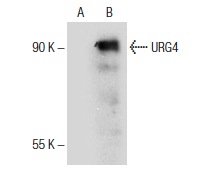
Western blot analysis of URG4 expression in non-transfected: (A) and human URG4 transfected: (B) 293T whole cell lysates.| Product Name | URG4 Antibody (H-267) |
|---|---|
| Antibody Type | Primary Antibodies |
| Antigen Alias | epitope corresponding to amino acids 406-672 mapping within an internal region of URG4 of human origin |
| Modification Notes | URG4 (up-regulated gene 4), also known as URGCP (upregulator of cell proliferation) or HBV X protein up-regulated gene 4 protein, is a 931 amino acid nuclear and cytomplasmic protein that is strongly expressed in Hepatitis B virus-infected liver, hepatocellular carcinoma cells, well-differentiated gastric cancer tissues and various gastric cancer cell lines. URG4 is suggested to be involved in cell cycle progression through the regulation of cyclin D1 expression. URG4 plays a critical role in development of gastric cancer and promotes hepatocellular growth and survival. URG4 exists as three alternatively spliced isoforms and is considered a potential therapeutic target for gastric cancer. The novel gene encoding URG4 is located on human chromosome 7, which houses over 1,000 genes, comprises nearly 5% of the human genome and has been linked to Osteogenesis imperfecta, Pendred syndrome, Lissencephaly, Citrullinemia and Shwachman-Diamond syndrome. |
| Clonality | Polyclonal |
|---|---|
| Isotype | IgG |
| Host Species | Rabbit |
| Tested Applications | WBIPIFELISA |
| recommended for detection of URG4 of mouse, rat and human origin by WB, IP, IF and ELISA also reactive with additional species, including equine, canine, bovine and porcine: |
|
| Species Reactivity | HumanMouseRat |
| Concentration | 1mg/ml |
| Purification | Affinity purified |
| Alternative Names | epitope corresponding to amino acids 406-672 mapping within an internal region of URG4 of human origin |
|---|---|
| Tissue Specificity | epitope corresponding to amino acids 406-672 mapping within an internal region of URG4 of human origin |
| Entrez Gene | 55665 |
|---|
Application
Western blot analysis of URG4 expression in non-transfected: (A) and human URG4 transfected: (B) 293T whole cell lysates.| Application Notes | recommended for detection of URG4 of mouse, rat and human origin by WB, IP, IF and ELISA also reactive with additional species, including equine, canine, bovine and porcine: |
|---|
| Form | Liquid |
|---|---|
| Storage Instructions | For short-term storage, store at 4° C. For long-term storage, aliquot and store at -20ºC or below. Avoid multiple freeze-thaw cycles. |
| Storage Buffer | phosphate buffered saline , pH 7.4, 150mM NaCl, 0.02% sodium azide and 50% glycerol. |


