Application
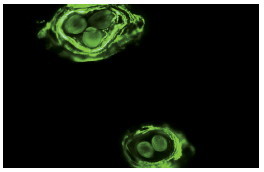
Immunofluorescence staining of normal mouse skin frozen section showing extracellular staining.| Product Name | Tenascin-R Antibody (H-60) |
|---|---|
| Antibody Type | Primary Antibodies |
| Antigen Alias | epitope corresponding to amino acids 1-60 mapping at the N-terminus of Tenascin-R of human origin |
| Modification Notes | The Tenascin family of extracellular matrix proteins includes Tenascin (also designated cytotactin or Tenascin-C), Tenascin-R (also designated Restrictin or Janusin) and Tenascin-X. Tenascin proteins function as substrate-adhesion molecules (SAMs) and are involved in regulating numerous developmental processes, such as morphogenetic cell migration and organogenesis. The Tenascin family proteins arise from various splicing events in the region of coding for FNIII repeats. Tenascin and Tenascin-X are expressed in several tissues during embryogenesis, and in adult tissues undergoing active remodel-ing such as healing wounds and tumors. Tenascin-R (TN-R) is expressed on the surface of neurons and glial cells. |
| Clonality | Polyclonal |
|---|---|
| Isotype | IgG |
| Host Species | Rabbit |
| Tested Applications | WBIPIFELISA |
| recommended for detection of Tenascin-R of mouse, rat and human origin by WB, IP, IF and ELISA also reactive with additional species, including equine, canine and porcine: |
|
| Species Reactivity | HumanMouseRat |
| Concentration | 1mg/ml |
| Purification | Affinity purified |
| Alternative Names | epitope corresponding to amino acids 1-60 mapping at the N-terminus of Tenascin-R of human origin |
|---|---|
| Tissue Specificity | epitope corresponding to amino acids 1-60 mapping at the N-terminus of Tenascin-R of human origin |
| Entrez Gene | 7143 |
|---|
Application
Immunofluorescence staining of normal mouse skin frozen section showing extracellular staining.| Application Notes | recommended for detection of Tenascin-R of mouse, rat and human origin by WB, IP, IF and ELISA also reactive with additional species, including equine, canine and porcine: |
|---|
| Form | Liquid |
|---|---|
| Storage Instructions | For short-term storage, store at 4° C. For long-term storage, aliquot and store at -20ºC or below. Avoid multiple freeze-thaw cycles. |
| Storage Buffer | phosphate buffered saline , pH 7.4, 150mM NaCl, 0.02% sodium azide and 50% glycerol. |


