Application
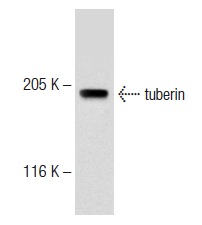
Western blot analysis of tuberin expression in U-87 MG whole cell lysate.Application
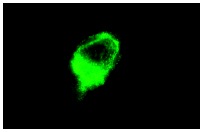
Immunofluorescence staining of methanol-fixed U-87 MG cells showing cytoplasmic localization.| Product Name | tuberin Antibody (C-20) |
|---|---|
| Antibody Type | Primary Antibodies |
| Antigen Alias | epitope mapping at the C-terminus of tuberin of human origin |
| Modification Notes | Tuberous sclerosis (TSC) is a human genetic disorder characterized by mental retardation and the widespread development of benign and infrequently malignant tumors in a variety of tissues. Two different genetic loci have been linked to TSC; one of these loci, the tuberous sclerosis-2 gene (TSC2), encodes a protein 1784 amino acids in length, called tuberin. Tuberin exhibits a region of limited homology to the catalytic domain of Rap1 GAP. Subcellular fractionation studies have shown tuberin to be predominantly localized in membrane fractions. Tuberin is capable of stimulating the intrinsic GTPase activity of Rap 1A, but not Rap 2, H-Ras, Rac or Rho. TSC2 maps to human chromosome 16 and is associated with several intragenic mutations in affected patients. The mouse homolog of the tuberin gene maps to chromosome 17. |
| Clonality | Polyclonal |
|---|---|
| Isotype | IgG |
| Host Species | Rabbit |
| Tested Applications | WBIPIFELISA |
| recommended for detection of tuberin of mouse, rat and human origin by WB, IP, IF and ELISA also reactive with additional species, including equine, canine and porcine: |
|
| Species Reactivity | HumanMouseRat |
| Concentration | 1mg/ml |
| Purification | Affinity purified |
| Alternative Names | epitope mapping at the C-terminus of tuberin of human origin |
|---|---|
| Tissue Specificity | epitope mapping at the C-terminus of tuberin of human origin |
| Entrez Gene | 7249 |
|---|
Application
Western blot analysis of tuberin expression in U-87 MG whole cell lysate.
Application
Immunofluorescence staining of methanol-fixed U-87 MG cells showing cytoplasmic localization.| Application Notes | recommended for detection of tuberin of mouse, rat and human origin by WB, IP, IF and ELISA also reactive with additional species, including equine, canine and porcine: |
|---|
| Form | Liquid |
|---|---|
| Storage Instructions | For short-term storage, store at 4° C. For long-term storage, aliquot and store at -20ºC or below. Avoid multiple freeze-thaw cycles. |
| Storage Buffer | phosphate buffered saline , pH 7.4, 150mM NaCl, 0.02% sodium azide and 50% glycerol. |


