Application
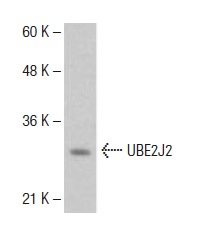
Western blot analysis of UBE2J2 expression in Hep G2 whole cell lysate.Application
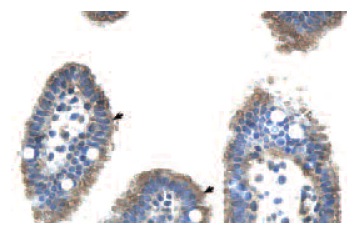
Immunoperoxidase staining of formalin-fixed, paraffin-embedded human intestine tissue showing cytoplasmic localization.| Product Name | UBE2J2 Antibody (L-24) |
|---|---|
| Antibody Type | Primary Antibodies |
| Antigen Alias | recommended for detection of UBE2J2 of mouse, rat and human origin by WB, IP, IF, IHC(P) and ELISA; also reactive with additional species, including canine |
| Modification Notes | Ubiquitination is an important molecular mechanism by which abnormal or short-lived proteins are targeted for degradation by the concerted efforts of at least three classes of enzymes: ubiquitin-activating enzymes (E1s), ubiquitin-conjugating enzymes (E2s) and ubiquitin-protein ligases (E3s). UBE2J2 (Ubiquitin-conjugating enzyme E2 J2), also known as NCUBE2 (Non-canonical ubiquitin-conjugating enzyme 2), is a 259 amino acid single pass type IV membrane protein that that belongs to the E2 ubiquitin-conjugating enzyme family and is involved in protein degradation. Localized to the membrane of the endoplasmic reticulum (ER), UBE2J2 catalyzes the attachment of ubiquitin to misfolded membrane proteins, thereby targeting them for proteasomal destruction. This ATP-dependent reaction yields AMP, a diphosphate and a ubiquitin-tagged protein and may be a method of quality control within the ER. Two isoforms of UBE2J2 exist due to alternative splicing events. |
| Clonality | Polyclonal |
|---|---|
| Isotype | IgG |
| Host Species | Rabbit |
| Tested Applications | WBIPIFIHCELISA |
| WB:1:500~1:2000 IP:1:100~1:500 IF:1:200~1:500 IHC:1:50~1:200 Notes:Optimal dilutions/concentrations should be determined by the researcher. |
|
| Species Reactivity | HumanMouseRat |
| Concentration | 1mg/ml |
| Purification | Affinity purified |
| Alternative Names | recommended for detection of UBE2J2 of mouse rat and human origin by WB IP IF IHC(P) and ELISA also reactive with additional species including canine |
|---|---|
| Tissue Specificity | recommended for detection of UBE2J2 of mouse, rat and human origin by WB, IP, IF, IHC(P) and ELISA; also reactive with additional species, including canine |
| Entrez Gene | 118424 |
|---|
Application
Western blot analysis of UBE2J2 expression in Hep G2 whole cell lysate.
Application
Immunoperoxidase staining of formalin-fixed, paraffin-embedded human intestine tissue showing cytoplasmic localization.| Application Notes | WB:1:500~1:2000 IP:1:100~1:500 IF:1:200~1:500 IHC:1:50~1:200 Notes:Optimal dilutions/concentrations should be determined by the researcher. |
|---|
| Form | Liquid |
|---|---|
| Storage Instructions | For short-term storage, store at 4° C. For long-term storage, aliquot and store at -20ºC or below. Avoid multiple freeze-thaw cycles. |
| Storage Buffer | phosphate buffered saline , pH 7.4, 150mM NaCl, 0.02% sodium azide and 50% glycerol. |


