Application
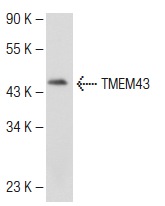
Western blot analysis of TMEM43 expression in EOC 20 whole cell lysate.Application
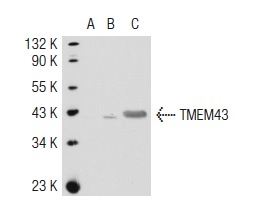
Western blot analysis of TMEM43 expression in non-transfected 293T: (A), mouse TMEM43 transfected 293T: (B) and EOC 20 (C) whole cell lysates.| Product Name | TMEM43 Antibody (S-18) |
|---|---|
| Antibody Type | Primary Antibodies |
| Antigen Alias | epitope mapping within a cytoplasmic domain of TMEM43 of human origin |
| Modification Notes | TMEM43 (transmembrane protein 43), also known as LUMA, ARVC5 or ARVD5, is a 400 amino acid multi-pass membrane protein that localizes to the inner nuclear membrane, as well as to the endoplasmic reticulum. Highly expressed in placenta and present at lower levels in ovary, heart, thymus, spleen, prostate, testis and small intestine, TMEM43 is required for retaining emerin at the nuclear membrane and may also play an important role in the maintenance of nuclear envelope structure. Defects in the gene encoding TMEM43 are the cause of familial arrhythmogenic right ventricular dysplasia type 5 (ARVD5), an inherited disorder that is characterized by heart failure, ventricular tachycardia, fibrofatty replacement of cardiomyocytes and sudden cardiac death. |
| Clonality | Polyclonal |
|---|---|
| Isotype | IgG |
| Host Species | Rabbit |
| Tested Applications | WBIPIFELISA |
| recommended for detection of TMEM43 of mouse, rat and human origin by WB, IP, IF and ELISA non cross-reactive with other TMEM family members also reactive with additional species, including equine, canine and bovine: |
|
| Species Reactivity | HumanMouseRat |
| Concentration | 1mg/ml |
| Purification | Affinity purified |
| Alternative Names | epitope mapping within a cytoplasmic domain of TMEM43 of human origin |
|---|---|
| Tissue Specificity | epitope mapping within a cytoplasmic domain of TMEM43 of human origin |
| Entrez Gene | 79188 |
|---|
Application
Western blot analysis of TMEM43 expression in EOC 20 whole cell lysate.
Application
Western blot analysis of TMEM43 expression in non-transfected 293T: (A), mouse TMEM43 transfected 293T: (B) and EOC 20 (C) whole cell lysates.| Application Notes | recommended for detection of TMEM43 of mouse, rat and human origin by WB, IP, IF and ELISA non cross-reactive with other TMEM family members also reactive with additional species, including equine, canine and bovine: |
|---|
| Form | Liquid |
|---|---|
| Storage Instructions | For short-term storage, store at 4° C. For long-term storage, aliquot and store at -20ºC or below. Avoid multiple freeze-thaw cycles. |
| Storage Buffer | phosphate buffered saline , pH 7.4, 150mM NaCl, 0.02% sodium azide and 50% glycerol. |


