Application
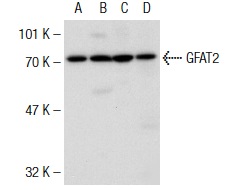
Western blot analysis of GFAT2 expression in HeLa (A), A549 (B) and JAR (C) whole cell lysates and mouse heart tissue extract (D).Application
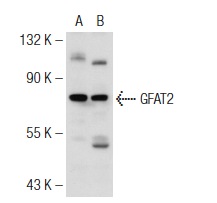
Western blot analysis of GFAT2 expression in HeLa (A) and A549 (B) whole cell lysates.| Product Name | GFAT2 Antibody (H-300) |
|---|---|
| Antibody Type | Primary Antibodies |
| Modification Notes | GFPT2 (glutamine-fructose-6-phosphate transaminase 2), also known as D-fructose-6-phosphate amidotransferase 2 or hexosephosphate aminotransferase 2, is a 682 amino acid protein and isoenzyme of GFAT1, the first and rate-limiting enzyme for the entry of glucose into the hexosamine biosynthetic pathway (HBP), which is a relatively minor branch of glycolysis. Expressed in spinal cord, heart and placenta, GFAT2 regulates glucose entry into the HBP and likely controls the availability of precursors for N- and O-linked protein glycosylation. Containing one glutamine amidotransferase type-2 domain and two SIS domains. GFAT2 is encoded by a gene that maps to human chromosome 5q35.3. GFAT2 gene variants have been linked to type 2 diabetes, diabetic nephropathy, and increased GFPT2 mRNA levels. |
| Clonality | Polyclonal |
|---|---|
| Isotype | IgG |
| Host Species | Rabbit |
| Tested Applications | WBIPIFELISA |
| recommended for detection of GFAT2 of mouse, rat and human origin by WB, IP, IF and ELISA may cross-react with GFAT1 also reactive with additional species, including equine, canine, bovine, porcine and avian | |
| Species Reactivity | HumanMouseRat |
| Concentration | 1mg/ml |
| Purification | Affinity purified |
| Alternative Names | epitope corresponding to amino acids 301-600 mapping within an internal region of GFAT2 of human origin |
|---|---|
| Tissue Specificity | epitope corresponding to amino acids 301-600 mapping within an internal region of GFAT2 of human origin |
Application
Western blot analysis of GFAT2 expression in HeLa (A), A549 (B) and JAR (C) whole cell lysates and mouse heart tissue extract (D).
Application
Western blot analysis of GFAT2 expression in HeLa (A) and A549 (B) whole cell lysates.| Application Notes | recommended for detection of GFAT2 of mouse, rat and human origin by WB, IP, IF and ELISA may cross-react with GFAT1 also reactive with additional species, including equine, canine, bovine, porcine and avian |
|---|
| Form | Liquid |
|---|---|
| Storage Instructions | For short-term storage, store at 4° C. For long-term storage, aliquot and store at -20ºC or below. Avoid multiple freeze-thaw cycles. |
| Storage Buffer | phosphate buffered saline , pH 7.4, 150mM NaCl, 0.02% sodium azide and 50% glycerol. |


