Application
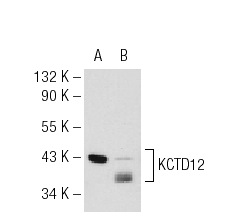
Western blot analysis of KCTD12 expression in non-transfected: (A) and human KCTD12 transfected: (B) 293 whole cell lysates and mouse brain tissue extract (C).| Product Name | KCTD12 Antibody (E-12) |
|---|---|
| Antibody Type | Primary Antibodies |
| Modification Notes | The BTB (Broad-Complex, Tramtrack and Bric a brac) domain, also known as the POZ (POxvirus and Zinc finger) domain, is an N-terminal homodimerization domain that contains multiple copies of kelch repeats and/or C2H2-type zinc fingers. Proteins that contain BTB domains are thought to be involved in transcriptional regulation via control of chromatin structure and function. KCTD12 (potassium channel tetramerisation domain containing 12), also known as PFET1 or PFETIN, is a 325 amino acid protein that is expressed in fetal organs, with highest levels in the cochlea and brain and extremely low levels in adult organs, such as brain and lung. KCTD12 is considered a prognostic biomarker of gastrointestinal stromal tumors. |
| Clonality | Polyclonal |
|---|---|
| Isotype | IgG |
| Host Species | Rabbit |
| Tested Applications | WBIPIFELISA |
| recommended for detection of KCTD12 of mouse, rat and human origin by WB, IP, IF and ELISA non cross-reactive with other KCTD family members also reactive with additional species, including canine | |
| Species Reactivity | HumanMouseRat |
| Concentration | 1mg/ml |
| Purification | Affinity purified |
| Alternative Names | epitope mapping within an internal region of KCTD12 of human origin |
|---|---|
| Tissue Specificity | epitope mapping within an internal region of KCTD12 of human origin |
| Entrez Gene | 115207 |
|---|
Application
Western blot analysis of KCTD12 expression in non-transfected: (A) and human KCTD12 transfected: (B) 293 whole cell lysates and mouse brain tissue extract (C).| Application Notes | recommended for detection of KCTD12 of mouse, rat and human origin by WB, IP, IF and ELISA non cross-reactive with other KCTD family members also reactive with additional species, including canine |
|---|
| Form | Liquid |
|---|---|
| Storage Instructions | For short-term storage, store at 4° C. For long-term storage, aliquot and store at -20ºC or below. Avoid multiple freeze-thaw cycles. |
| Storage Buffer | phosphate buffered saline , pH 7.4, 150mM NaCl, 0.02% sodium azide and 50% glycerol. |


