Application
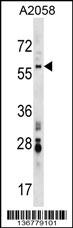
SIRPA Antibody (C-term) western blot analysis in A2058 cell line lysates (35ug/lane).This demonstrates the SIRPA antibody detected the SIRPA protein (arrow).| Product Name | SIRPA Antibody (C-term) |
|---|---|
| Antibody Type | Primary Antibodies |
| Clonality | Polyclonal |
|---|---|
| Isotype | Ig |
| Host Species | Rabbit |
| Tested Applications | WB |
| WB:1:100~500 |
|
| Species Reactivity | Human |
| Concentration | 1mg/ml |
| Gene Synonyms | BIT, MFR, MYD1, PTPNS1, SHPS1, SIRP |
|---|---|
| Alternative Names | SIRPA BIT MFR MYD1 PTPNS1 SHPS1 SIRP Tyrosine-protein phosphatase non-receptor type substrate 1 Brain Ig-like molecule with tyrosine-based activation motifs CD172 antigen-like family member A Inhibitory receptor SHPS-1 Macrophage fusion receptor |
| Molecular Weight(MW) | 54967 Da |
| Function | Immunoglobulin-like cell surface receptor for CD47. Acts as docking protein and induces translocation of PTPN6, PTPN11 and other binding partners from the cytosol to the plasma membrane Supports adhesion of cerebellar neurons, neurite outgrowth and glial cell attachment. May play a key role in intracellular signaling during synaptogenesis and in synaptic function (By similarity). Involved in the negative regulation of receptor tyrosine kinase-coupled cellular responses induced by cell adhesion, growth factors or insulin. Mediates negative regulation of phagocytosis, mast cell activation and dendritic cell activation. CD47 binding prevents maturation of immature dendritic cells and inhibits cytokine production by mature dendritic cells |
| Tissue Specificity | Ubiquitous. Highly expressed in brain. Detected on myeloid cells, but not T-cells. Detected at lower levels in heart, placenta, lung, testis, ovary, colon, liver, small intestine, prostate, spleen, kidney, skeletal muscle and pancreas |
| Cellular Localization | Membrane; Single-pass type I membrane protein |
| Entrez Gene | 140885 |
|---|---|
| Nucleotide Accession | NP_001035111.1 NP_001035112.1 |
Application
SIRPA Antibody (C-term) western blot analysis in A2058 cell line lysates (35ug/lane).This demonstrates the SIRPA antibody detected the SIRPA protein (arrow).| Application Notes | WB:1:100~500 |
|---|
| Form | Liquid |
|---|---|
| Storage Instructions | For short-term storage, store at 4° C. For long-term storage, aliquot and store at -20ºC or below. Avoid multiple freeze-thaw cycles. |
| Storage Buffer | Purified polyclonal antibody supplied in PBS with 0.09% (W/V) sodium azide. This antibody is purified through a protein A column, followed by peptide affinity purification. |


