Application
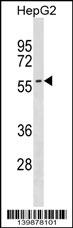
SMPD3 Antibody (N-term) western blot analysis in HepG2 cell line lysates (35ug/lane).This demonstrates the SMPD3 antibody detected the SMPD3 protein (arrow).| Product Name | SMPD3 Antibody (N-term) |
|---|---|
| Antibody Type | Primary Antibodies |
| Antigen Alias | SMPD3; Sphingomyelin phosphodiesterase 3; Neutral sphingomyelinase 2; Neutral sphingomyelinase II |
| Clonality | Polyclonal |
|---|---|
| Isotype | Ig |
| Host Species | Rabbit |
| Tested Applications | WB |
| WB:1:100~500 |
|
| Species Reactivity | Human |
| Concentration | 1mg/ml |
| Alternative Names | SMPD3 Sphingomyelin phosphodiesterase 3 Neutral sphingomyelinase 2 Neutral sphingomyelinase II |
|---|---|
| Molecular Weight(MW) | 71081 Da |
| Function | Catalyzes the hydrolysis of sphingomyelin to form ceramide and phosphocholine. Ceramide mediates numerous cellular functions, such as apoptosis and growth arrest, and is capable of regulating these 2 cellular events independently. Also hydrolyzes sphingosylphosphocholine. Regulates the cell cycle by acting as a growth suppressor in confluent cells. Probably acts as a regulator of postnatal development and participates in bone and dentin mineralization |
| Tissue Specificity | Predominantly expressed in brain. |
| Cellular Localization | Golgi apparatus membrane; Lipid-anchor. Cell membrane; Lipid-anchor. Note=May localize to detergent-resistant subdomains of Golgi membranes of hypothalamic neurosecretory neurons. According to PubMed:15051724, it localizes to plasma membrane in confluent contact-inhibited cells |
| Entrez Gene | 55512 |
|---|---|
| Nucleotide Accession | NP_061137.1 |
Application
SMPD3 Antibody (N-term) western blot analysis in HepG2 cell line lysates (35ug/lane).This demonstrates the SMPD3 antibody detected the SMPD3 protein (arrow).| Application Notes | WB:1:100~500 |
|---|
| Form | Liquid |
|---|---|
| Storage Instructions | For short-term storage, store at 4° C. For long-term storage, aliquot and store at -20ºC or below. Avoid multiple freeze-thaw cycles. |
| Storage Buffer | Purified polyclonal antibody supplied in PBS with 0.09% (W/V) sodium azide. This antibody is purified through a protein A column, followed by peptide affinity purification. |


