Application
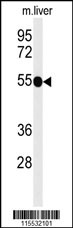
Western blot analysis of TNFRSF8-Y479 in mouse liver tissue lysates (35ug/lane). TNFRSF8 (arrow) was detected using the purified Pab.Application
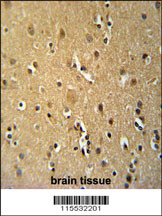
TNFRSF8-Y479 Antibody immunohistochemistry analysis in formalin fixed and paraffin embedded human brain tissue followed by peroxidase conjugation of the secondary antibody and DAB staining. This data demonstrates the use of the TNFRSF8-Y479 Antibody for immunohistochemistry. Clinical relevance has not been evaluated.| Product Name | TNFRSF8-Y479 Antibody |
|---|---|
| Antibody Type | Primary Antibodies |
| Clonality | Polyclonal |
|---|---|
| Isotype | Ig |
| Host Species | Rabbit |
| Tested Applications | WBIHC |
| WB:1:100~500 IHC |
|
| Species Reactivity | Human |
| Concentration | 1mg/ml |
| Gene Synonyms | CD30, D1S166E |
|---|---|
| Alternative Names | TNFRSF8 CD30 D1S166E Tumor necrosis factor receptor superfamily member 8 CD30L receptor Ki-1 antigen Lymphocyte activation antigen CD30 CD_antigen=CD30 Flags: Precursor |
| Molecular Weight(MW) | 63747 Da |
| Function | Receptor for TNFSF8/CD30L. May play a role in the regulation of cellular growth and transformation of activated lymphoblasts. Regulates gene expression through activation of NF- kappa-B |
| Tissue Specificity | This TNFRSF8-Y479 antibody is generated from rabbits immunized with a KLH conjugated synthetic peptide between amino acid 470-500 from the Y479 region of human TNFRSF8. |
| Cellular Localization | Isoform Long: Cell membrane; Single-pass type I membrane protein |
| Entrez Gene | 943 |
|---|
Application
Western blot analysis of TNFRSF8-Y479 in mouse liver tissue lysates (35ug/lane). TNFRSF8 (arrow) was detected using the purified Pab.
Application
TNFRSF8-Y479 Antibody immunohistochemistry analysis in formalin fixed and paraffin embedded human brain tissue followed by peroxidase conjugation of the secondary antibody and DAB staining. This data demonstrates the use of the TNFRSF8-Y479 Antibody for immunohistochemistry. Clinical relevance has not been evaluated.| Application Notes | WB:1:100~500 IHC |
|---|
| Form | Liquid |
|---|---|
| Storage Instructions | For short-term storage, store at 4° C. For long-term storage, aliquot and store at -20ºC or below. Avoid multiple freeze-thaw cycles. |
| Storage Buffer | Purified polyclonal antibody supplied in PBS with 0.09% (W/V) sodium azide. This antibody is purified through a protein A column, followed by peptide affinity purification. |


