Application
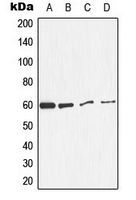
Western blot analysis of Catalase (pY386) expression in HeLa (A); HepG2 (B); mouse liver (C); rat liver (D) whole cell lysates.Application
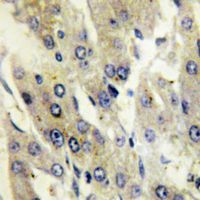
Immunohistochemical analysis of Catalase (pY386) staining in human liver formalin fixed paraffin embedded tissue section. The section was pre-treated using heat mediated antigen retrieval with sodium citrate buffer (pH 6.0). The section was then incubated with the antibody at room temperature and detected using an HRP conjugated compact polymer system. DAB was used as the chromogen. The section was then counterstained with haematoxylin and mounted with DPX.| Product Name | Catalase (phospho Tyr386) antibody |
|---|---|
| Antibody Type | Primary Antibodies |
| Product description | Rabbit Polyclonal antibody to Catalase (phospho Tyr386)This gene encodes catalase, a key antioxidant enzyme in the bodies defense against oxidative stress. Catalase is a heme enzyme that is present in the peroxisome of nearly all aerobic cells. Catalase converts the reactive oxygen species hydrogen peroxide to water and oxygen and thereby mitigates the toxic effects of hydrogen peroxide. Oxidative stress is hypothesized to play a role in the development of many chronic or late-onset diseases such as diabetes, asthma, Alzheimer's disease, systemic lupus erythematosus, rheumatoid arthritis, and cancers. Polymorphisms in this gene have been associated with decreases in catalase activity but, to date, acatalasemia is the only disease known to be caused by this gene. [provided by RefSeq, Oct 2009] |
| Immunogen | KLH-conjugated synthetic peptide encompassing a sequence within the center region of human Catalase (pY386). The exact sequence is proprietary. |
| Modification | p-Tyr386 |
| Clonality | Polyclonal |
|---|---|
| Isotype | IgG |
| Host Species | Rabbit |
| Tested Applications | IHC-PWB |
| WB: 1:500 - 1:1000. IHC-P: 1:100 - 1:200: |
|
| Species Reactivity | HumanMouseRat |
| Concentration | 1mg/ml |
| Purification | Affinity purified |
| Gene Synonyms | CAT catalase |
|---|---|
| Target | Catalase (phospho Tyr386) |
| Tissue Specificity | Recognizes endogenous levels of Catalase (pY386) protein. |
Application
Western blot analysis of Catalase (pY386) expression in HeLa (A); HepG2 (B); mouse liver (C); rat liver (D) whole cell lysates.
Application
Immunohistochemical analysis of Catalase (pY386) staining in human liver formalin fixed paraffin embedded tissue section. The section was pre-treated using heat mediated antigen retrieval with sodium citrate buffer (pH 6.0). The section was then incubated with the antibody at room temperature and detected using an HRP conjugated compact polymer system. DAB was used as the chromogen. The section was then counterstained with haematoxylin and mounted with DPX.| Application Notes | WB: 1:500 - 1:1000. IHC-P: 1:100 - 1:200: |
|---|
| Form | Liquid |
|---|---|
| Storage Instructions | Shipped at 4 °C. Upon delivery aliquot and store at -20 °C for one year. Avoid freeze/thaw cycles. |
| Storage Buffer | Liquid in 0.42% Potassium phosphate; 0.87% Sodium chloride; pH 7.3; 30% glycerol; and 0.01% sodium azide. |


