Application
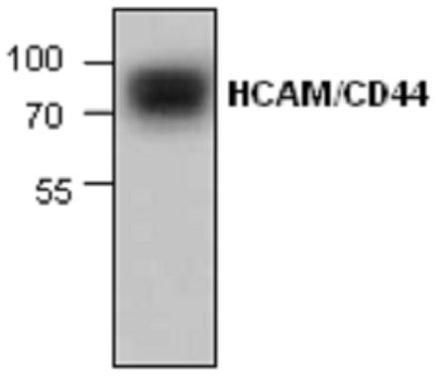
Western blot analysis of HCAM/CD44 using mouse small intestine tissue lysate.| Product Name | CD44 antibody |
|---|---|
| Antibody Type | Primary Antibodies |
| Product description | Rabbit polyclonal antibody to HCAMCell adhesion molecules (CAMs) are a family of closely related cell surface glycoproteins involved in cell-cell interactions during growth and are thought to play an important role in embryogenesis and development. The CAM family includes NCAM (neuronal cell adhesion molecule), ICAM (intracellular adhesion molecule), PECAM (platelet/endothelial cell adhesion molecule), BLCAM (produced by alternative splicing of the CD22 gene), VCAM (vascular cell adhesion molecule), and HCAM (homing cell adhesion molecule, also designed CD44), etc. |
| Clonality | Polyclonal |
|---|---|
| Isotype | IgG |
| Host Species | Rabbit |
| Tested Applications | IHCIPWB |
| Western blotting (0.5-4 µg/ml), immunoprecipitation (20 µg/ml) and Immunohistochemistry (20 µg/ml). However, the optimal concentrations should be determined individually.: |
|
| Species Reactivity | HumanMouseRat |
| Concentration | 0.2mg/ml |
| Purification | Affinity purified |
| Gene Synonyms | homing cell adhesion molecule CD44 cell adhesion molecule |
|---|---|
| Target | HCAM |
| Tissue Specificity | This antibody is specific for HCAM. |
Application
Western blot analysis of HCAM/CD44 using mouse small intestine tissue lysate.| Application Notes | Western blotting (0.5-4 µg/ml), immunoprecipitation (20 µg/ml) and Immunohistochemistry (20 µg/ml). However, the optimal concentrations should be determined individually.: |
|---|
| Form | Liquid |
|---|---|
| Storage Instructions | The antibody solution should be gently mixed before use. Stored at -20 °C for future use. |
| Storage Buffer | PBS (pH 7.2) containing 50% glycerol, 1% BSA, and 0.02% thimerosal |


