Application
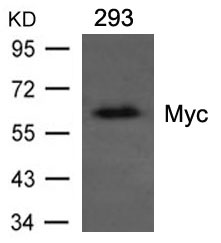
Western blot analysis of extracts from 293 cells transfected with recombinant human Myc using Myc mouse mAb| Product Name | c-Myc antibody |
|---|---|
| Antibody Type | Tags Antibodies |
| Product description | Mouse Monoclonal antibody to MycMyc proto-oncogene encodes nuclear DNA-binding phosphoproteins that are involved in the regulation of gene expression and DNA replication during cell growth and differentiation. Myc encodes a protein of 65 kDa which is expressed in almost all normal and transformed cells. The expression correlates with the proliferation state of the cells. Transcription is repressed in quiescent or terminally differentiated cells. Expression of Myc is generally induced after mitogenic stimulation of cells or serum induction. Myc therefore is an important positive regulator of cell growth and proliferation. Myc has been demonstrated also to be a potent inducer of apoptosis when expressed in the absence of serum or growth factors. Apoptosis may serve also as a protective mechanism to prevent tumorigenicity elicited by deregulated Myc expression. Sequences of the Myc oncogene have been highly conserved throughout evolution, from Drosophila to vertebrates |
| Immunogen | Peptide sequence derived from C-terminal (aa. 410-432) of human c-Myc conjugated with KLH. |
| Clonality | Monoclonal |
|---|---|
| Isotype | IgG1 |
| Clone Number | 3E8 |
| Host Species | Mouse |
| Tested Applications | WB |
| Suggested starting dilutions are as follows. WB: 1:500~1:1000. Not yet tested in other applications. Optimal working dilutions should be determined experimentally by the end user.: |
|
| Species Reactivity | Human |
| Concentration | 1mg/ml (Please refer to the vial label for the specific concentration) |
| Purification | Affinity purified |
| Gene Synonyms | MRTL bHLHe39 c-Myc MYC avian myelocytomatosis viral oncogene homolog myc-related translation/localization regulatory factor class E basic helix-loop-helix protein 39 transcription factor p64 proto-oncogene c-Myc myc proto-oncogene protein v-myc |
|---|---|
| Target | Myc |
| Molecular Weight(MW) | 60 (note) |
Application
Western blot analysis of extracts from 293 cells transfected with recombinant human Myc using Myc mouse mAb| Application Notes | Suggested starting dilutions are as follows. WB: 1:500~1:1000. Not yet tested in other applications. Optimal working dilutions should be determined experimentally by the end user.: |
|---|
| Form | Liquid |
|---|---|
| Storage Instructions | Keep as concentrated solution. Aliquot and store at -20ºC or below. Avoid multiple freeze-thaw cycles. |
| Storage Buffer | phosphate buffered saline , pH 7.4, 150mM NaCl, 0.02% sodium azide and 50% glycerol. |


