Application
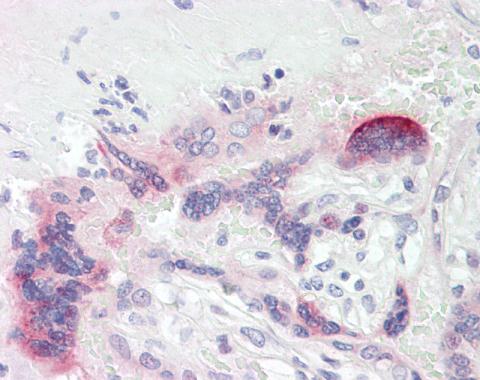
CRF antibody [N1C3] detects CRF protein at cytoplasm on human placenta by immunohistochemical analysis. Sample: Paraffin-embedded placenta. CRF antibody [N1C3] dilution: 1:100.| Product Name | CRF antibody |
|---|---|
| Antibody Type | Primary Antibodies |
| Product description | Rabbit polyclonal antibody to CRF (corticotropin releasing hormone)Corticotropin-releasing hormone (CRH) is a 41-amino acid peptide derived from a 191-amino acid preprohormone. CRH is secreted by the paraventricular nucleus (PVN) of the hypothalamus in response to stress. Marked reduction in CRH has been observed in association with Alzheimer disease and autosomal recessive hypothalamic corticotropin dificiency has multiple and potentially fatal metabolic consequences including hypoglycemia and hepatitis. In addition to production in the hypothalamus, CRH is also synthesized in peripheral tissues, such as T lymphocytes and is highly expressed in the placenta. In the placenta CRH is a marker that determines the length of gestation and the timing of parturition and delivery. A rapid increase in circulating levels of CRH occurs at the onset of parturition, suggesting that, in addition to its metabolic functions, CRH may act as a trigger for parturition. [provided by RefSeq] |
| Immunogen | Recombinant protein encompassing a sequence within the center region of human CRF. The exact sequence is proprietary. |
| Clonality | Polyclonal |
|---|---|
| Isotype | IgG |
| Host Species | Rabbit |
| Tested Applications | IHC-P |
| *Optimal dilutions/concentrations should be determined by the researcher.
: |
|
| Species Reactivity | Human |
| Predicted Reactivity | Dog, RabbitDog (86%), Rabbit (84%) |
| Concentration | 1mg/ml |
| Purification | Affinity purified |
| Gene Synonyms | CRF antibody CRH antibody corticotropin-releasing factor antibody corticoliberin antibody corticotropin releasing hormone antibody |
|---|---|
| Target | CRF |
| Molecular Weight(MW) | 21 kDa (note) |
| Cellular Localization | Secreted |
Application
CRF antibody [N1C3] detects CRF protein at cytoplasm on human placenta by immunohistochemical analysis. Sample: Paraffin-embedded placenta. CRF antibody [N1C3] dilution: 1:100.| Positive Control | Target recombinant protein |
|---|---|
| Application Notes | *Optimal dilutions/concentrations should be determined by the researcher.
: |
| Form | Liquid |
|---|---|
| Storage Instructions | Keep as concentrated solution. Aliquot and store at -20ºC or below. Avoid multiple freeze-thaw cycles. |
| Storage Buffer | 0.1M Tris, 0.1M Glycine, 10% Glycerol (pH7). 0.01% Thimerosal was added as a preservative. |


