Application
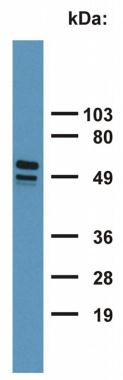
Detection of Cytokeratin 7+17 in HeLa cell lysate with monoclonal antibodyApplication
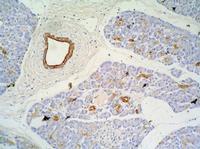
Immunohistochemistry staining of pancreas (paraffin-embedded sections) with anti-Cytokeratin 7+17| Product Name | Cytokeratin 7 + 17 antibody |
|---|---|
| Antibody Type | Primary Antibodies |
| Product description | Mouse monoclonal [C-46] to Cytokeratin 7+17The protein encoded by this gene is a member of the keratin gene family. The type II cytokeratins consist of basic or neutral proteins which are arranged in pairs of heterotypic keratin chains coexpressed during differentiation of simple and stratified epithelial tissues. This type II cytokeratin is specifically expressed in the simple epithelia lining the cavities of the internal organs and in the gland ducts and blood vessels. The genes encoding the type II cytokeratins are clustered in a region of chromosome 12q12-q13. Alternative splicing may result in several transcript variants; however, not all variants have been fully described. [provided by RefSeq] |
| Immunogen | Tissue / cell preparation (Human). (Cytoskeleton preparation of HeLa cells (cervix carcinoma)). |
| Clonality | Monoclonal |
|---|---|
| Isotype | IgG1 |
| Clone Number | C-46 |
| Host Species | Mouse |
| Tested Applications | ICC/IFIHC-PIPWB |
| ICC: Use at an assay dependant concentration. IHC-P: Use at an assay dependant dilution. Perform enzymatic antigen retrieval before commencing with IHC staining protocol. IP: Use at an assay dependant dilution. WB: Use at an assay dependant concentration. Optimal dilutions/concentrations should be determined by the end user.: |
|
| Species Reactivity | HumanDogPigSheepBovine |
| Concentration | 1mg/ml (Please refer to the vial label for the specific concentration) |
| Purification | Affinity purified |
| Gene Synonyms | 3872 KRT17 3855 148059 Cytokeratin7 + 17 K7 Cytokeratin 7 + 17 MGC3625 PCHC1 MGC129731 K17 KRT7 Q04695 SCL K2C7 PC2 148069 P08729 CK7 PC |
|---|---|
| Target | Cytokeratin 7 + 17 |
| Tissue Specificity | Cytokeratin peptides 7 (54 kDa) and 17 (46 kDa) |
Application
Detection of Cytokeratin 7+17 in HeLa cell lysate with monoclonal antibody
Application
Immunohistochemistry staining of pancreas (paraffin-embedded sections) with anti-Cytokeratin 7+17| Application Notes | ICC: Use at an assay dependant concentration. IHC-P: Use at an assay dependant dilution. Perform enzymatic antigen retrieval before commencing with IHC staining protocol. IP: Use at an assay dependant dilution. WB: Use at an assay dependant concentration. Optimal dilutions/concentrations should be determined by the end user.: |
|---|
| Form | Liquid |
|---|---|
| Storage Instructions | Keep as concentrated solution. Store at 4°C short term. For extended storage aliquot and store at -20°C or below. Avoid freeze-thaw cycles. |
| Storage Buffer | Phosphate buffered saline pH 7.4 containing 15mM sodium azide |


