Application
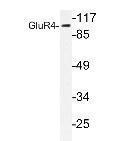
Western Blot: GluR4 Antibody [NBP1-19394] - extracts from NIH/3T3 cells.Application
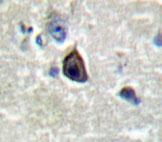
Immunohistochemistry: GluR4 Antibody [ - GluR4 Antibody [ - paraffin-embedded human brain tissue.| Product Name | GluR4 antibody |
|---|---|
| Antibody Type | Primary Antibodies |
| Product description | Rabbit polyclonal antibody to GluR4G protein-coupled inwardly rectifying potassium channels (KIR3.1 through KIR3.4) are coupled to numerous neurotransmitter receptors in the brain and are abundantly expressed in the olfactory bulb, hippocampus, neocortex, dentate gyrus, cerebellar cortex and thalamus regions of the brain. Also known as GIRK, KIR3 potassium channels localize to the soma and dendrites as well as axons of neurons. Liberated Gbgamma subunits from G protein heterotrimers bind to and regulate KIR3 channel activity. Gb3- and Gb4-containing Gbgamma dimers bind directly to cytoplasmic domains of KIR3 proteins and increase the K+ current while Gb5-containing Gbgamma dimers inhibit KIR3 K+ current. KIR3 activity is also inhibited by tyrosine phosphorylation. Brain-derived neurotrophic factor activates receptor tyrosine kinase B, which then phosphorylates KIR3 tyrosine residues, effectively inactivating the KIR3 channels. |
| Clonality | Polyclonal |
|---|---|
| Isotype | IgG |
| Host Species | Rabbit |
| Tested Applications | IHCIHC-PWB |
| We recommend the following starting dilutions: Western Blot 1:500-1:1000, immunohistochemistry 1:50-1:200,. Optimal concentration should be determined experimentally by the end user.: |
|
| Species Reactivity | HumanMouseRat |
| Concentration | 1mg/ml |
| Purification | Affinity purified |
| Gene Synonyms | 268934 ionotrophic Glutamate receptor4 GLUR4C 29629 GLUR4 AMPAselective glutamate receptor4 AMPA-selective glutamate receptor 4 2893 AMPA 4 AMPAselective glutamate receptor 4 AMPA4 GRIA4 glutamate receptor GLURD |
|---|---|
| Target | GluR4 |
| Tissue Specificity | GluR4 (K858) detects endogenous levels of GluR4 protein. |
Application
Western Blot: GluR4 Antibody [NBP1-19394] - extracts from NIH/3T3 cells.
Application
Immunohistochemistry: GluR4 Antibody [ - GluR4 Antibody [ - paraffin-embedded human brain tissue.| Application Notes | We recommend the following starting dilutions: Western Blot 1:500-1:1000, immunohistochemistry 1:50-1:200,. Optimal concentration should be determined experimentally by the end user.: |
|---|
| Form | Liquid |
|---|---|
| Storage Instructions | Store at 4C short term. Aliquot and store at -20C long term. Avoid freeze-thaw cycles. |
| Storage Buffer | Phosphate buffered saline (PBS) with 15 mM sodium azide, approx. pH 7.2. |


