Application
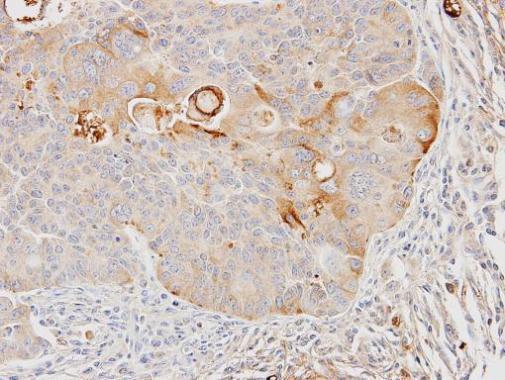
Immunohistochemical analysis of paraffin-embedded SW480 xenograft, using GSTA4 antibody at 1:100 dilution.Application
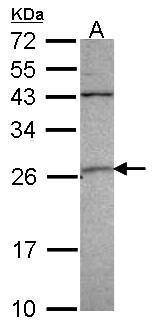
Sample (30 ug of whole cell lysate) A: 293T 12% SDS PAGE GST A4 antibody diluted at 1:1000| Product Name | GSTA4 antibody |
|---|---|
| Antibody Type | Primary Antibodies |
| Product description | Rabbit Polyclonal antibody to GSTA4 (glutathione S-transferase alpha 4)Cytosolic and membrane-bound forms of glutathione S-transferase are encoded by two distinct supergene families. These enzymes are involved in cellular defense against toxic, carcinogenic, and pharmacologically active electrophilic compounds. At present, eight distinct classes of the soluble cytoplasmic mammalian glutathione S-transferases have been identified: alpha, kappa, mu, omega, pi, sigma, theta and zeta. This gene encodes a glutathione S-tranferase belonging to the alpha class. The alpha class genes, which are located in a cluster on chromosome 6, are highly related and encode enzymes with glutathione peroxidase activity that function in the detoxification of lipid peroxidation products. Reactive electrophiles produced by oxidative metabolism have been linked to a number of degenerative diseases including Parkinson's disease, Alzheimer's disease, cataract formation, and atherosclerosis. [provided by RefSeq] |
| Immunogen | Recombinant protein encompassing a sequence within the center region of human GSTA4. The exact sequence is proprietary. |
| Clonality | Polyclonal |
|---|---|
| Isotype | IgG |
| Host Species | Rabbit |
| Tested Applications | IHC-PWB |
| *Optimal dilutions/concentrations should be determined by the researcher.
: |
|
| Species Reactivity | HumanPig |
| Predicted Reactivity | Dog, Rhesus Monkey, BovineDog (91%), Rhesus Monkey (97%), Bovine (93%) |
| Concentration | 1mg/ml (Please refer to the vial label for the specific concentration) |
| Purification | Affinity purified |
| Gene Synonyms | DKFZp686D21185 antibody GSTA4-4 antibody GTA4 antibody GSTA4 antibody glutathione transferase A4-4 antibody glutathione S-alkyltransferase A4 antibody glutathione S-transferase A4-4 antibody GST class-alpha member 4 antibody glutathione S-aralkyltr |
|---|---|
| Molecular Weight(MW) | 26 kDa (note) |
| Cellular Localization | Cytoplasm |
Application
Immunohistochemical analysis of paraffin-embedded SW480 xenograft, using GSTA4 antibody at 1:100 dilution.
Application
Sample (30 ug of whole cell lysate) A: 293T 12% SDS PAGE GST A4 antibody diluted at 1:1000| Positive Control | 293T |
|---|---|
| Application Notes | *Optimal dilutions/concentrations should be determined by the researcher.
: |
| Form | Liquid |
|---|---|
| Storage Instructions | Keep as concentrated solution. Aliquot and store at -20ºC or below. Avoid multiple freeze-thaw cycles. |
| Storage Buffer | 0.1M Tris, 0.1M Glycine, 10% Glycerol (pH7). 0.01% Thimerosal was added as a preservative. |


