Application
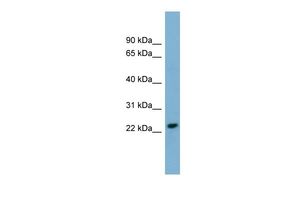
WB analysis of OVCAR-3 cells using KLRC3 antibody at 0.2-1μg/ml.| Product Name | KLRC3 antibody, N-term |
|---|---|
| Antibody Type | Primary Antibodies |
| Product description | Rabbit Polyclonal antibody to KLRC3Natural killer (NK) cells are lymphocytes that can mediate lysis of certain tumor cells and virus-infected cells without previous activation. They can also regulate specific humoral and cell-mediated immunity. NK cells preferentially express several calcium-dependent (C-type) lectins, which have been implicated in the regulation of NK cell function. KLRC3 is a member of the NKG2 group which are expressed primarily in natural killer (NK) cells and encodes a family of transmembrane proteins characterized by a type II membrane orientation (extracellular C terminus) and the presence of a C-type lectin domain. The NKG2 gene family is located within the NK complex, a region that contains several C-type lectin genes preferentially expressed on NK cells. Alternative splicing results in multiple transcript variants encoding different isoforms. [provided by RefSeq, Jul 2008] |
| Immunogen | A synthetic peptide corresponding to a N-terminal region of Human KLRC3 |
| Clonality | Polyclonal |
|---|---|
| Isotype | IgG |
| Host Species | Rabbit |
| Tested Applications | WB |
| *Optimal dilutions/concentrations should be determined by the researcher.
: |
|
| Species Reactivity | Human |
| Predicted Reactivity | Human: 100%; Mouse: 79% |
| Concentration | 1mg/ml |
| Purification | Affinity purified |
| Gene Synonyms | KLRC3 NKG2E |
|---|---|
| Target | KLRC3 |
| Molecular Weight(MW) | 27 KDa (note) |
Application
WB analysis of OVCAR-3 cells using KLRC3 antibody at 0.2-1μg/ml.| Positive Control | OVCAR-3 |
|---|---|
| Application Notes | *Optimal dilutions/concentrations should be determined by the researcher.
: |
| Form | Liquid |
|---|---|
| Storage Instructions | Keep as concentrated solution. For short-term storage, store at 4ºC. For long-term storage, aliquot and store at -20ºC or below. Avoid multiple freeze-thaw cycles. |
| Storage Buffer | 1x PBS buffer with 0.09% (w/v) sodium azide and 2% sucrose. |


