Application
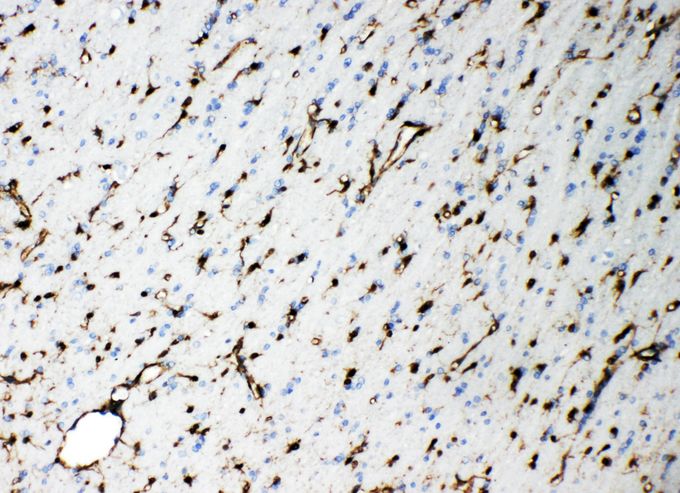
Anti-MADH7 antibody, IHC(P). IHC(P): Rat Brain TissueApplication
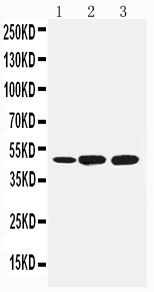
Anti-MADH7 antibody, Western blotting. Lane 1: Rat Brain Tissue Lysate. Lane 2: A549 Cell Lysate. Lane 3: HELA Cell Lysate. Lane 4: U87 Cell Lysate.| Product Name | MADH7 antibody |
|---|---|
| Antibody Type | Primary Antibodies |
| Product description | Rabbit Polyclonal antibody to MADH7The protein encoded by this gene is a nuclear protein that binds the E3 ubiquitin ligase SMURF2. Upon binding, this complex translocates to the cytoplasm, where it interacts with TGF-beta receptor type-1 (TGFBR1), leading to the degradation of both the encoded protein and TGFBR1. Expression of this gene is induced by TGFBR1. Variations in this gene are a cause of susceptibility to colorectal cancer type 3 (CRCS3). Several transcript variants encoding different isoforms have been found for this gene. [provided by RefSeq, Jun 2010] |
| Immunogen | A synthetic peptide corresponding to a sequence at the C-terminus of human MADH7(375-389aa YSLQRPNDHEFMQQP), identical to the related rat and mouse sequences. |
| Clonality | Polyclonal |
|---|---|
| Isotype | IgG |
| Host Species | Rabbit |
| Tested Applications | IHC-PWB |
| IHC-P: 0.5-1μg/ml, WB: 0.1-0.5μg/ml | |
| Species Reactivity | HumanMouseRat |
| Concentration | 1mg/ml |
| Purification | Affinity purified |
| Gene Synonyms | MADH8 , SMAD family member 7 , CRCS3 , SMAD7 |
|---|---|
| Target | MADH7 |
Application
Anti-MADH7 antibody, IHC(P). IHC(P): Rat Brain Tissue
Application
Anti-MADH7 antibody, Western blotting. Lane 1: Rat Brain Tissue Lysate. Lane 2: A549 Cell Lysate. Lane 3: HELA Cell Lysate. Lane 4: U87 Cell Lysate.| Application Notes | IHC-P: 0.5-1μg/ml, WB: 0.1-0.5μg/ml |
|---|
| Form | Liquid |
|---|---|
| Storage Instructions | At -20˚C for one year. After reconstitution, at 4˚C for one month. It can also be aliquotted and stored frozen at -20˚C for a longer time.Avoid repeated freezing and thawing. |
| Storage Buffer | Each vial contains 5mg BSA, 0.9mg NaCl, 0.2mg Na2HPO4, 0.05mg Thimerosal, 0.05mg NaN3. |


