Application
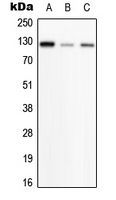
Western blot analysis of PHKB expression in HeLa (A); SP2/0 (B); H9C2 (C) whole cell lysates.| Product Name | Phosphorylase B antibody |
|---|---|
| Antibody Type | Primary Antibodies |
| Product description | Rabbit Polyclonal antibody to Phosphorylase BPhosphorylase kinase is a polymer of 16 subunits, four each of alpha, beta, gamma and delta. The alpha subunit includes the skeletal muscle and hepatic isoforms, encoded by two different genes. The beta subunit is the same in both the muscle and hepatic isoforms, encoded by this gene, which is a member of the phosphorylase b kinase regulatory subunit family. The gamma subunit also includes the skeletal muscle and hepatic isoforms, encoded by two different genes. The delta subunit is a calmodulin and can be encoded by three different genes. The gamma subunits contain the active site of the enzyme, whereas the alpha and beta subunits have regulatory functions controlled by phosphorylation. The delta subunit mediates the dependence of the enzyme on calcium concentration. Mutations in this gene cause glycogen storage disease type 9B, also known as phosphorylase kinase deficiency of liver and muscle. Alternatively spliced transcript variants encoding different isoforms have been identified in this gene. Two pseudogenes have been found on chromosomes 14 and 20, respectively.[provided by RefSeq, Feb 2010] |
| Immunogen | KLH-conjugated synthetic peptide encompassing a sequence within the center region of human PHKB. The exact sequence is proprietary. |
| Clonality | Polyclonal |
|---|---|
| Isotype | IgG |
| Host Species | Rabbit |
| Tested Applications | WB |
| Species Reactivity | HumanMouseMonkeyRat |
| Concentration | 1mg/ml |
| Purification | Affinity purified |
| Gene Synonyms | phosphorylase kinase, beta , PHKB |
|---|---|
| Target | Phosphorylase B |
| Tissue Specificity | Recognizes endogenous levels of PHKB protein. |
Application
Western blot analysis of PHKB expression in HeLa (A); SP2/0 (B); H9C2 (C) whole cell lysates.| Form | Liquid |
|---|---|
| Storage Instructions | Shipped at 4 C. Upon delivery aliquot and store at -20 C for one year. Avoid freeze/thaw cycles. |
| Storage Buffer | Liquid in 0.42% Potassium phosphate; 0.87% Sodium chloride; pH 7.3; 30% glycerol; and 0.01% sodium azide. |


