Application
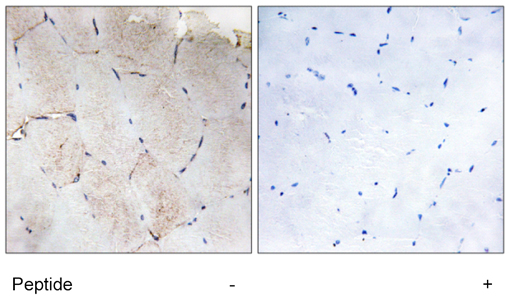
Immunohistochemistry analysis of paraffin-embedded human skeletal muscle tissue using Collagen XII alpha1 antibodyApplication
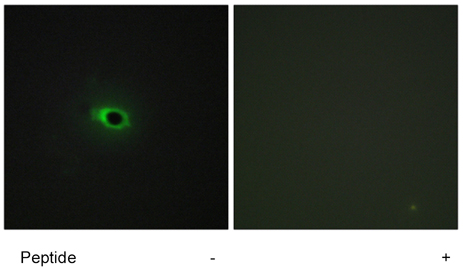
Immunofluorescence analysis of COS-7 cells, using Collagen XII alpha1 antibody| Product Name | PKC delta (phospho Ser645) antibody |
|---|---|
| Antibody Type | Primary Antibodies |
| Product description | Rabbit polyclonal to PKC delta ( phospho S645 )Protein Kinase C delta (PKC delta) is a 78 kDa member of the novel group (nPKCs: sensitive to diacylglycerol, phosphatidylserine, and phorbol esters) of the PKC family of serine/threonine kinases that are involved in a wide range of physiological processes including mitogenesis, cell survival and transcriptional regulation. PKC delta is an ubiquitously expressed PKC isozyme that has been implicated in the regulation of multiple cellular processes including cell cycle progression and apoptosis. In contrast to other PKC isozymes where phosphorylation of the activation loop residue is essential for catalytic activity, phosphorylation of the activation loop threonine 507 of PKC delta appears to modulate, but is not required for, catalytic activity. This phosphorylation may also regulate PKC delta stability and degradation. Autophosphorylation at serine 645 (serine 643 in mouse and rat) is not required for, but may modulate, catalytic activity and receptor dephosphorylation. |
| Immunogen | Synthetic phosphopeptide derived from the region of human PKC delta that contains serine 645. |
| Modification | p-Ser645 |
| Clonality | Polyclonal |
|---|---|
| Isotype | IgG |
| Host Species | Rabbit |
| Tested Applications | ICC/IFIHC-PWB |
| WB: Use at a concentration of 0.35 - 1 μg/ml. Detects a band of approximately 77 kDa. Optimal dilutions/concentrations should be determined by the end user. | |
| Species Reactivity | HumanMouseRat |
| Concentration | 0.5mg/ml |
| Purification | Affinity purified |
| Gene Synonyms | 2011/5/1, MGC49908, PKCD, nPKC-delta, nPKC delta, nPKCdelta, PKC delta (phospho S645), PKC delta (phospho Ser645), PKC delta (pS645), PKC delta (pSer645), PKC delta phospho S645, PKC delta phospho Ser645, Phospho PKC delta (S645), Phospho PKC delta (Ser645 |
|---|---|
| Target | PKC delta |
| Cellular Localization | Cytoplasmic |
Application
Immunohistochemistry analysis of paraffin-embedded human skeletal muscle tissue using Collagen XII alpha1 antibody
Application
Immunofluorescence analysis of COS-7 cells, using Collagen XII alpha1 antibody| Application Notes | WB: Use at a concentration of 0.35 - 1 μg/ml. Detects a band of approximately 77 kDa. Optimal dilutions/concentrations should be determined by the end user. |
|---|
| Form | Liquid |
|---|---|
| Storage Instructions | Keep as concentrated solution. Store at 4ºC short term. For extended storage aliquot and store at -20ºC or below. Avoid freeze-thaw cycles. |
| Storage Buffer | Preservative: 0.05% Sodium Azide; Constituents: PBS, 1mg/ml BSA (IgG, protease free). pH 7.3 |


