Application
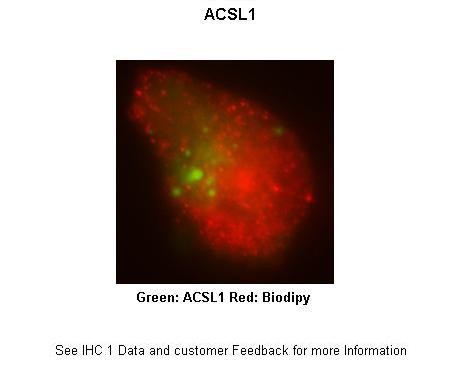
Antibody used in IHC on Human THP-1 at: 1:200.Application
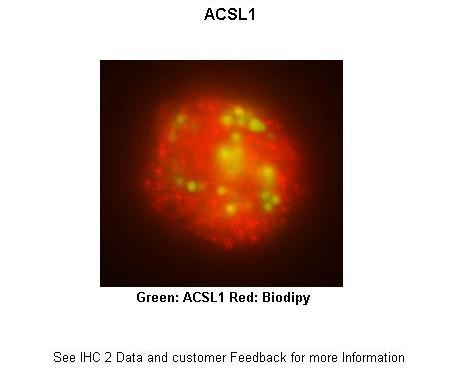
Antibody used in IHC on Human THP-1 at: 1:200.Application
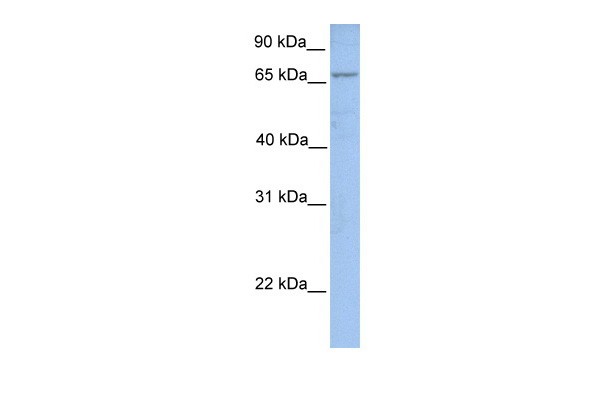
Antibody used in WB on Human MCF-7 at 0.2-1 ug/ml.| Product Name | ACSL1 Antibody |
|---|---|
| Antibody Type | Primary Antibodies |
| Product description | ACSL1 encodes an isozyme of the long-chain fatty-acid-coenzyme A ligase family. Although differing in substrate specificity, subcellular localization, and tissue distribution, all isozymes of this family convert free long-chain fatty acids into fatty acyl-CoA esters, and thereby play a key role in lipid biosynthesis and fatty acid degradation.The protein encoded by this gene is an isozyme of the long-chain fatty-acid-coenzyme A ligase family. Although differing in substrate specificity, subcellular localization, and tissue distribution, all isozymes of this family convert free long-chain fatty acids into fatty acyl-CoA esters, and thereby play a key role in lipid biosynthesis and fatty acid degradation. Publication Note: This RefSeq record includes a subset of the publications that are available for this gene. Please see the Entrez Gene record to access additional publications.1) Soupene, E. (er) BMC Mol. Biol. 7, 21 (2006). |
| Immunogen | Antibody produced in rabbits immunized with a synthetic peptide corresponding a region of human ACSL1. |
| Clonality | Polyclonal |
|---|---|
| Host Species | Rabbit |
| Tested Applications | ELISAWB |
| ACSL1 antibody can be used for detection of ACSL1 by ELISA at 1:62500. ACSL1 antibody can be used for detection of ACSL1 by western blot at 1 μg/mL, and HRP conjugated secondary antibody should be diluted 1:50,000 - 100,000. | |
| Species Reactivity | Human |
| Concentration | 1mg/ml |
| Purification | Affinity purified |
| Gene Symbol | ACSL1 |
|---|---|
| Alternative Names | ACSL1 ACS1 FACL1 FACL2 LACS LACS1 LACS2 |
| Molecular Weight(MW) | 78 kDa |
Application
Antibody used in IHC on Human THP-1 at: 1:200.
Application
Antibody used in IHC on Human THP-1 at: 1:200.
Application
Antibody used in WB on Human MCF-7 at 0.2-1 ug/ml.| Application Notes | ACSL1 antibody can be used for detection of ACSL1 by ELISA at 1:62500. ACSL1 antibody can be used for detection of ACSL1 by western blot at 1 μg/mL, and HRP conjugated secondary antibody should be diluted 1:50,000 - 100,000. |
|---|
| Form | Liquid |
|---|---|
| Storage Instructions | For short periods of storage (days) store at 4˚C. For longer periods of storage, store ACSL1 antibody at -20˚C. As with any antibody avoid repeat freeze-thaw cycles. |
| Storage Buffer | Antibody is lyophilized in PBS buffer with 2% sucrose. Add 50 μL of distilled water. Final antibody concentration is 1 mg/mL. |


