Application
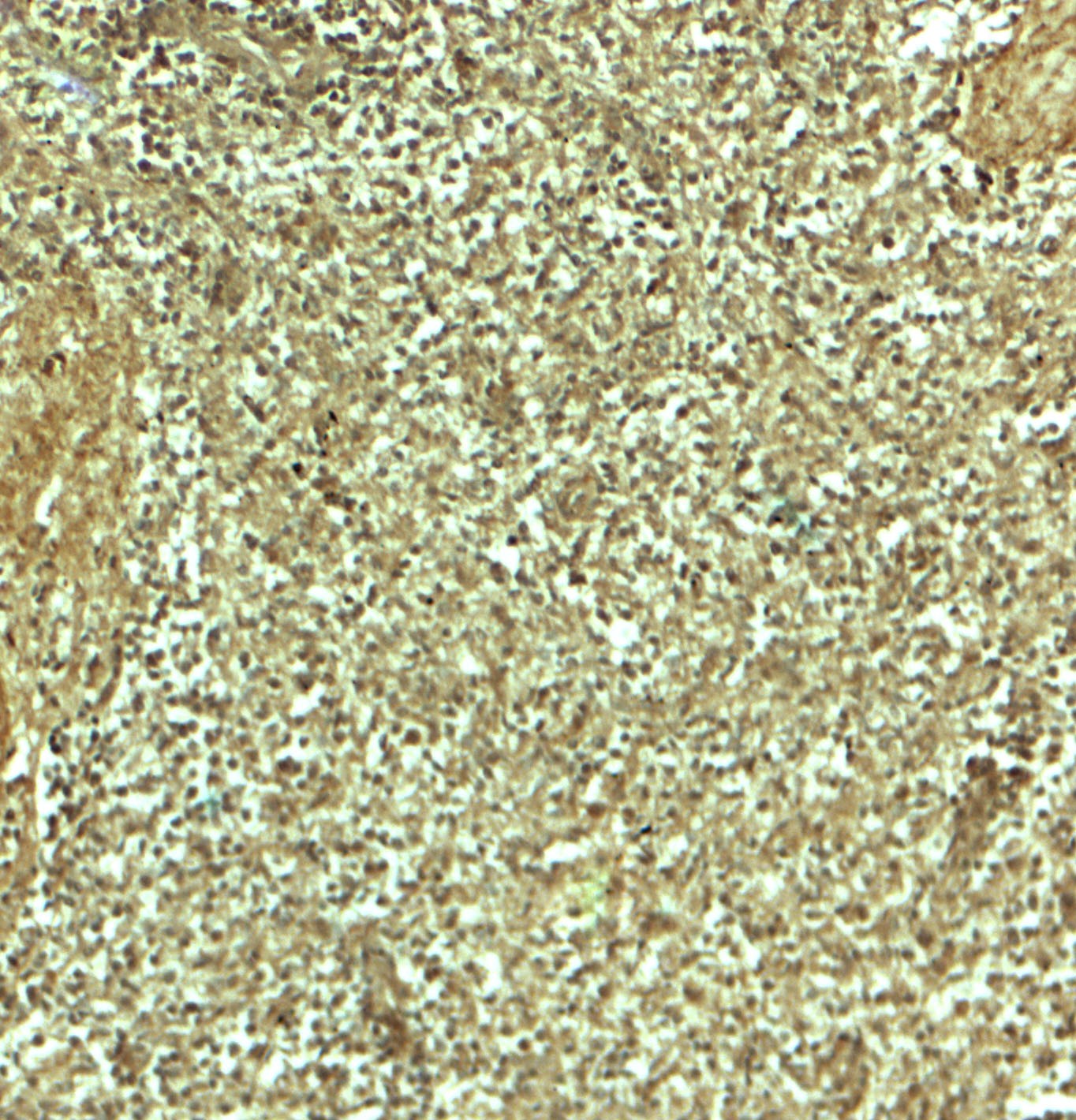
Immunohistochemistry of ADRM1 in human spleen tissue with ADRM1 antibody at 5 μg/mL.Application
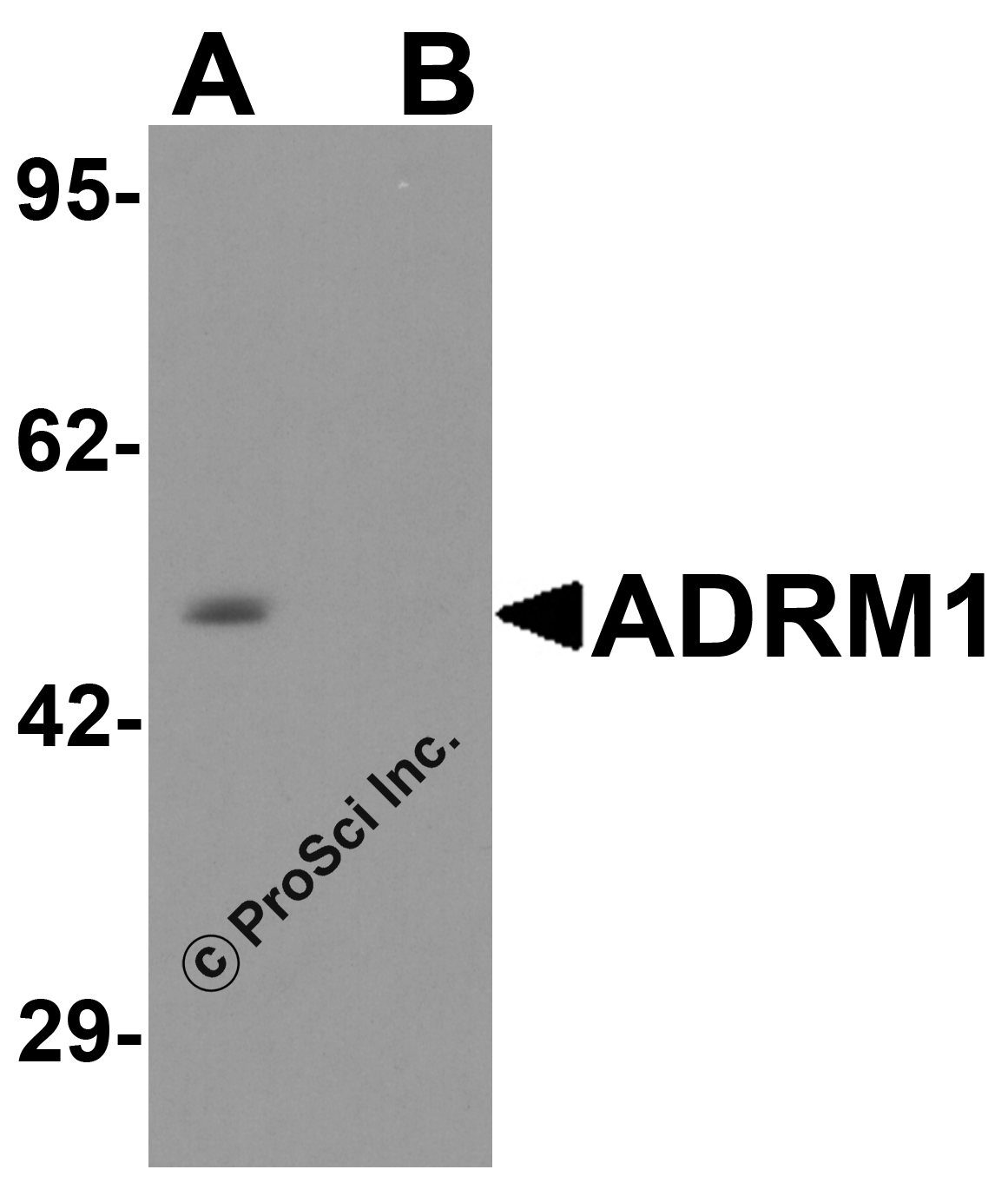
Western blot analysis of ADRM1 in EL cell lysate with ADRM1 antibody at 1 μg/ml in (A) the absence and (B) the presence of blocking peptide.| Product Name | ADRM1 Antibody |
|---|---|
| Antibody Type | Primary Antibodies |
| Antigen Alias | Adhesion regulating molecule 1, ARM1, Gp110, hRpn13, Proteasomal ubiquitin receptor ADRM1, Proteasome regulatory particle non-ATPase 13, Rpn13 |
| Product description | The adhesion-regulating molecule 1 (ADRM1) is thought to be involved in protein recruitment and cell adhesion and functions as a proteasomal ubiquitin receptor (1). ADRM1 promotes the activity of UCH-L5 and plays a role in lymphocyte homing. The carboxy-terminal domain of mammalian ADRM1 serves to bind and enhance the isopeptidase activity of UCHL5/UCH37, perhaps serving as a mechanism to accelerate ubiquitin chain disassembly (2,3). ADRM1 expression is induced by IFN-gamma in some cancer cell lines and its expression is upregulated in other metastatic cells, suggesting a role in carcinogenesis (4,5).1) Husnjak K, Elsasser S, Zhang N, et al. Proteasome subunit Rpn13 is a novel ubiquitin receptor. Nature 2008; 453:481-8. |
| Immunogen | ADRM1 antibody was raised against a 19 amino acid peptide near the center of human ADRM1. The immunogen is located within amino acids 210 - 260 of ADRM1. |
| Clonality | Polyclonal |
|---|---|
| Isotype | IgG |
| Host Species | Rabbit |
| Tested Applications | ELISAIHC-PWB |
| ADRM1 antibody can be used for detection of ADRM1 by Western blot at 1 - 2 μg/mL. Antibody can also be used for immunohistochemistry starting at 5 μg/mL.: |
|
| Species Reactivity | HumanMouseRat |
| Concentration | 1mg/ml |
| Purification | Affinity purified |
| Gene Symbol | ADRM1 |
|---|---|
| Alternative Names | Adhesion regulating molecule 1 ARM1 Gp110 hRpn13 Proteasomal ubiquitin receptor ADRM1 Proteasome regulatory particle non-ATPase 13 Rpn13 |
| Molecular Weight(MW) | Predicted: 45 kDa Observed: 48 kDa |
| Sequence Similarities | 2) Cat. No. 10-901 - Human Spleen Tissue Slide |
| Tissue Specificity | ADRM1 antibody is human, mouse and rat reactive. At least two isoforms of ADRM1 are know to exist; this antibody will detect both isoforms. |
Application
Immunohistochemistry of ADRM1 in human spleen tissue with ADRM1 antibody at 5 μg/mL.
Application
Western blot analysis of ADRM1 in EL cell lysate with ADRM1 antibody at 1 μg/ml in (A) the absence and (B) the presence of blocking peptide.| Positive Control | 1) Cat. No. 1287 - EL4 Cell Lysate |
|---|---|
| Application Notes | ADRM1 antibody can be used for detection of ADRM1 by Western blot at 1 - 2 μg/mL. Antibody can also be used for immunohistochemistry starting at 5 μg/mL.: |
| Form | Liquid |
|---|---|
| Storage Instructions | ADRM1 antibody can be stored at 4˚C for three months and -20˚C, stable for up to one year. |
| Storage Buffer | ADRM1 antibody is supplied in PBS containing 0.02% sodium azide. |


