Application
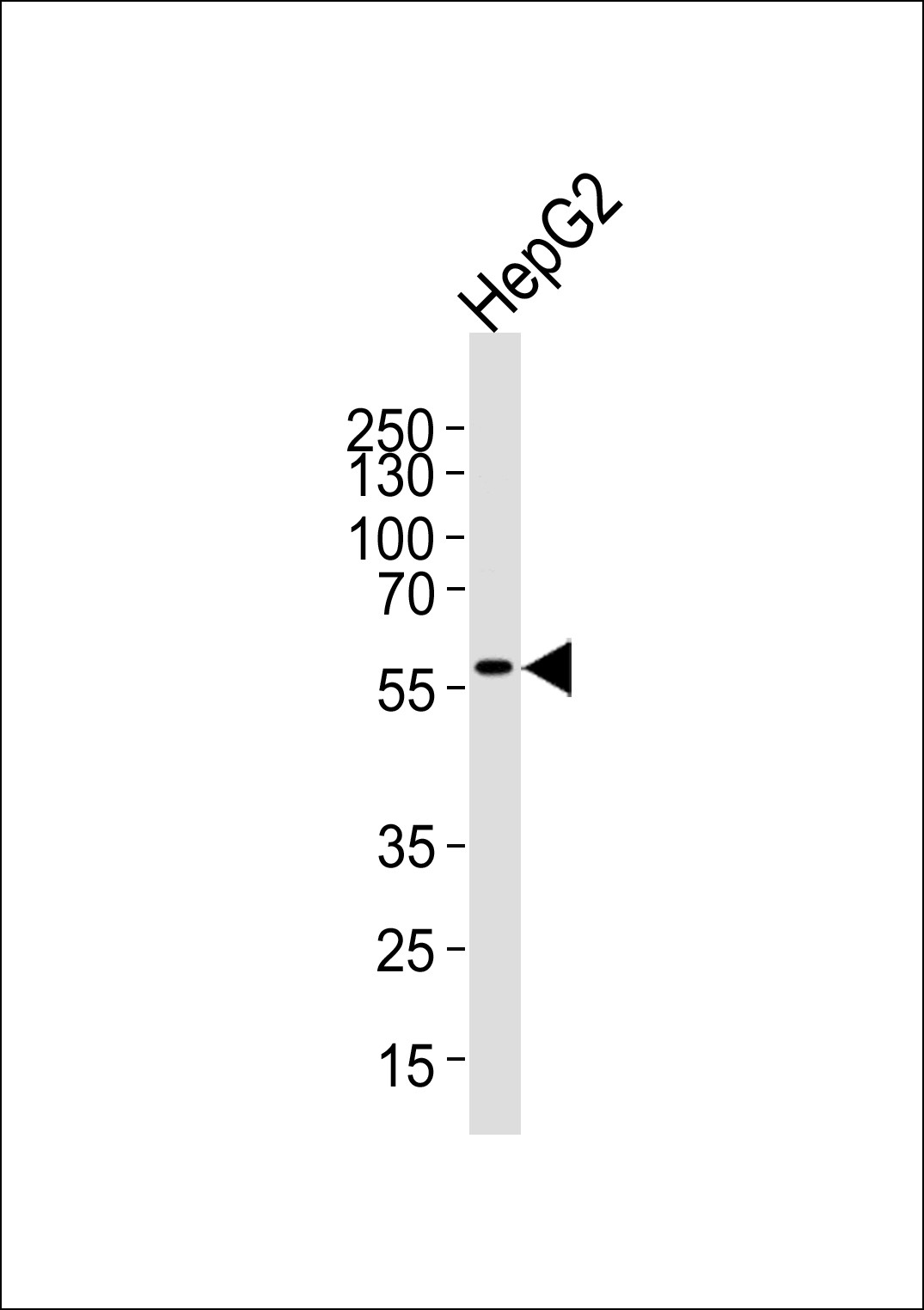
Western blot analysis of lysate from HepG2 cell line, using MLLT3 C-term Antibody at 1:1000 at each lane.| Product Name | AF9 Antibody |
|---|---|
| Antibody Type | Primary Antibodies |
| Product description | The human AF9 gene is one of the most common fusion partner genes with the ALL1 gene at 11q23 (also called MLL), resulting in the t(9;11)(p22;q23). The AF9 gene is more than 100 kb, and 2 patient breakpoint cluster regions (BCRs) have been identified; BCR1 is within intron 4, previously called site A, whereas BCR2 or site B spans introns 7 and 8. Several different structural elements have been identified in AF9, including a colocalizing in vivo DNA topo II cleavage site and an in vitro DNase I hypersensitive (DNase 1 HS) site in intron 7 in BCR2. Reversibility experiments demonstrated a religation of the topo II cleavage sites. In addition, 2 scaffold associated regions (SARs) are located centromeric to the topo II and DNase I HS cleavage sites and border breakpoint regions in 2 leukemic cells lines: SAR1 is located in intron 4, whereas SAR2 encompasses parts of exons 5-7. The patient breakpoint regions of AF9 share the same structural elements as the MLL BCR. A DNA breakage and repair model for nonhomologous recombination between MLL and its partner genes, particularly AF9, has been proposed.1) Iida, S., et al., Oncogene 8(11):3085-3092 (1993). |
| Immunogen | This AF9 (MLLT3) antibody is generated from rabbits immunized with a KLH conjugated synthetic peptide between 407-438 amino acids from the Central region of human AF9 (MLLT3). |
| Clonality | Polyclonal |
|---|---|
| Isotype | Ig |
| Host Species | Rabbit |
| Tested Applications | WB |
| For WB starting dilution is: 1:1000 | |
| Species Reactivity | Human |
| Concentration | 1mg/ml |
| Purification | Unpurified |
| Gene Symbol | MLLT3 |
|---|---|
| Alternative Names | Protein AF-9 ALL1-fused gene from chromosome 9 protein Myeloid/lymphoid or mixed-lineage leukemia translocated to chromosome 3 protein YEATS domain-containing protein 3 MLLT3 AF9 YEATS3 |
| Molecular Weight(MW) | 63 kDa |
Application
Western blot analysis of lysate from HepG2 cell line, using MLLT3 C-term Antibody at 1:1000 at each lane.| Application Notes | For WB starting dilution is: 1:1000 |
|---|
| Form | Liquid |
|---|---|
| Storage Instructions | Store at 4˚C for three months and -20˚C, stable for up to one year. As with all antibodies care should be taken to avoid repeated freeze thaw cycles. Antibodies should not be exposed to prolonged high temperatures. |
| Storage Buffer | Supplied in PBS with 0.09% (W/V) sodium azide. |


