Application
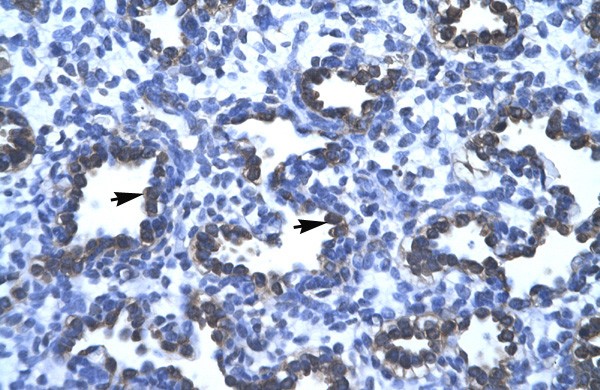
Antibody used in IHC on Human Lung.Application
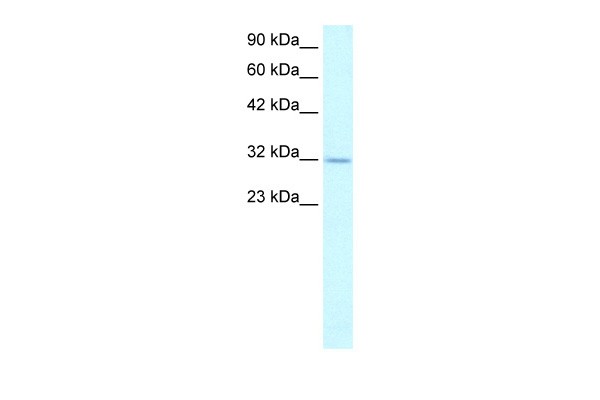
Antibody used in WB on Human HepG2 at 1.25 ug/ml.| Product Name | APEX1 Antibody |
|---|---|
| Antibody Type | Primary Antibodies |
| Antigen Alias | APEX1, APE, APX, APE1, APEN, APEX, HAP1, REF1 |
| Product description | Apurinic/apyrimidinic (AP) sites occur frequently in DNA molecules by spontaneous hydrolysis, by DNA damaging agents or by DNA glycosylases that remove specific abnormal bases. AP sites are pre-mutagenic lesions that can prevent normal DNA replication so the cell contains systems to identify and repair such sites. Class II AP endonucleases cleave the phosphodiester backbone 5' to the AP site. This gene encodes the major AP endonuclease in human cells.1) Ding, S.Z., et al., (2004) Gastroenterology 127 (3), 845-858. |
| Immunogen | Antibody produced in rabbits immunized with a synthetic peptide corresponding a region of human APEX1. |
| Clonality | Polyclonal |
|---|---|
| Host Species | Rabbit |
| Tested Applications | ELISAIHCWB |
| APEX1 antibody can be used for detection of APEX1 by ELISA at 1:312500. APEX1 antibody can be used for detection of APEX1 by western blot at 1.25 μg/mL, and HRP conjugated secondary antibody should be diluted 1:50,000 - 100,000.: |
|
| Species Reactivity | Human |
| Concentration | 1mg/ml |
| Purification | Protein A |
| Gene Symbol | APEX1 |
|---|---|
| Alternative Names | APEX1 APE APX APE1 APEN APEX HAP1 REF1 |
| Molecular Weight(MW) | 35 kDa |
Application
Antibody used in IHC on Human Lung.
Application
Antibody used in WB on Human HepG2 at 1.25 ug/ml.| Positive Control | 1) Cat. No. 1211 - HepG2 Cell Lysate |
|---|---|
| Application Notes | APEX1 antibody can be used for detection of APEX1 by ELISA at 1:312500. APEX1 antibody can be used for detection of APEX1 by western blot at 1.25 μg/mL, and HRP conjugated secondary antibody should be diluted 1:50,000 - 100,000.: |
| Form | Liquid |
|---|---|
| Storage Instructions | For short periods of storage (days) store at 4˚C. For longer periods of storage, store APEX1 antibody at -20˚C. As with any antibody avoid repeat freeze-thaw cycles. |
| Storage Buffer | IgG in phosphate buffered saline , pH 7.4, 150mM NaCl, 0.02% sodium azide and 50% glycerol.Store at -20 °C.Stable for 12 months from date of receipt |


