Application
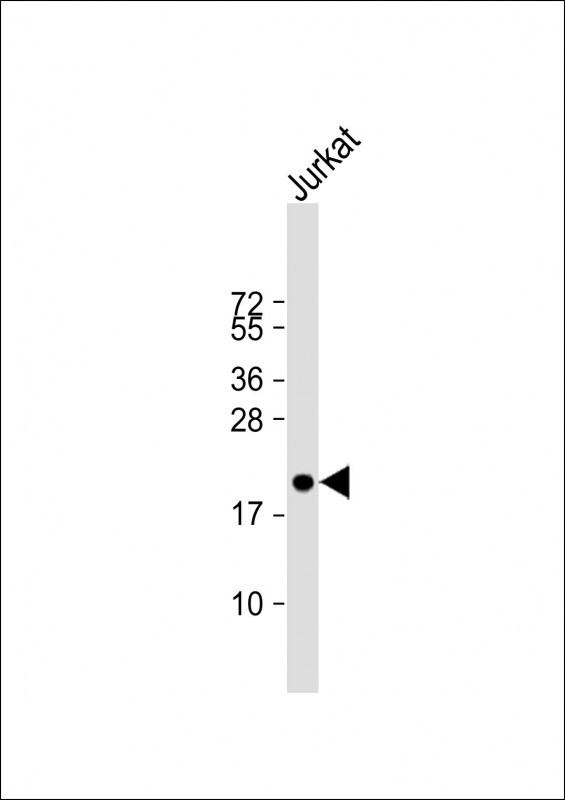
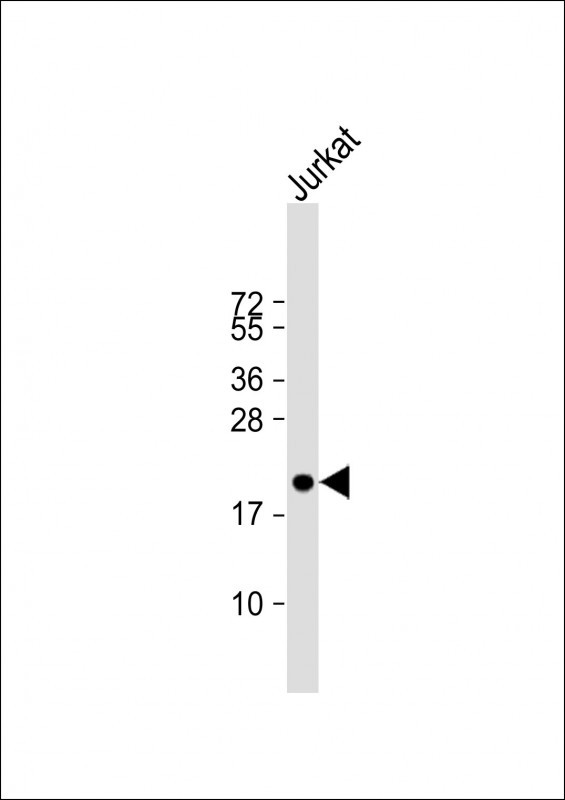
Western Blot at 1:1000 dilution + Jurkat whole cell lysate Lysates/proteins at 20 ug per lane.Application
Western Blot at 1:1000 dilution + Jurkat whole cell lysate Lysates/proteins at 20 ug per lane.| Product Name | APOBEC3A Antibody |
|---|---|
| Antibody Type | Primary Antibodies |
| Antigen Alias | DNA dC->dU-editing enzyme APOBEC-3A, A3A, 354-, Phorbolin-1, APOBEC3A |
| Product description | This gene is a member of the cytidine deaminase gene family. It is one of seven related genes or pseudogenes found in a cluster, thought to result from gene duplication, on chromosome 22. Members of the cluster encode proteins that are structurally and functionally related to the C to U RNA-editing cytidine deaminase APOBEC1. The protein encoded by this gene lacks the zinc binding activity of other family members. The protein plays a role in immunity, by restricting transmission of foreign DNA such as viruses. One mechanism of foreign DNA restriction is deamination of foreign double-stranded DNA cytidines to uridines, which leads to DNA degradation. However, other mechanisms are also thought to be involved, as anti-viral effect is not dependent on deaminase activity. One allele of this gene results from the deletion of approximately 29.5 kb of sequence between this gene, APOBEC3A, and the adjacent gene APOBEC3B. The breakpoints of the deletion are within the two genes, so the deletion allele is predicted to have the promoter and coding region of APOBEC3A, but the 3' UTR of APOBEC3B.1) Thielen, B.K., et al. J. Biol. Chem. 285(36):27753-27766(2010) |
| Immunogen | This APOBEC3A antibody is generated from rabbits immunized with a KLH conjugated synthetic peptide between 20-49 amino acids from the N-terminal region of human APOBEC3A. |
| Clonality | Polyclonal |
|---|---|
| Isotype | Ig |
| Host Species | Rabbit |
| Tested Applications | WB |
| For WB starting dilution is: 1:1000: |
|
| Species Reactivity | Human |
| Concentration | 1mg/ml |
| Purification | Affinity purified |
| Gene Symbol | APOBEC3A |
|---|---|
| Alternative Names | DNA dC->dU-editing enzyme APOBEC-3A A3A 354- Phorbolin-1 APOBEC3A |
| Molecular Weight(MW) | 23 kDa |
Application
Western Blot at 1:1000 dilution + Jurkat whole cell lysate Lysates/proteins at 20 ug per lane.
Application
Western Blot at 1:1000 dilution + Jurkat whole cell lysate Lysates/proteins at 20 ug per lane.| Application Notes | For WB starting dilution is: 1:1000: |
|---|
| Form | Liquid |
|---|---|
| Storage Instructions | Store at 4˚C for three months and -20˚C, stable for up to one year. As with all antibodies care should be taken to avoid repeated freeze thaw cycles. Antibodies should not be exposed to prolonged high temperatures. |
| Storage Buffer | Supplied in PBS with 0.09% (W/V) sodium azide. |


