Application
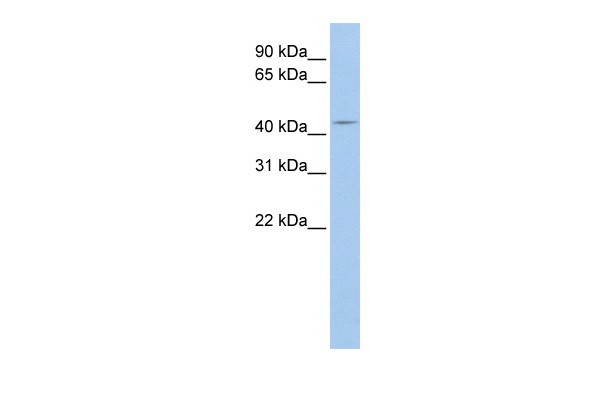
Antibody used in WB on Human Heart at 0.2-1 ug/ml.| Product Name | ATG4A Antibody |
|---|---|
| Antibody Type | Primary Antibodies |
| Antigen Alias | ATG4A, APG4A, AUTL2 |
| Product description | Autophagy is the process by which endogenous proteins and damaged organelles are destroyed intracellularly. Autophagy is postulated to be essential for cell homeostasis and cell remodeling during differentiation, metamorphosis, non-apoptotic cell death, and aging. Reduced levels of autophagy have been described in some malignant tumors, and a role for autophagy in controlling the unregulated cell growth linked to cancer has been proposed. ATG4A is a member of the autophagin protein family. ATG4A is also designated as a member of the C-54 family of cysteine proteases.Autophagy is the process by which endogenous proteins and damaged organelles are destroyed intracellularly. Autophagy is postulated to be essential for cell homeostasis and cell remodeling during differentiation, metamorphosis, non-apoptotic cell death, and aging. Reduced levels of autophagy have been described in some malignant tumors, and a role for autophagy in controlling the unregulated cell growth linked to cancer has been proposed. This gene encodes a member of the autophagin protein family. The encoded protein is also designated as a member of the C-54 family of cysteine proteases. Transcript variants that encode distinct isoforms have been identified.1) Dunham, I., (2007) EMBO J. 26 (7), 1749-1760. |
| Immunogen | Antibody produced in rabbits immunized with a synthetic peptide corresponding a region of human ATG4A. |
| Clonality | Polyclonal |
|---|---|
| Host Species | Rabbit |
| Tested Applications | ELISAWB |
| ATG4A antibody can be used for detection of ATG4A by ELISA at 1:312500. ATG4A antibody can be used for detection of ATG4A by western blot at 1 μg/mL, and HRP conjugated secondary antibody should be diluted 1:50,000 - 100,000.: |
|
| Species Reactivity | Human |
| Concentration | 1mg/ml |
| Purification | Affinity purified |
| Gene Symbol | ATG4A |
|---|---|
| Alternative Names | ATG4A APG4A AUTL2 |
| Molecular Weight(MW) | 45 kDa |
Application
Antibody used in WB on Human Heart at 0.2-1 ug/ml.| Positive Control | 1) Cat. No. XBL-10407 - Fetal Heart Tissue Lysate |
|---|---|
| Application Notes | ATG4A antibody can be used for detection of ATG4A by ELISA at 1:312500. ATG4A antibody can be used for detection of ATG4A by western blot at 1 μg/mL, and HRP conjugated secondary antibody should be diluted 1:50,000 - 100,000.: |
| Form | Liquid |
|---|---|
| Storage Instructions | For short periods of storage (days) store at 4˚C. For longer periods of storage, store ATG4A antibody at -20˚C. As with any antibody avoid repeat freeze-thaw cycles. |
| Storage Buffer | Antibody is lyophilized in PBS buffer with 2% sucrose. Add 50 μL of distilled water. Final antibody concentration is 1 mg/mL. |


