Application
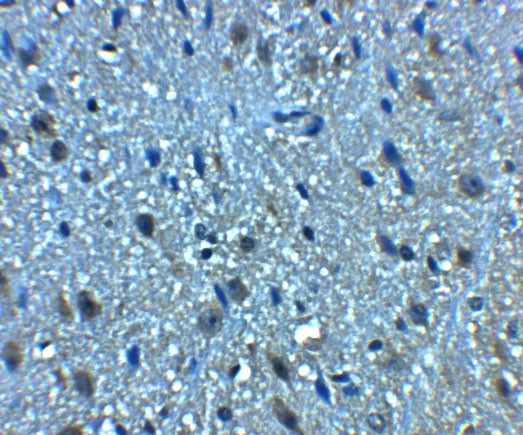
Immunohistochemistry of BCLAF1 in mouse brain tissue with BCLAF1 antibody at 5 μg/mL.Application
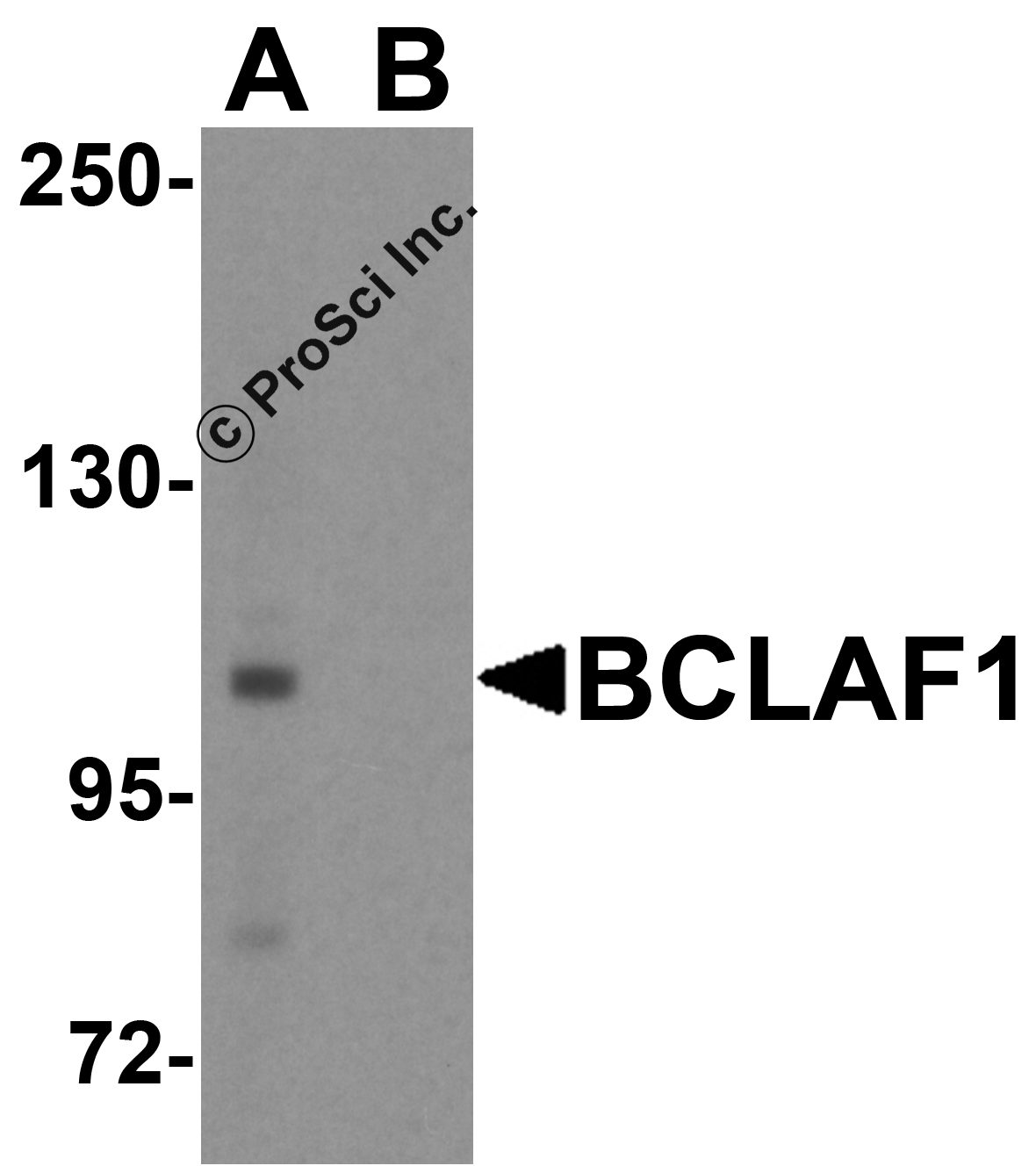
Western blot analysis of BCLAF1 in human brain tissue lysate with BCLAF1 antibody at 1 μg/ml.| Product Name | BCLAF1 Antibody |
|---|---|
| Antibody Type | Primary Antibodies |
| Product description | The BCL2-associated transcription factor 1 (BCLAF1) is a transcriptional repressor that interacts with several members of the BCL2 family of proteins. Overexpression of this protein induces apoptosis, which can be suppressed by co-expression of BCL2 proteins (1). BCLAF1 localizes to dot-like structures throughout the nucleus, and redistributes to a zone near the nuclear envelope in cells undergoing apoptosis. (2). More recent studies have suggested BCLAF1 plays roles in processes not associated with actions of the BCL2 family members, including lung development, T cell activation, and post-transcriptional processes that affect mRNA metabolism (3).1) Kasof GM, Goyal L, and White E. Btf, a novel death-promoting transcriptional repressor that interacts with Bcl-2-related proteins. Mol. Cell Biol. 1999; 19:4390-404. |
| Immunogen | BCLAF1 antibody was raised against a 19 amino acid peptide near the carboxy terminus of human BCLAF1. The immunogen is located within amino acids 820 - 870 of BCLAF1. |
| Clonality | Polyclonal |
|---|---|
| Isotype | IgG |
| Host Species | Rabbit |
| Tested Applications | ELISAIHC-PWB |
| BCLAF1 antibody can be used for detection of BCLAF1 by Western blot at 0.5 - 1 μg/ml. Antibody can also be used for immunohistochemistry starting at 5 μg/mL. | |
| Species Reactivity | HumanMouseRat |
| Concentration | 1mg/ml |
| Purification | Affinity purified |
| Gene Symbol | BCLAF1 |
|---|---|
| Alternative Names | BCL2-associated transcription factor 1 |
| Molecular Weight(MW) | Predicted: 101 kDa Observed: 105 kDa |
| Tissue Specificity | BCLAF1 antibody is human, mouse and rat reactive. At least four isoforms of BCLAF1 are known to exist; this antibody will detect all but isoform 2. |
Application
Immunohistochemistry of BCLAF1 in mouse brain tissue with BCLAF1 antibody at 5 μg/mL.
Application
Western blot analysis of BCLAF1 in human brain tissue lysate with BCLAF1 antibody at 1 μg/ml.| Positive Control | 1) Cat. No. 1282 - 3T3 (NIH) Cell Lysate |
|---|---|
| Application Notes | BCLAF1 antibody can be used for detection of BCLAF1 by Western blot at 0.5 - 1 μg/ml. Antibody can also be used for immunohistochemistry starting at 5 μg/mL. |
| Form | Liquid |
|---|---|
| Storage Instructions | BCLAF1 antibody can be stored at 4˚C for three months and -20˚C, stable for up to one year. |
| Storage Buffer | BCLAF1 antibody is supplied in PBS containing 0.02% sodium azide. |


