Application
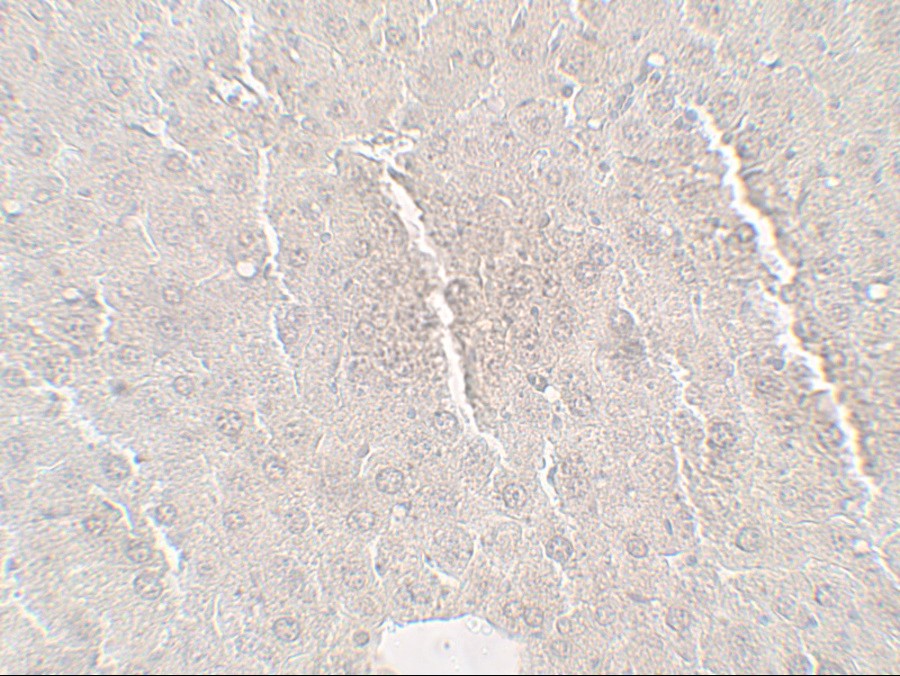
Immunohistochemistry of Betatrophin in mouse liver tissue with Betatrophin antibody at 5 μg/mL.Application
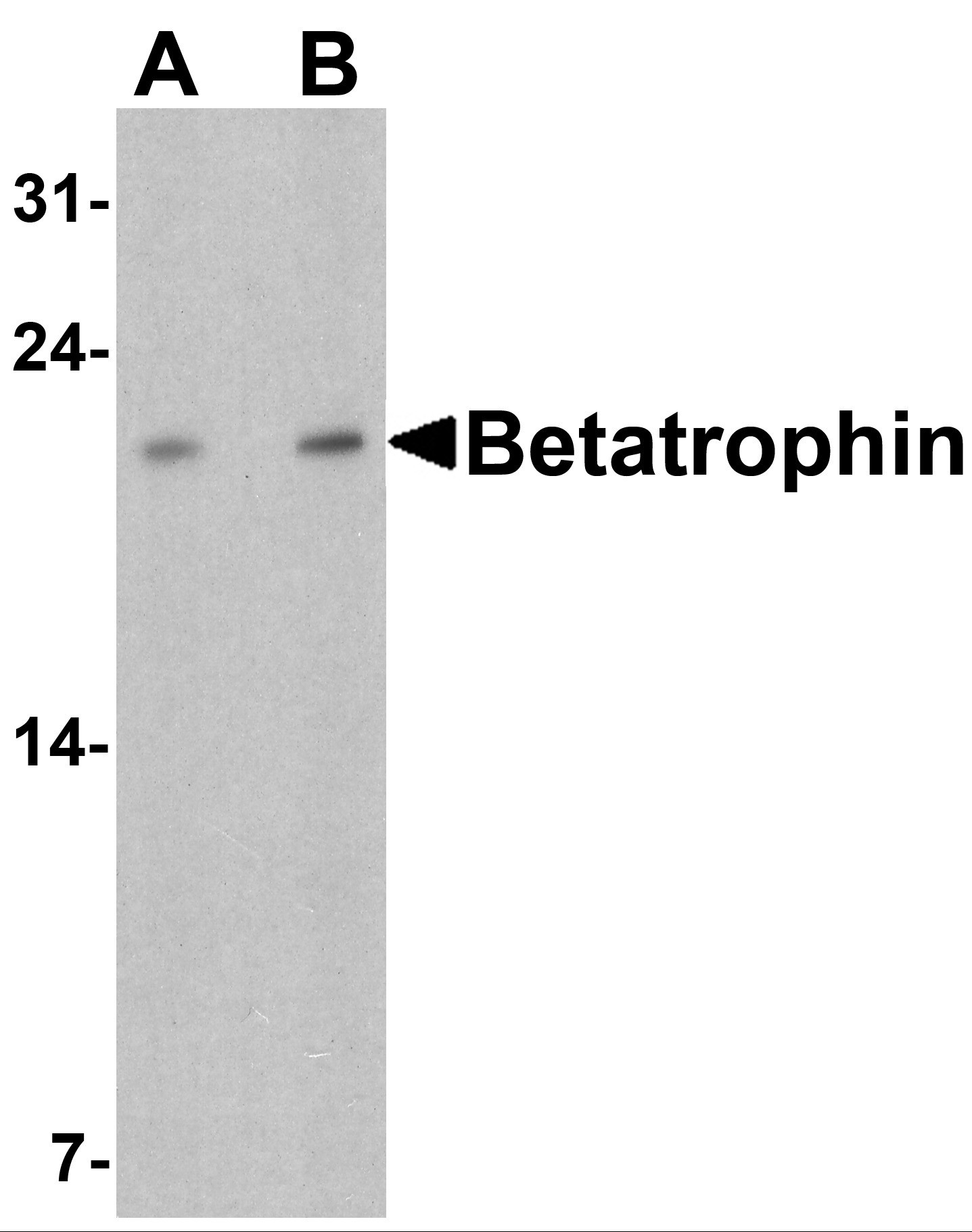
Western blot analysis of Betatrophin in rat liver tissue lysate with Betatrophin antibody at (A) 1 and (B) 2 μg/ml.| Product Name | Betatrophin Antibody |
|---|---|
| Antibody Type | Primary Antibodies |
| Product description | The Betatrophin protein, also known as the hepatocellular carcinoma-associated protein TD26, is an adipocyte- and liver-enriched insulin targeted gene that is thought to play a role in lipid metabolism be regulating serum triglyceride levels (1,2). Betatrophin is closely related to the angiopoietin-like (ANGPTL) protein family. Betatrophin mRNA increases in the cold environment and after treatment with a high-fat diet, while its mRNA levels decrease in response to fasting, suggesting that it may play a role in mediating thermogenesis and energy homeostasis (3).1) Ren G, Kim JY, and Smas CM. Identification of RIFL, a novel adipocyte-enriched insulin target gene with a role in lipid metabolism. Am. J. Endocrinol. Metab. 2012; 303:E334-51. |
| Immunogen | Betatrophin antibody was raised against a 16 amino acid peptide near the amino terminus of human Betatrophin. The immunogen is located within amino acids 40 - 90 of Betatrophin. |
| Clonality | Polyclonal |
|---|---|
| Isotype | IgG |
| Host Species | Rabbit |
| Tested Applications | ELISAIHC-PWB |
| WB:1:500~1:2000 IHC-P:1:50~1:200 |
|
| Species Reactivity | HumanMouseRat |
| Concentration | 1mg/ml |
| Purification | Affinity purified |
| Gene Symbol | C19orf80 |
|---|---|
| Alternative Names | Betatrophin Antibody: RIFL TD26 ANGPTL8 PRO1185 PVPA599 Angptl8 UNQ599/PRO1185 Betatrophin Angiopoietin-like protein 8 |
| Molecular Weight(MW) | Predicted: 22 kDa Observed: 22 kDa |
| Tissue Specificity | Betatrophin antibody is human, mouse and rat reactive. At least three isoforms of Betatrophin are known to exist; this antibody will detect the two largest isoforms. |
Application
Immunohistochemistry of Betatrophin in mouse liver tissue with Betatrophin antibody at 5 μg/mL.
Application
Western blot analysis of Betatrophin in rat liver tissue lysate with Betatrophin antibody at (A) 1 and (B) 2 μg/ml.| Positive Control | Rat Liver Tissue Lysate |
|---|---|
| Application Notes | WB:1:500~1:2000 IHC-P:1:50~1:200 |
| Form | Liquid |
|---|---|
| Storage Instructions | Betatrophin antibody can be stored at 4˚C for three months and -20˚C, stable for up to one year. |
| Storage Buffer | Betatrophin antibody is supplied in PBS containing 0.02% sodium azide. |


