Application
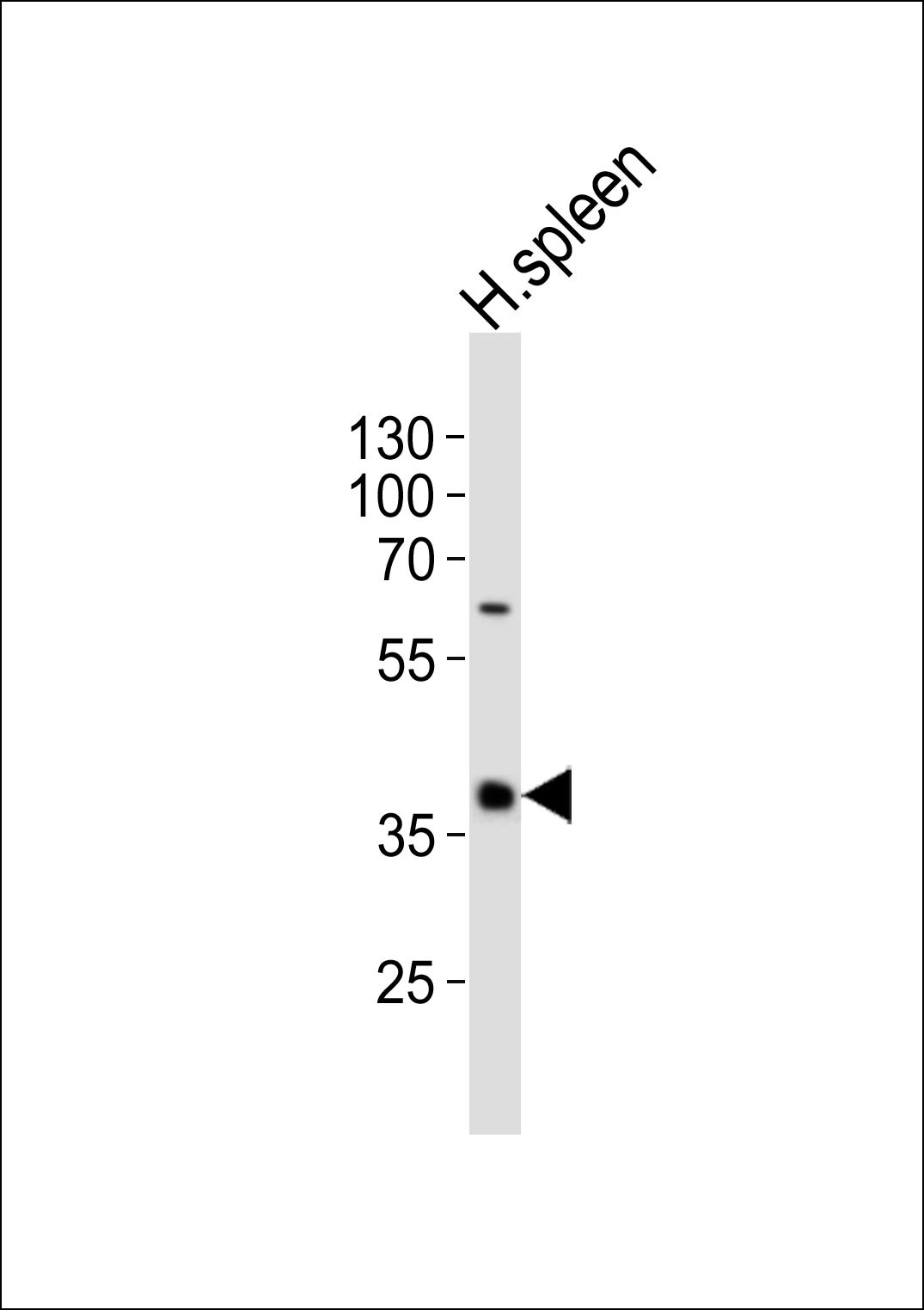
Western blot analysis of lysate from human spleen tissue lysate, using CD40 Antibody at 1:1000.Application
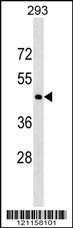
Western blot analysis in 293 cell line lysates (35ug/lane).| Product Name | CD40 Antibody |
|---|---|
| Antibody Type | Primary Antibodies |
| Product description | The protein encoded by this gene is a member of the TNF-receptor superfamily. This receptor has been found to be essential in mediating a broad variety of immune and inflammatory responses including T cell-dependent immunoglobulin class switching, memory B cell development, and germinal center formation. AT-hook transcription factor AKNA is reported to coordinately regulate the expression of this receptor and its ligand, which may be important for homotypic cell interactions. Adaptor protein TNFR2 interacts with this receptor and serves as a mediator of the signal transduction. The interaction of this receptor and its ligand is found to be necessary for amyloid-beta-induced microglial activation, and thus is thought to be an early event in Alzheimer disease pathogenesis. Two alternatively spliced transcript variants of this gene encoding distinct isoforms have been reported.1) Rodriguez-Rodriguez, L., et al. J. Rheumatol. 37(10):2076-2080(2010) |
| Immunogen | This CD40 antibody is generated from rabbits immunized with a KLH conjugated synthetic peptide between 247-276 amino acids from the C-terminal region of human CD40. |
| Clonality | Polyclonal |
|---|---|
| Isotype | Ig |
| Host Species | Rabbit |
| Tested Applications | WB |
| For WB starting dilution is: 1:1000 | |
| Species Reactivity | Human |
| Concentration | 1mg/ml |
| Purification | Affinity purified |
| Gene Symbol | CD40 |
|---|---|
| Alternative Names | Tumor necrosis factor receptor superfamily member 5 B-cell surface antigen CD40 Bp50 CD40L receptor CDw40 CD40 CD40 TNFRSF5 |
| Molecular Weight(MW) | 31 kDa |
| Sequence Similarities | Predicted species reactivity based on immunogen sequence: Mouse |
Application
Western blot analysis of lysate from human spleen tissue lysate, using CD40 Antibody at 1:1000.
Application
Western blot analysis in 293 cell line lysates (35ug/lane).| Application Notes | For WB starting dilution is: 1:1000 |
|---|
| Form | Liquid |
|---|---|
| Storage Instructions | Store at 4˚C for three months and -20˚C, stable for up to one year. As with all antibodies care should be taken to avoid repeated freeze thaw cycles. Antibodies should not be exposed to prolonged high temperatures. |
| Storage Buffer | Supplied in PBS with 0.09% (W/V) sodium azide. |


