Application
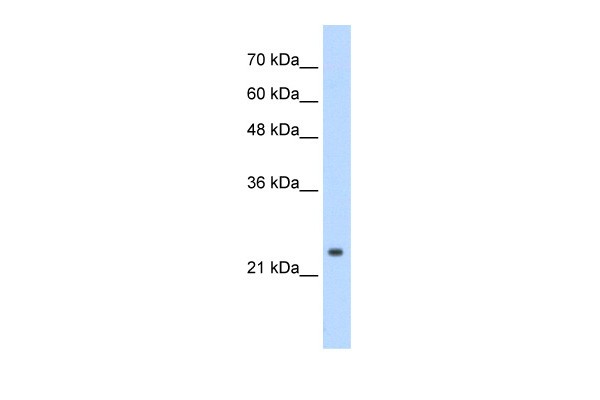
Antibody used in WB on Human Jurkat 0.2-1 ug/ml.| Product Name | CPSF4 Antibody |
|---|---|
| Antibody Type | Primary Antibodies |
| Product description | Inhibition of the nuclear export of poly (A)-containing mRNAs caused by the influenza A virus NS1 protein requires its effector domain. The NS1 effector domain functionally interacts with the cellular 30 kDa subunit of cleavage and polyadenylation specific factor 4, an essential component of the 3' end processing machinery of cellular pre-mRNAs. In influenza virus-infected cells, the NS1 protein is physically associated with cleavage and polyadenylation specific factor 4, 30kD subunit. Binding of the NS1 protein to the 30 kDa protein in vitro prevents CPSF binding to the RNA substrate and inhibits 3' end cleavage and polyadenylation of host pre-mRNAs. Thus the NS1 protein selectively inhibits the nuclear export of cellular, and not viral, mRNAs. |
| Immunogen | Antibody produced in rabbits immunized with a synthetic peptide corresponding a region of human CPSF4. |
| Clonality | Polyclonal |
|---|---|
| Host Species | Rabbit |
| Tested Applications | ELISAWB |
| CPSF4 antibody can be used for detection of CPSF4 by ELISA at 1:62500. CPSF4 antibody can be used for detection of CPSF4 by western blot at 0.5 μg/mL, and HRP conjugated secondary antibody should be diluted 1:50,000 - 100,000. | |
| Species Reactivity | DogHumanMouseRat |
| Concentration | 1mg/ml |
| Purification | Affinity purified |
| Gene Symbol | CPSF4 |
|---|---|
| Alternative Names | CPSF4 CPSF30 NAR NEB1 |
| Molecular Weight(MW) | 24 kDa, 28 kDa, 30 kDa |
Application
Antibody used in WB on Human Jurkat 0.2-1 ug/ml.| Positive Control | 1) Cat. No. 1205 - Jurkat Cell Lysate |
|---|---|
| Application Notes | CPSF4 antibody can be used for detection of CPSF4 by ELISA at 1:62500. CPSF4 antibody can be used for detection of CPSF4 by western blot at 0.5 μg/mL, and HRP conjugated secondary antibody should be diluted 1:50,000 - 100,000. |
| Form | Liquid |
|---|---|
| Storage Instructions | For short periods of storage (days) store at 4˚C. For longer periods of storage, store CPSF4 antibody at -20˚C. As with any antibody avoid repeat freeze-thaw cycles. |
| Storage Buffer | Antibody is lyophilized in PBS buffer with 2% sucrose. Add 50 μL of distilled water. Final antibody concentration is 1 mg/mL. |


