Application
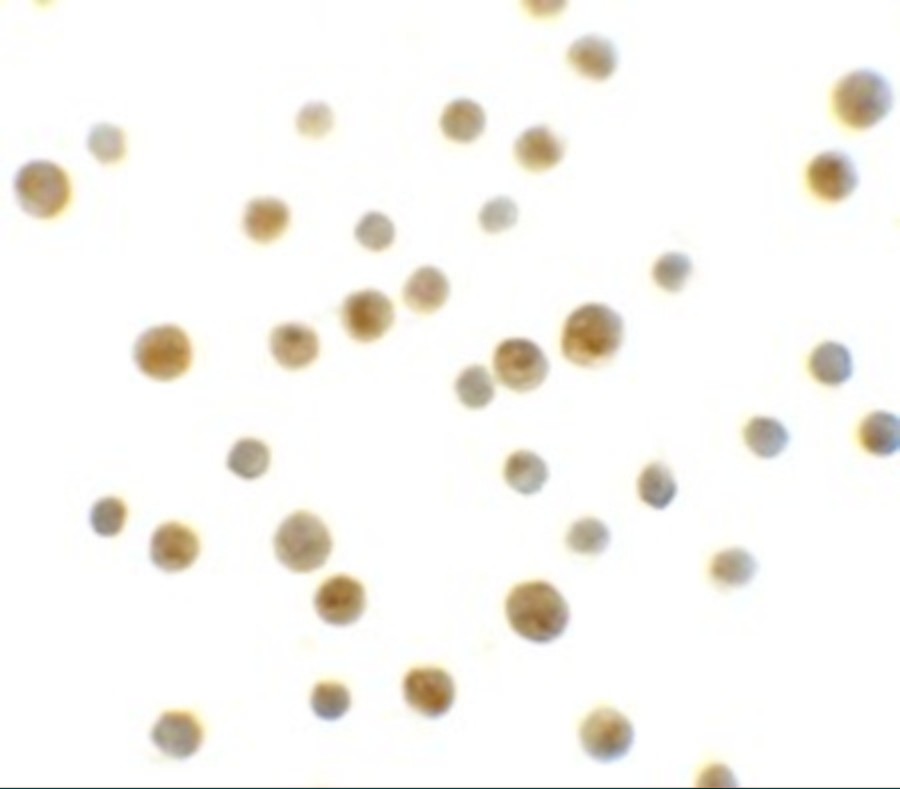
Immunocytochemistry of DYRK1A in HeLa cells with DYRK1A antibody at 10 μg/mL.Application
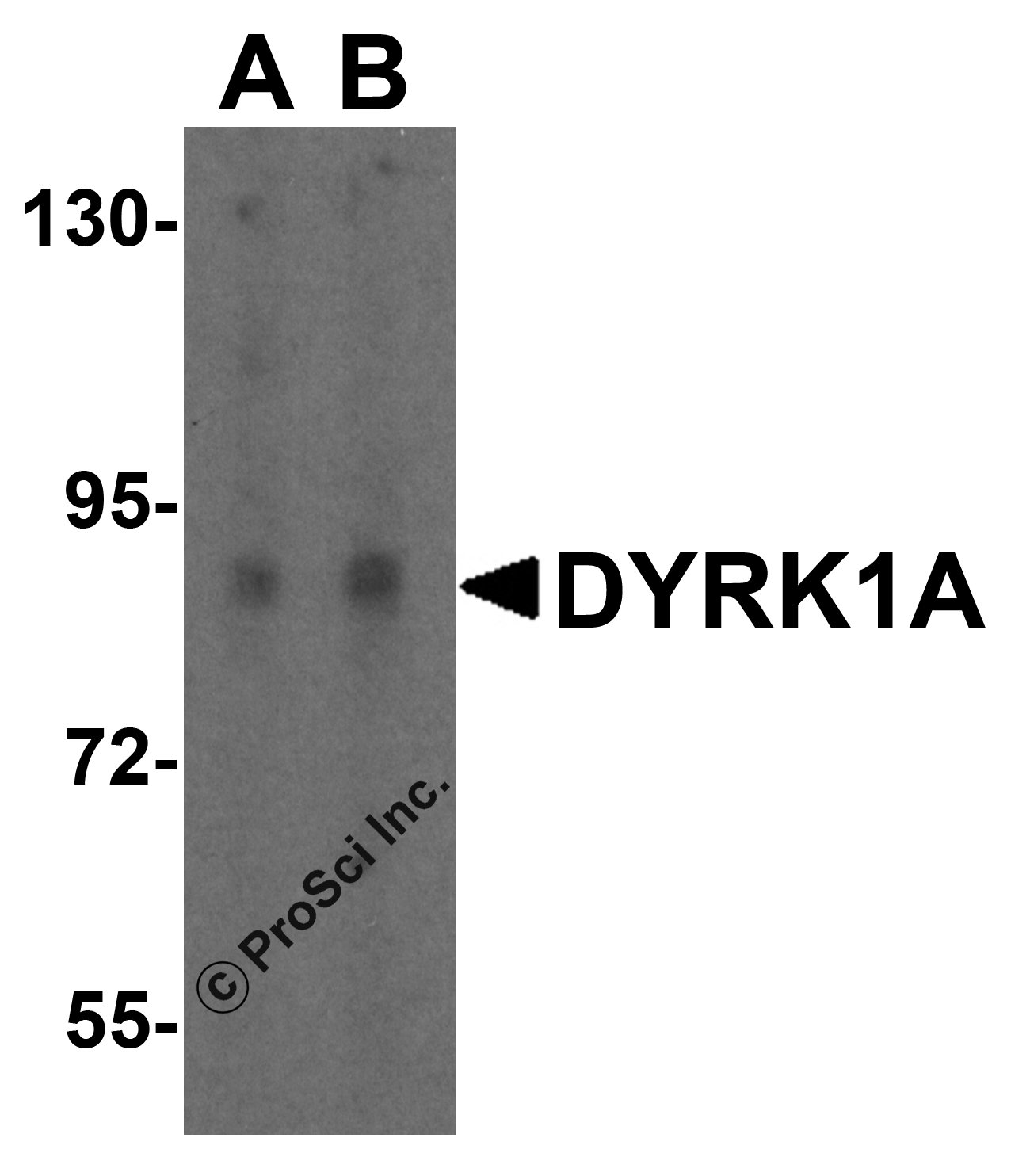
Western blot analysis of DYRK1A in HeLa cell lysate with DYRK1A antibody at (A) 1 and (B) 2 μg/mL.| Product Name | DYRK1A Antibody |
|---|---|
| Antibody Type | Primary Antibodies |
| Antigen Alias | DYRK1A Antibody: MNB, DYRK, HP86, MNBH, MRD7, DYRK1, MNB, Dual specificity tyrosine-phosphorylation-regulated kinase 1A, Dual specificity YAK1-related kinase |
| Product description | DYRK1A Antibody: DYRK1A is a member of the dual-specificity tyrosine phosphorylation-regulated kinase (DYRK) family and is thought to be involved in neuronal differentiation, neurodegenerative diseases, and is considered to be a strong candidate gene for learning defects associated with Down syndrome. DYRK1A phosphorylates several transcription factors such as p53, leading to inhibition of embryonic neuronal cell proliferation. DYRK1A associates with multiple proteins, including SPRED1 and SPRED2; this association appears to inhibit the phosphorylation activity of DYRK1A. Recent evidence also suggests that DYRK1A may be involved in the replication of HIV-1.1) Park J, Oh Y, and Chung KC. Two key genes closely implicated with the neuropathological characteristics in Down Syndrome: DYRK1A and RCAN1. BMB Reports 2009; 42:6-15. |
| Immunogen | DYRK1A antibody was raised against a 17 amino acid synthetic peptide near the carboxy terminus of human DYRK1A. The immunogen is located within the last 50 amino acids of DYRK1A. |
| Clonality | Polyclonal |
|---|---|
| Isotype | IgG |
| Host Species | Rabbit |
| Tested Applications | ELISAICCWB |
| DYRK1A antibody can be used for detection of DYRK1A by Western blot at 1 - 2 μg/mL. Antibody can also be used for immunocytochemistry starting at 10 μg/mL.: |
|
| Species Reactivity | HumanMouseRat |
| Concentration | 1mg/ml |
| Purification | Affinity purified |
| Gene Symbol | DYRK1A |
|---|---|
| Alternative Names | DYRK1A Antibody: MNB DYRK HP86 MNBH MRD7 DYRK1 MNB Dual specificity tyrosine-phosphorylation-regulated kinase 1A Dual specificity YAK1-related kinase |
| Molecular Weight(MW) | Predicted: 84 kDa Observed: 90 kDa |
| Sequence Similarities | 2) Cat. No. 17-001 - HeLa Cell Slide |
| Tissue Specificity | Multiple isoforms of DYRK1A are known to exist. DYRK1A antibody will not cross-react with other DYRK family members |
Application
Immunocytochemistry of DYRK1A in HeLa cells with DYRK1A antibody at 10 μg/mL.
Application
Western blot analysis of DYRK1A in HeLa cell lysate with DYRK1A antibody at (A) 1 and (B) 2 μg/mL.| Positive Control | 1) Cat. No. 1201 - HeLa Cell Lysate |
|---|---|
| Application Notes | DYRK1A antibody can be used for detection of DYRK1A by Western blot at 1 - 2 μg/mL. Antibody can also be used for immunocytochemistry starting at 10 μg/mL.: |
| Form | Liquid |
|---|---|
| Storage Instructions | DYRK1A antibody can be stored at 4˚C for three months and -20˚C, stable for up to one year. As with all antibodies care should be taken to avoid repeated freeze thaw cycles. Antibodies should not be exposed to prolonged high temperatures. |
| Storage Buffer | DYRK1A Antibody is supplied in PBS containing 0.02% sodium azide. |


