Application
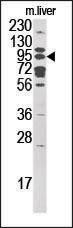
Western blot analysis of anti-GCS1 Pab in mouse liver cell line lysate (35ug/lane)| Product Name | GCS1 Antibody |
|---|---|
| Antibody Type | Primary Antibodies |
| Product description | GCS1 cleaves the distal alpha 1,2-linked glucose residue from the Glc(3)Man(9)GlcNAc(2) oligosaccharide precursor in a highly specific manner. Defects in GCS1 are the cause of type IIb congenital disorder of glycosylation (CDGIIb). This syndrome is also known as glucosidase I deficiency and is characterized by marked generalized hypotonia and hypomotility of the neonate, dysmorphic features, including a prominent occiput, short palpebral fissures, retrognathia, high arched palate, generalized edema, and hypoplastic genitalia. Symptoms include hepatomegaly, hypoventilation, feeding problems and seizures. The clinical course is progressive and survival is at most a few months.1) Volker, C., et al., Glycobiology 12(8):473-483 (2002). |
| Immunogen | This GCS1 antibody is generated from rabbits immunized with a KLH conjugated synthetic peptide between 796-826 amino acids from the C-terminal region of human GCS1. |
| Clonality | Polyclonal |
|---|---|
| Isotype | Ig |
| Host Species | Rabbit |
| Tested Applications | WB |
| For WB starting dilution is: 1:1000 | |
| Species Reactivity | HumanMouse |
| Concentration | 1mg/ml |
| Purification | Unpurified |
| Gene Symbol | MOGS |
|---|---|
| Alternative Names | Mannosyl-oligosaccharide glucosidase Processing A-glucosidase I MOGS GCS1 |
| Molecular Weight(MW) | 92 kDa |
Application
Western blot analysis of anti-GCS1 Pab in mouse liver cell line lysate (35ug/lane)| Application Notes | For WB starting dilution is: 1:1000 |
|---|
| Form | Liquid |
|---|---|
| Storage Instructions | Store at 4˚C for three months and -20˚C, stable for up to one year. As with all antibodies care should be taken to avoid repeated freeze thaw cycles. Antibodies should not be exposed to prolonged high temperatures. |
| Storage Buffer | Supplied in PBS with 0.09% (W/V) sodium azide. |


