Application
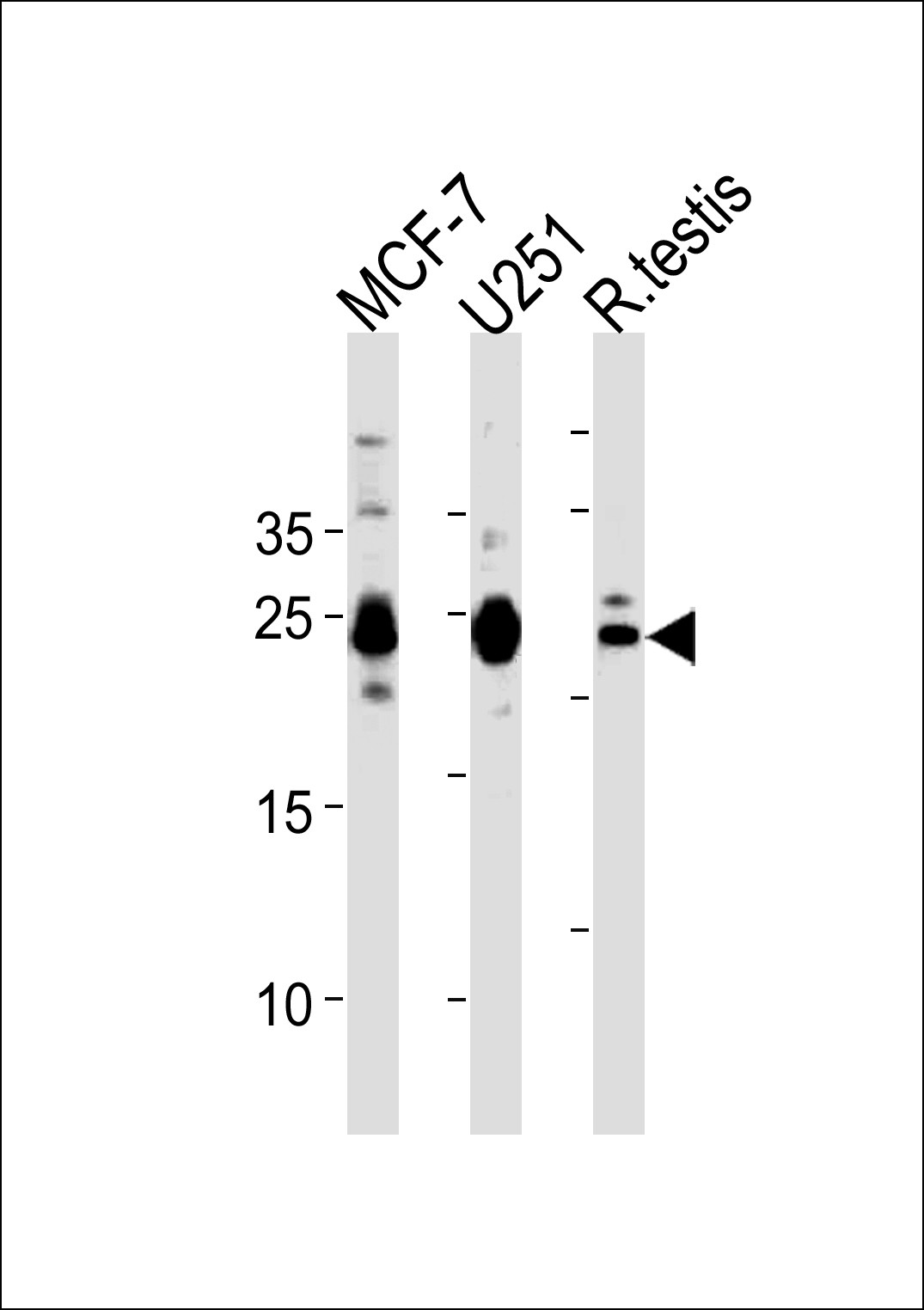
Western blot analysis in MCF-7,U251 cell line and rat testis tissue lysates (35ug/lane).Application
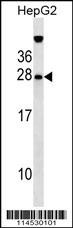
Western blot analysis in HepG2 cell line lysates (35ug/lane).| Product Name | GFER Antibody |
|---|---|
| Antibody Type | Primary Antibodies |
| Antigen Alias | FAD-linked sulfhydryl oxidase ALR, Augmenter of liver regeneration, hERV1, Hepatopoietin, GFER, ALR, HERV1, HPO |
| Product description | The hepatotrophic factor designated augmenter of liver regeneration (ALR) is thought to be one of the factors responsible for the extraordinary regenerative capacity of mammalian liver. It has also been called hepatic regenerative stimulation substance (HSS). The gene resides on chromosome 16 in the interval containing the locus for polycystic kidney disease (PKD1). The putative gene product is 42% similar to the scERV1 protein of yeast. The yeast scERV1 gene had been found to be essential for oxidative phosphorylation, the maintenance of mitochondrial genomes, and the cell division cycle. The human gene is both the structural and functional homolog of the yeast scERV1 gene.1) Dong, L.Y., et al. Biochem. J. 431(2):277-287(2010) Li, W., et al. FEBS Lett. 584(18):3929-3935(2010) Daithankar, V.N., et al. Biochemistry 49(31):6737-6745(2010) Dayoub, R., et al. Biochem. Biophys. Res. Commun. 395(4):465-470(2010) Chang, J., et al. World J. Gastroenterol. 16(2):193-200(2010) |
| Immunogen | This GFER antibody is generated from rabbits immunized with a KLH conjugated synthetic peptide between 67-94 amino acids from the Central region of human GFER. |
| Clonality | Polyclonal |
|---|---|
| Isotype | Ig |
| Host Species | Rabbit |
| Tested Applications | WB |
| For WB starting dilution is: 1:1000: |
|
| Species Reactivity | Human |
| Concentration | 1mg/ml |
| Purification | Affinity purified |
| Gene Symbol | GFER |
|---|---|
| Alternative Names | FAD-linked sulfhydryl oxidase ALR Augmenter of liver regeneration hERV1 Hepatopoietin GFER ALR HERV1 HPO |
| Molecular Weight(MW) | 23 kDa |
Application
Western blot analysis in MCF-7,U251 cell line and rat testis tissue lysates (35ug/lane).
Application
Western blot analysis in HepG2 cell line lysates (35ug/lane).| Application Notes | For WB starting dilution is: 1:1000: |
|---|
| Form | Liquid |
|---|---|
| Storage Instructions | Store at 4˚C for three months and -20˚C, stable for up to one year. As with all antibodies care should be taken to avoid repeated freeze thaw cycles. Antibodies should not be exposed to prolonged high temperatures. |
| Storage Buffer | Supplied in PBS with 0.09% (W/V) sodium azide. |


