Application
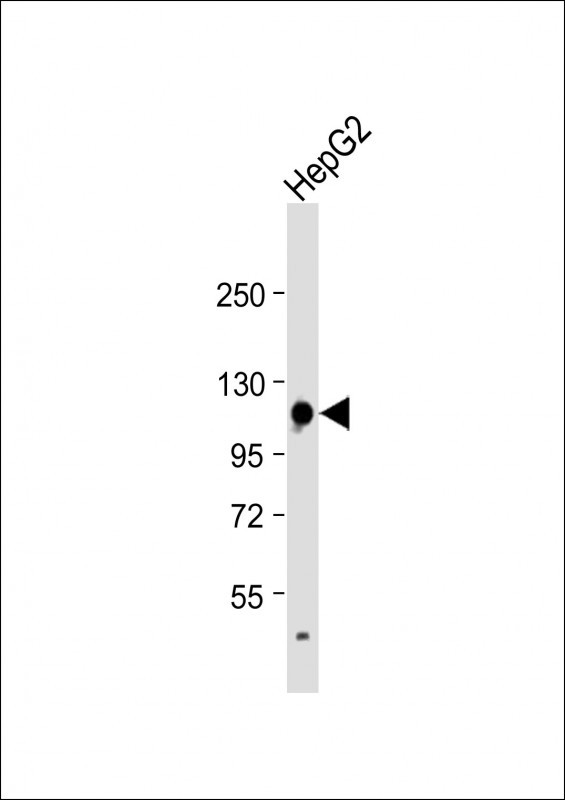
Western Blot at 1:1000 dilution + HepG2 whole cell lysate Lysates/proteins at 20 ug per lane.Application
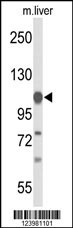
Western blot analysis of GLDC Antibody in mouse liver tissue lysates (35ug/lane)| Product Name | GLDC Antibody |
|---|---|
| Antibody Type | Primary Antibodies |
| Antigen Alias | Glycine dehydrogenase (decarboxylating), mitochondrial, Glycine cleavage system P protein, Glycine decarboxylase, Glycine dehydrogenase (aminomethyl-transferring), GLDC, GCSP |
| Product description | Degradation of glycine is brought about by the glycine cleavage system, which is composed of four mitochondrial protein components: P protein (a pyridoxal phosphate-dependent glycine decarboxylase), H protein (a lipoic acid-containing protein), T protein (a tetrahydrofolate-requiring enzyme), and L protein (a lipoamide dehydrogenase). The protein is the P protein, which binds to glycine and enables the methylamine group from glycine to be transferred to the T protein. Defects in this gene are a cause of nonketotic hyperglycinemia (NKH).1) Chang, C.Y., et al. Acta Paediatr Taiwan 49(1):35-37(2008) |
| Immunogen | This GLDC antibody is generated from rabbits immunized with a KLH conjugated synthetic peptide between 49-77 amino acids from the N-terminal region of human GLDC. |
| Clonality | Polyclonal |
|---|---|
| Isotype | Ig |
| Host Species | Rabbit |
| Tested Applications | WB |
| For WB starting dilution is: 1:1000: |
|
| Species Reactivity | HumanMouse |
| Concentration | 1mg/ml |
| Purification | Affinity purified |
| Gene Symbol | GLDC |
|---|---|
| Alternative Names | Glycine dehydrogenase (decarboxylating) mitochondrial Glycine cleavage system P protein Glycine decarboxylase Glycine dehydrogenase (aminomethyl-transferring) GLDC GCSP |
| Molecular Weight(MW) | 113 kDa |
Application
Western Blot at 1:1000 dilution + HepG2 whole cell lysate Lysates/proteins at 20 ug per lane.
Application
Western blot analysis of GLDC Antibody in mouse liver tissue lysates (35ug/lane)| Application Notes | For WB starting dilution is: 1:1000: |
|---|
| Form | Liquid |
|---|---|
| Storage Instructions | Store at 4˚C for three months and -20˚C, stable for up to one year. As with all antibodies care should be taken to avoid repeated freeze thaw cycles. Antibodies should not be exposed to prolonged high temperatures. |
| Storage Buffer | Supplied in PBS with 0.09% (W/V) sodium azide. |


