Application
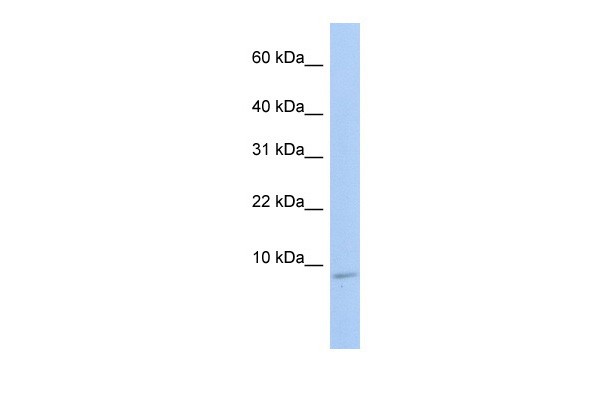
Antibody used in WB on Human Brain at 0.2-1 ug/ml.| Product Name | HSBP1 Antibody |
|---|---|
| Antibody Type | Primary Antibodies |
| Antigen Alias | HSBP1, DKFZp686D1664, DKFZp686O24200, NPC-A-13 |
| Product description | The heat-shock response is elicited by exposure of cells to thermal and chemical stress and through the activation of HSFs (heat shock factors) results in the elevated expression of heat-shock induced genes. Heat shock factor binding protein 1 (HSBP1), is a 76-amino-acid protein that binds to heat shock factor 1 (HSF1), which is a transcription factor involved in the HS response. During HS response, HSF1 undergoes conformational transition from an inert non-DNA-binding monomer to active functional trimers. HSBP1 is nuclear-localized and interacts with the active trimeric state of HSF1 to negatively regulate HSF1 DNA-binding activity. Overexpression of HSBP1 in mammalian cells represses the transactivation activity of HSF1. When overexpressed in C.elegans HSBP1 has severe effects on survival of the animals after thermal and chemical stress consistent with a role of HSBP1 as a negative regulator of heat shock response.The heat-shock response is elicited by exposure of cells to thermal and chemical stress and through the activation of HSFs (heat shock factors) results in the elevated expression of heat-shock induced genes. Heat shock factor binding protein 1 (HSBP1), is a 76-amino-acid protein that binds to heat shock factor 1 (HSF1), which is a transcription factor involved in the HS response. During HS response, HSF1 undergoes conformational transition from an inert non-DNA-binding monomer to active functional trimers. HSBP1 is nuclear-localized and interacts with the active trimeric state of HSF1 to negatively regulate HSF1 DNA-binding activity. Overexpression of HSBP1 in mammalian cells represses the transactivation activity of HSF1. When overexpressed in C.elegans HSBP1 has severe effects on survival of the animals after thermal and chemical stress consistent with a role of HSBP1 as a negative regulator of heat shock response.1) Tai, L.J., (2002) J. Biol. Chem. 277 (1), 735-745. |
| Immunogen | Antibody produced in rabbits immunized with a synthetic peptide corresponding a region of human HSBP1. |
| Clonality | Polyclonal |
|---|---|
| Host Species | Rabbit |
| Tested Applications | ELISAWB |
| HSBP1 antibody can be used for detection of HSBP1 by ELISA at 1:312500. HSBP1 antibody can be used for detection of HSBP1 by western blot at 1 μg/mL, and HRP conjugated secondary antibody should be diluted 1:50,000 - 100,000.: |
|
| Species Reactivity | Human |
| Concentration | 1mg/ml |
| Purification | Affinity purified |
| Gene Symbol | HSBP1 |
|---|---|
| Alternative Names | HSBP1 DKFZp686D1664 DKFZp686O24200 NPC-A-13 |
| Molecular Weight(MW) | 8 kDa |
Application
Antibody used in WB on Human Brain at 0.2-1 ug/ml.| Positive Control | 1) Cat. No. XBL-10123 - Fetal Brain Tissue Lysate |
|---|---|
| Application Notes | HSBP1 antibody can be used for detection of HSBP1 by ELISA at 1:312500. HSBP1 antibody can be used for detection of HSBP1 by western blot at 1 μg/mL, and HRP conjugated secondary antibody should be diluted 1:50,000 - 100,000.: |
| Form | Liquid |
|---|---|
| Storage Instructions | For short periods of storage (days) store at 4˚C. For longer periods of storage, store HSBP1 antibody at -20˚C. As with any antibody avoid repeat freeze-thaw cycles. |
| Storage Buffer | Antibody is lyophilized in PBS buffer with 2% sucrose. Add 50 μL of distilled water. Final antibody concentration is 1 mg/mL. |


