Application
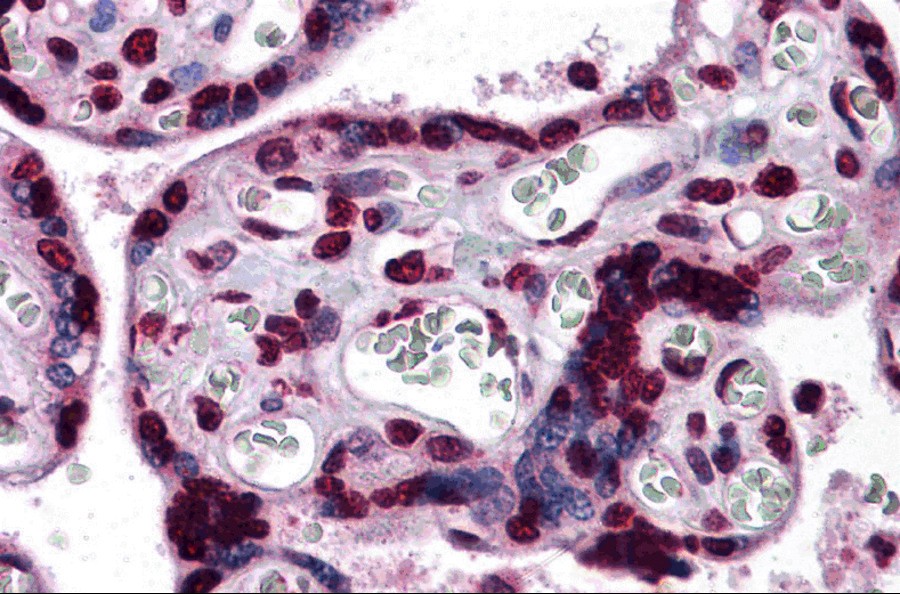
Immunohistochemistry of KPNA7 in human placenta tissue with KPNA7 antibody at 5 μg/mL.Application
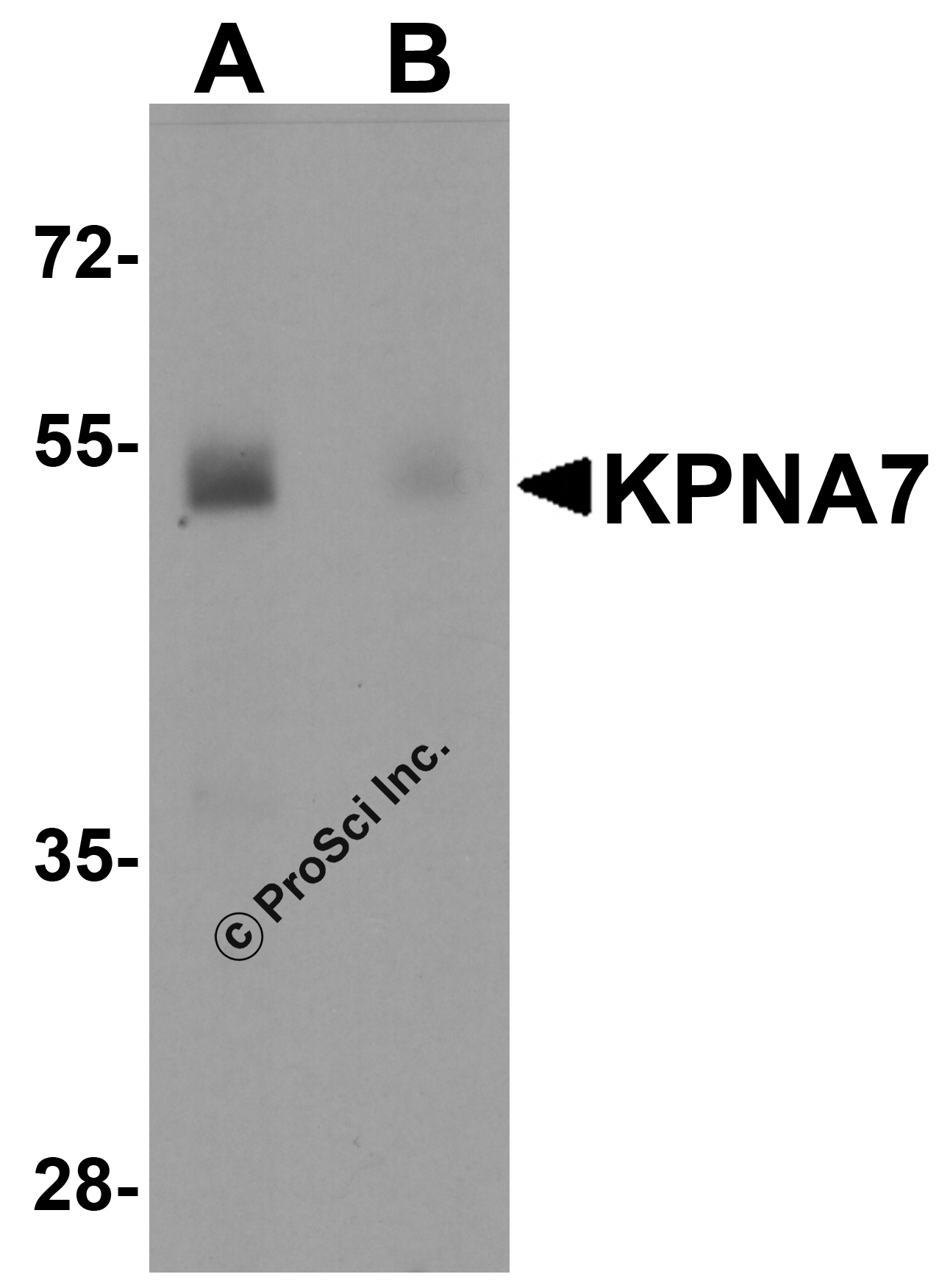
Western blot analysis of KPNA7 in human spleen with KPNA7 antibody at 1 μg/ml in (A) the absence and (B) the presence of blocking peptide.| Product Name | KPNA7 Antibody |
|---|---|
| Antibody Type | Primary Antibodies |
| Antigen Alias | KPNA7 Antibody: Importin subunit alpha-8, Karyopherin subunit alpha-7 |
| Product description | KPNA7 Antibody: Karyopherin, a cytosolic and heterodimeric protein complex consisting of alpha and beta subunits, is responsible for targeting proteins with nuclear localization signals to the nuclear pore complex (NPC) by an energy requiring, Ran-dependent mechanism. The alpha subunit and imported substrate enter the nucleus and accumulate in the nucleoplasm, while the beta subunit accumulates at the NPC. KPNA7 is most closely related to KPNA2, but unlike KPNA2, KPNA7 primarily localizes to the nucleus. It has been suggested that KPNA7 may play a role in the transport of essential nuclear proteins required for early embryogenesis.1) Moroianu J. Molecular mechanisms of nuclear protein transport. Crit. Rev. Eukaryot. Gene. Expr. 1997; 7:61-72. |
| Immunogen | KPNA7 antibody was raised against a 13 amino acid synthetic peptide near the amino terminus of human KPNA7. The immunogen is located within amino acids 40 - 90 of KPNA7. |
| Clonality | Polyclonal |
|---|---|
| Isotype | IgG |
| Host Species | Rabbit |
| Tested Applications | ELISAIHC-PWB |
| KPNA7 antibody can be used for detection of KPNA7 by Western blot at 1 μg/mL. Antibody can also be used for immunohistochemistry starting at 5 μg/mL.: |
|
| Species Reactivity | Human |
| Concentration | 1mg/ml |
| Purification | Affinity purified |
| Gene Symbol | KPNA7 |
|---|---|
| Alternative Names | KPNA7 Antibody: Importin subunit alpha-8 Karyopherin subunit alpha-7 |
| Tissue Specificity | KPNA7 antibody is human specific. KPNA7 antibody is predicted to not cross-react with other Importin alpha family members. |
| Entrez Gene | 402569 |
|---|---|
| Protein Accession | NP_001139187 |
Application
Immunohistochemistry of KPNA7 in human placenta tissue with KPNA7 antibody at 5 μg/mL.
Application
Western blot analysis of KPNA7 in human spleen with KPNA7 antibody at 1 μg/ml in (A) the absence and (B) the presence of blocking peptide.| Application Notes | KPNA7 antibody can be used for detection of KPNA7 by Western blot at 1 μg/mL. Antibody can also be used for immunohistochemistry starting at 5 μg/mL.: |
|---|
| Form | Liquid |
|---|---|
| Storage Instructions | KPNA7 antibody can be stored at 4˚C for three months and -20˚C, stable for up to one year. As with all antibodies care should be taken to avoid repeated freeze thaw cycles. Antibodies should not be exposed to prolonged high temperatures. |
| Storage Buffer | KPNA7 Antibody is supplied in PBS containing 0.02% sodium azide. |


