Application
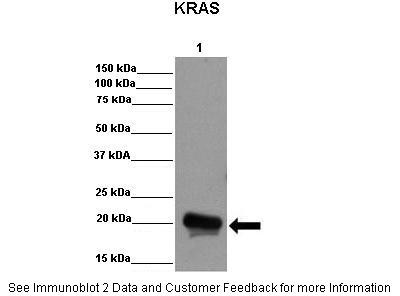
Antibody used in WB on candida albicans Ras1P at: 1:5000.Application
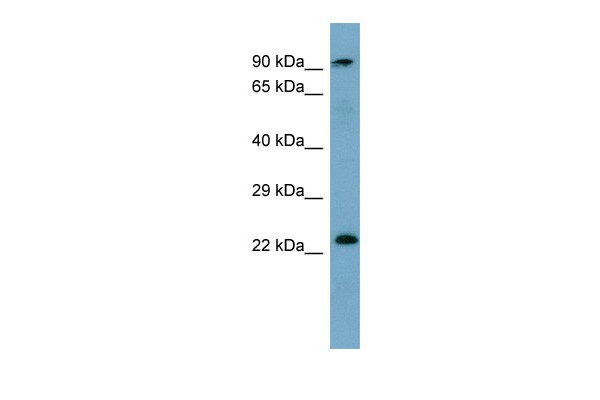
Antibody used in WB on Human Heart at 0.2-1 ug/ml.| Product Name | KRAS Antibody |
|---|---|
| Antibody Type | Primary Antibodies |
| Antigen Alias | KRAS, C-K-RAS, K-RAS2A, K-RAS2B, K-RAS4A, K-RAS4B, KI-RAS, KRAS1, KRAS2, NS3, RASK2, NS, CFC2 |
| Product description | KRAS is a member of the small GTPase superfamily. A single amino acid substitution is responsible for an activating mutation. The transforming protein that results is implicated in various malignancies, including lung adenocarcinoma, mucinous adenoma, ductal carcinoma of the pancreas and colorectal carcinoma.This gene, a Kirsten ras oncogene homolog from the mammalian ras gene family, encodes a protein that is a member of the small GTPase superfamily. A single amino acid substitution is responsible for an activating mutation. The transforming protein that results is implicated in various malignancies, including lung adenocarcinoma, mucinous adenoma, ductal carcinoma of the pancreas and colorectal carcinoma. Alternative splicing leads to variants encoding two isoforms that differ in the C-terminal region.1) Turbiner, J., (er) Mod. Pathol. (2008) In press. |
| Immunogen | Antibody produced in rabbits immunized with a synthetic peptide corresponding a region of human KRAS. |
| Clonality | Polyclonal |
|---|---|
| Host Species | Rabbit |
| Tested Applications | ELISAWB |
| KRAS antibody can be used for detection of KRAS by ELISA at 1:62500. KRAS antibody can be used for detection of KRAS by western blot at 1 μg/mL, and HRP conjugated secondary antibody should be diluted 1:50,000 - 100,000.: |
|
| Species Reactivity | DrosophilaHumanMouseRat |
| Concentration | 1mg/ml |
| Purification | Affinity purified |
| Gene Symbol | KRAS |
|---|---|
| Alternative Names | KRAS C-K-RAS K-RAS2A K-RAS2B K-RAS4A K-RAS4B KI-RAS KRAS1 KRAS2 NS3 RASK2 NS CFC2 |
| Molecular Weight(MW) | 22 kDa |
Application
Antibody used in WB on candida albicans Ras1P at: 1:5000.
Application
Antibody used in WB on Human Heart at 0.2-1 ug/ml.| Positive Control | 1) Cat. No. XBL-10407 - Fetal Heart Tissue Lysate |
|---|---|
| Application Notes | KRAS antibody can be used for detection of KRAS by ELISA at 1:62500. KRAS antibody can be used for detection of KRAS by western blot at 1 μg/mL, and HRP conjugated secondary antibody should be diluted 1:50,000 - 100,000.: |
| Form | Liquid |
|---|---|
| Storage Instructions | For short periods of storage (days) store at 4˚C. For longer periods of storage, store KRAS antibody at -20˚C. As with any antibody avoid repeat freeze-thaw cycles. |
| Storage Buffer | Antibody is lyophilized in PBS buffer with 2% sucrose. Add 50 μL of distilled water. Final antibody concentration is 1 mg/mL. |


