Application
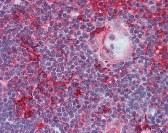
Immunohistochemistry staining of LCK in thymus tissue using LCK monoclonal Antibody.| Product Name | LCK Antibody |
|---|---|
| Antibody Type | Primary Antibodies |
| Antigen Alias | LCK, Lck kinase, LSK, p56-LCK, Pp58lck, Tyrosine-protein kinase Lck, p56lck, Protein YT16, Proto-oncogene Lck, YT16 |
| Product description | Lck is a lymphoid-specific cytosolic protein tyrosine kinase (PTK), which is essential for T-cell development and function. It is constitutively associated with the cytoplasmic portions of the CD4 and CD8 surface receptors and plays a key role in T-cell antigen receptor (TCR)-linked signal transduction pathways. Association of the TCR with a peptide antigen-bound MHC complex facilitates the interaction of CD4 and CD8 with MHC class II and class I molecules, respectively, and thereby recruits the associated Lck to the vicinity of the TCR/CD3 complex. Lck then phosphorylates tyrosine residues within the immunoreceptor tyrosine-based activation motifs (ITAMs) in the cytoplasmic tails of the TCR-chains and CD3 subunits. The phospho-ITAMs serve as docking sites for Src homology domain 2 (SH2)-containing molecules, predominantly ZAP-70 and Syk. Only then can ZAP-70 undergo tyrosine phosphorylation, become enzymatically active and further phosphorylate downstream effector molecules. In addition, Lck contributes to signaling by other receptor molecules. Protein tyrosine kinase LCK is a non-receptor kinase belonging to the Src subfamily. LCK functions in a variety of ways, and therefore results in an assortment of diseases when not working properly. For example, T cell receptor binding activates LCK to induce downstream effects. In addition, LCK regulates chloride channel opening in lymphocytes. LCK is associated with various cancers and diseases, including neuroblastoma, Non-Hodgkins lymphoma, leukemia, SCID (severe combine immunodeficiency), and type I diabetes. Alternative splicing and differential promoter usage have been observed. |
| Immunogen | LCK monoclonal antibody was raised against a synthetic peptide containing amino acid residues of LCK (Human). |
| Clonality | Monoclonal |
|---|---|
| Isotype | IgG1 |
| Host Species | Mouse |
| Tested Applications | IHCWB |
| LCK antibody can be used in ELISA, Western Blot starting at 1:500 - 1:1000, and immunohistochemistry starting at 10 - 20 μg/mL.: |
|
| Species Reactivity | Human |
| Concentration | 1mg/ml |
| Purification | Protein G |
| Gene Symbol | LCK |
|---|---|
| Alternative Names | LCK Lck kinase LSK p56-LCK Pp58lck Tyrosine-protein kinase Lck p56lck Protein YT16 Proto-oncogene Lck YT16 |
| Tissue Specificity | Lck (33D196). |
Application
Immunohistochemistry staining of LCK in thymus tissue using LCK monoclonal Antibody.| Application Notes | LCK antibody can be used in ELISA, Western Blot starting at 1:500 - 1:1000, and immunohistochemistry starting at 10 - 20 μg/mL.: |
|---|
| Form | Liquid |
|---|---|
| Storage Instructions | LCK antibody can be stored short term 4 ˚C. For long term storage aliquot and store at -20 ˚C. As with all antibodies avoid freeze/thaw cycles. |
| Storage Buffer | PBS, 0.02% sodium azide. |


