Application
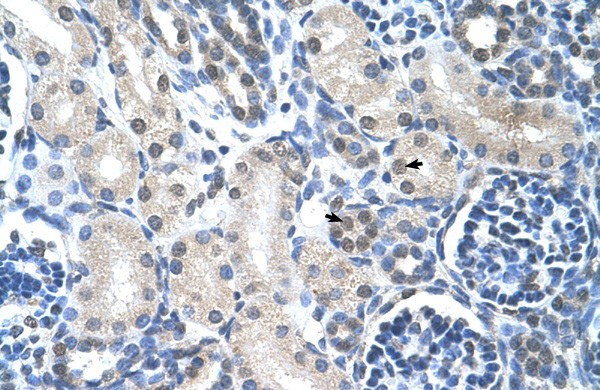
Antibody used in IHC on Human Kidney at 4.0-8.0 ug/ml.Application
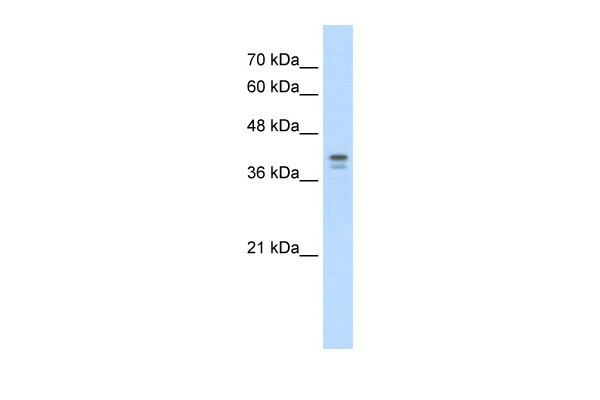
Antibody used in WB on Human HepG2 at 5.0 ug/ml.| Product Name | LOR Antibody |
|---|---|
| Antibody Type | Primary Antibodies |
| Antigen Alias | LOR, MGC111513, LRN |
| Product description | LOR is a major protein component of the cornified cell envelope found in terminally differentiated epidermal cells. Mutations in this gene are associated with Vohwinkel's syndrome and progressive symmetric erythrokeratoderma, both inherited skin diseases.LOR encodes loricrin, a major protein component of the cornified cell envelope found in terminally differentiated epidermal cells. Mutations in LOR may be the cause of both Vohwinkel's syndrome and progressive symmetric erythrokeratoderma, both inherited skin diseases.1) Giardina, E., Ann. Hum. Genet. 68 (PT 6), 639-645 (2004). |
| Immunogen | Antibody produced in rabbits immunized with a synthetic peptide corresponding a region of human LOR. |
| Clonality | Polyclonal |
|---|---|
| Host Species | Rabbit |
| Tested Applications | ELISAIHCWB |
| LOR antibody can be used for detection of LOR by ELISA at 1:62500. LOR antibody can be used for detection of LOR by western blot at 5.0 μg/mL, and HRP conjugated secondary antibody should be diluted 1:50,000 - 100,000.: |
|
| Species Reactivity | Human |
| Concentration | 1mg/ml |
| Purification | Protein A |
| Gene Symbol | LOR |
|---|---|
| Alternative Names | LOR MGC111513 LRN |
| Molecular Weight(MW) | 35 kDa |
Application
Antibody used in IHC on Human Kidney at 4.0-8.0 ug/ml.
Application
Antibody used in WB on Human HepG2 at 5.0 ug/ml.| Positive Control | 1) Cat. No. 1211 - HepG2 Cell Lysate |
|---|---|
| Application Notes | LOR antibody can be used for detection of LOR by ELISA at 1:62500. LOR antibody can be used for detection of LOR by western blot at 5.0 μg/mL, and HRP conjugated secondary antibody should be diluted 1:50,000 - 100,000.: |
| Form | Liquid |
|---|---|
| Storage Instructions | For short periods of storage (days) store at 4˚C. For longer periods of storage, store LOR antibody at -20˚C. As with any antibody avoid repeat freeze-thaw cycles. |
| Storage Buffer | Antibody is lyophilized in PBS buffer with 2% sucrose. Add 50 μL of distilled water. Final antibody concentration is 1 mg/mL. |


