Application
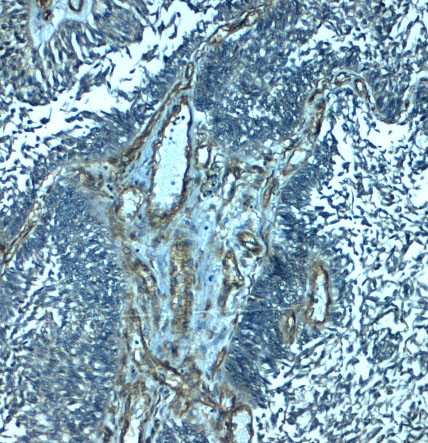
Immunohistochemistry of PALMD in human bladder tissue with PALMD antibody at 2.5 μg/mL.Application
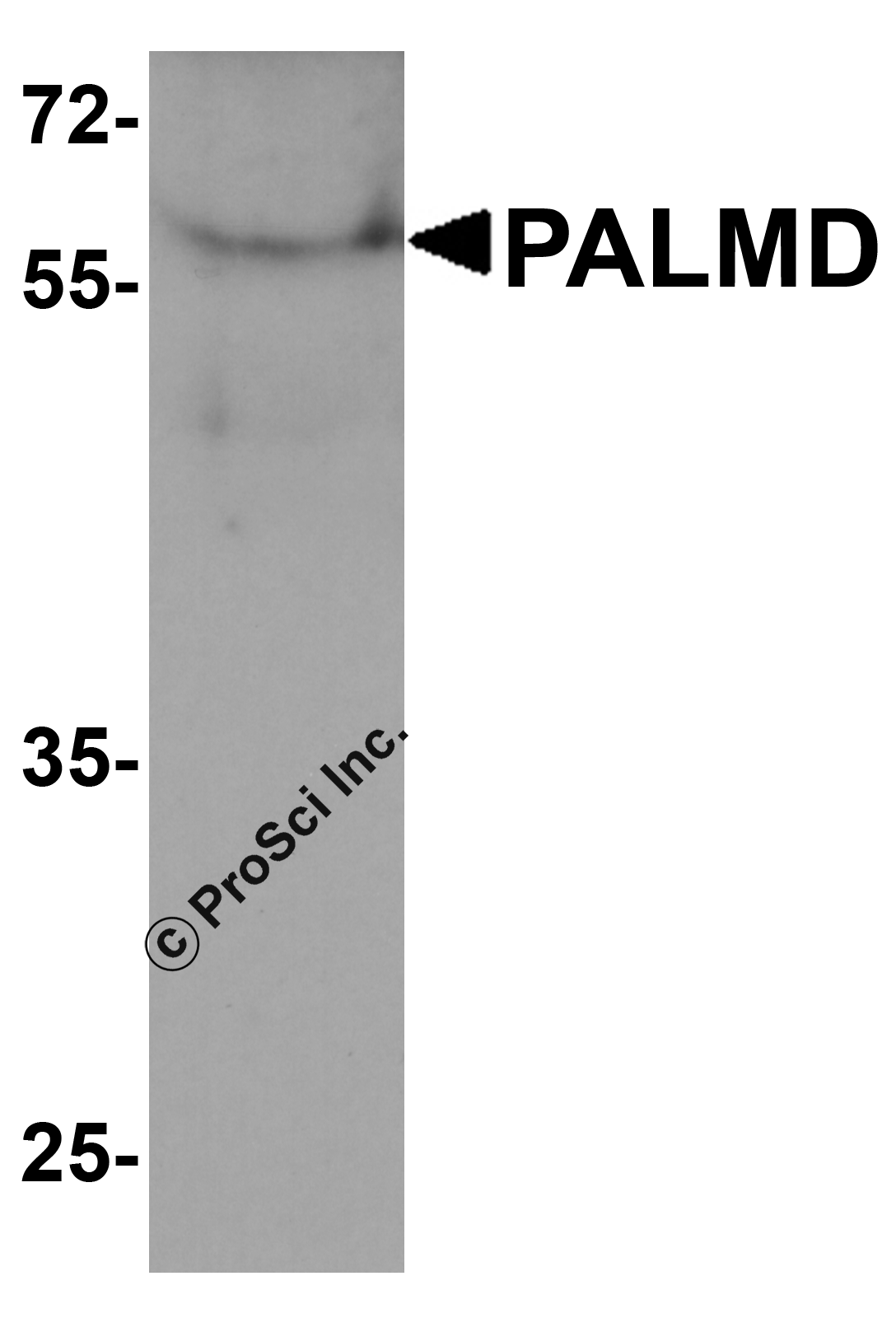
Western blot analysis of PALMD in human bladder tissue lysate with PALMD antibody at 1 μg/ml.| Product Name | PALMD Antibody |
|---|---|
| Antibody Type | Primary Antibodies |
| Product description | Palmdelphin (PALMD) is a member of the paralemmin families that are lipid-anchored proteins having a role in the cell shape control and cell dynamics (1,2). While Paralemmin proteins typically anchor to the cytoplasm through via palmytoylation and prenylation, PALMD is found predominantly in the cytosol (3). PALMD is targeted to the nucleus to induce apoptosis in response to DNA damage (3-5). Abnormal genetic alterations in PALMD are observed in many malignant tumors (5).1) Hultqvist G, Ocampo Daza D, Larhammar D, et al. Evolution of the vertebrate paralemmin gene family: ancient origin of gene duplicates suggests distinct functions. PLoS One 2012; 7:e41850. |
| Immunogen | PALMD antibody was raised against a 15 amino acid peptide near the carboxy terminus of human PALMD. The immunogen is located within amino acids 460 - 510 of PALMD. |
| Clonality | Polyclonal |
|---|---|
| Isotype | IgG |
| Host Species | Rabbit |
| Tested Applications | ELISAIHC-PWB |
| PALMD antibody can be used for detection of PALMD by Western blot at 1 - 2 μg/ml. Antibody can also be used for immunohistochemistry starting at 2.5 μg/mL. | |
| Species Reactivity | Human |
| Concentration | 1mg/ml |
| Purification | Affinity purified |
| Gene Symbol | PALMD |
|---|---|
| Alternative Names | Palmdelphin C1orf11 FLJ20271 PALML Paralemnin-like protein |
| Molecular Weight(MW) | Predicted: 61 kDa Observed: 60 kDa |
| Sequence Similarities | Predicted species reactivity based on immunogen sequence: Rat: (100%), Bovine: (93%), Pig: (93%), Mouse: (86%) |
| Tissue Specificity | PALMD antibody is human specific. At least two isoforms are known to exist. |
Application
Immunohistochemistry of PALMD in human bladder tissue with PALMD antibody at 2.5 μg/mL.
Application
Western blot analysis of PALMD in human bladder tissue lysate with PALMD antibody at 1 μg/ml.| Positive Control | 1) Cat. No. 1310 - Human Bladder Tissue Lysate |
|---|---|
| Application Notes | PALMD antibody can be used for detection of PALMD by Western blot at 1 - 2 μg/ml. Antibody can also be used for immunohistochemistry starting at 2.5 μg/mL. |
| Form | Liquid |
|---|---|
| Storage Instructions | PALMD antibody can be stored at 4˚C for three months and -20˚C, stable for up to one year. |
| Storage Buffer | PALMD antibody is supplied in PBS containing 0.02% sodium azide. |


