Application
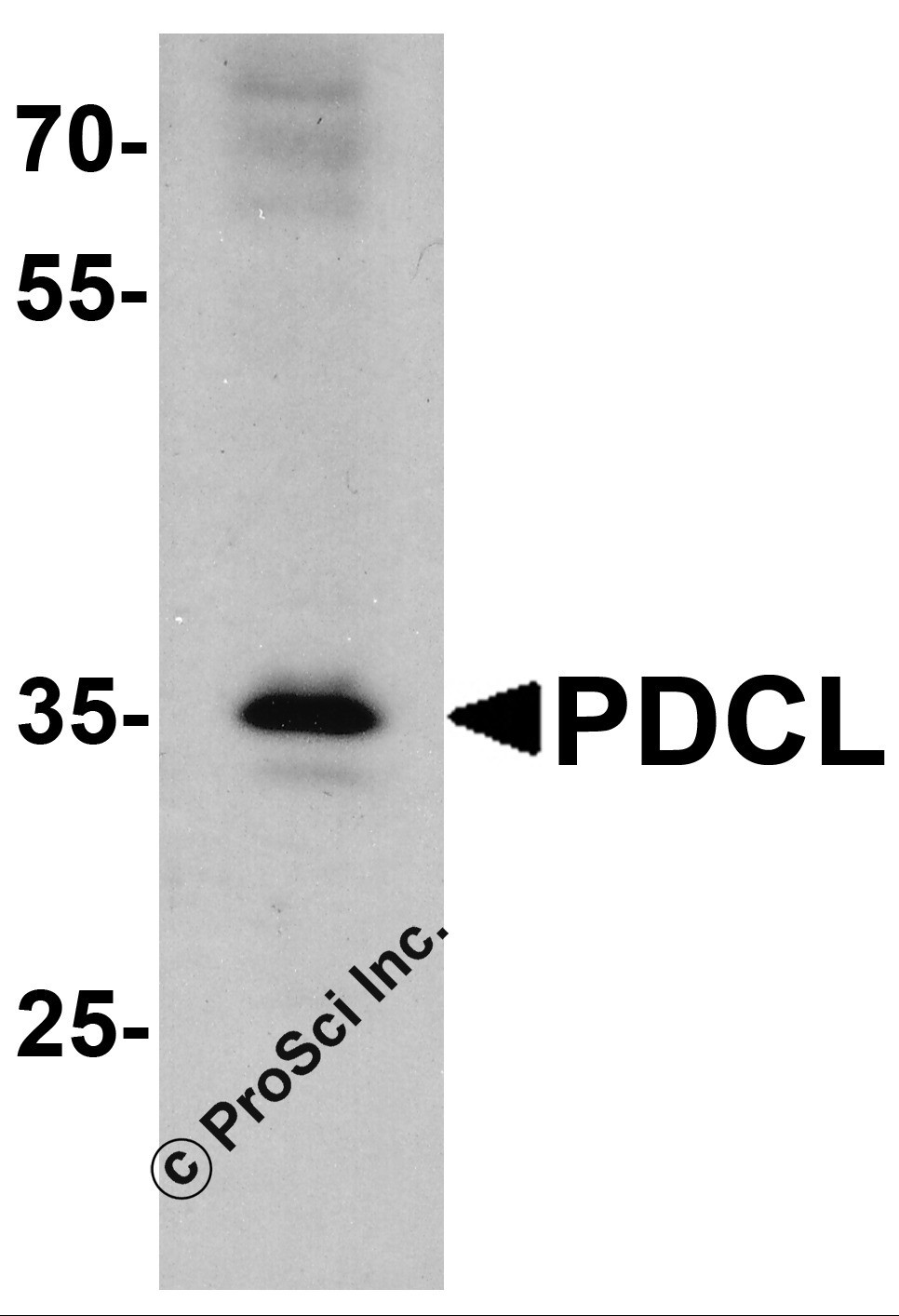
Western blot analysis of PDCL in K562 cell lysate with PDCL antibody at 1 μg/ml.| Product Name | PDCL Antibody |
|---|---|
| Antibody Type | Primary Antibodies |
| Antigen Alias | PDCL Antibody: PhLP, PHLOP1, PhLP1, Phosducin-like protein, PHLP |
| Product description | Phosducin-like proteins (PhLPs) are a conserved family of proteins with thioredoxin-like domains that were initially identified as modulators of G protein signaling (1,2). PDCL is widely expressed in normal human tissues and may participate directly in the regulation of calcium-evoked exocytosis in adrenal medullary chromaffin cells (3). It is an ethanol-responsive modulator of heterotrimeric G proteins (4).1) Miles MF, Barhite S, Sganga M, et al. Phosducin-like protein: an ethanol-responsive potential modulator of guanine nucleotide-binding protein function. Proc. Natl. Acad. Sci. USA 1993; 90:10831-5. |
| Immunogen | PDCL antibody was raised against a 16 amino acid peptide near the amino terminus of human PDCL. The immunogen is located within the first 50 amino acids of PDCL. |
| Clonality | Polyclonal |
|---|---|
| Isotype | IgG |
| Host Species | Rabbit |
| Tested Applications | ELISAWB |
| PDCL antibody can be used for detection of PDCL by Western blot at 1 - 2 μg/ml.: |
|
| Species Reactivity | HumanMouseRat |
| Concentration | 1mg/ml |
| Purification | Affinity purified |
| Gene Symbol | PDCL |
|---|---|
| Alternative Names | PDCL Antibody: PhLP PHLOP1 PhLP1 Phosducin-like protein PHLP |
| Molecular Weight(MW) | Predicted: 33 kDa Observed: 35 kDa |
| Sequence Similarities | Predicted species reactivity based on immunogen sequence: Bovine: (94%) |
| Tissue Specificity | PDCL antibody is human, mouse and rat reactive. At least two isoforms of PDCL are known to exist. PDCL antibody is predicted to not cross-react with other members of the PDCL protein family. |
Application
Western blot analysis of PDCL in K562 cell lysate with PDCL antibody at 1 μg/ml.| Positive Control | 1) Cat. No. 1204 - K562 Cell Lysate |
|---|---|
| Application Notes | PDCL antibody can be used for detection of PDCL by Western blot at 1 - 2 μg/ml.: |
| Form | Liquid |
|---|---|
| Storage Instructions | PDCL antibody can be stored at 4˚C for three months and -20˚C, stable for up to one year. |
| Storage Buffer | PDCL antibody is supplied in PBS containing 0.02% sodium azide. |


