Application
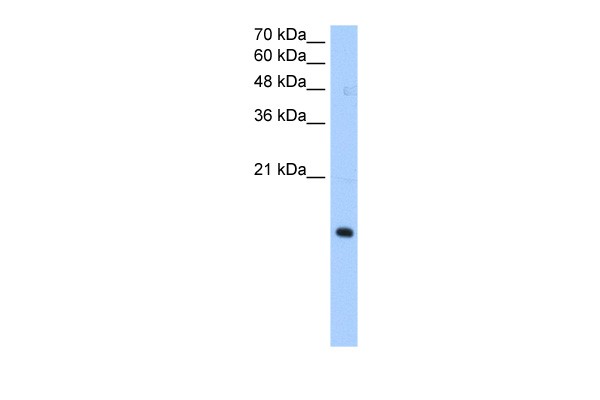
Antibody used in WB on Human HepG2 at 1 ug/ml.| Product Name | PILRA Antibody |
|---|---|
| Antibody Type | Primary Antibodies |
| Antigen Alias | PILRA, FDF03 |
| Product description | Cell signaling pathways rely on a dynamic interaction between activating and inhibiting processes. SHP-1-mediated dephosphorylation of protein tyrosine residues is central to the regulation of several cell signaling pathways. Two types of inhibitory receptor superfamily members are immunoreceptor tyrosine-based inhibitory motif (ITIM)-bearing receptors and their non-ITIM-bearing, activating counterparts. Control of cell signaling via SHP-1 is thought to occur through a balance between PILRalpha-mediated inhibition and PILRbeta-mediated activation. This particular gene encodes the ITIM-bearing member of the receptor pair, which functions in the inhibitory role.Cell signaling pathways rely on a dynamic interaction between activating and inhibiting processes. SHP-1-mediated dephosphorylation of protein tyrosine residues is central to the regulation of several cell signaling pathways. Two types of inhibitory receptor superfamily members are immunoreceptor tyrosine-based inhibitory motif (ITIM)-bearing receptors and their non-ITIM-bearing, activating counterparts. Control of cell signaling via SHP-1 is thought to occur through a balance between PILRalpha-mediated inhibition and PILRbeta-mediated activation. These paired immunoglobulin-like receptor genes are located in a tandem head-to-tail orientation on chromosome 7. This particular gene encodes the ITIM-bearing member of the receptor pair, which functions in the inhibitory role. Alternative splicing has been observed at this locus and three variants, each encoding a distinct isoform, are described.1) Satoh, T., (2008) Cell 132 (6), 935-944. |
| Immunogen | Antibody produced in rabbits immunized with a synthetic peptide corresponding a region of human PILRA. |
| Modification | Acetylated |
| Clonality | Polyclonal |
|---|---|
| Isotype | Cocktail |
| Host Species | Rabbit |
| Tested Applications | ELISAWB |
| WB:1:500~1:2000 ELISA:1:5000~1:20000 |
|
| Species Reactivity | Human |
| Concentration | 1mg/ml |
| Purification | Affinity purified |
| Gene Symbol | PILRA |
|---|---|
| Alternative Names | PILRA FDF03 |
| Molecular Weight(MW) | 18 kDa |
Application
Antibody used in WB on Human HepG2 at 1 ug/ml.| Positive Control | 1) Cat. No. 1211 - HepG2 Cell Lysate |
|---|---|
| Application Notes | WB:1:500~1:2000 ELISA:1:5000~1:20000 |
| Form | Liquid |
|---|---|
| Storage Instructions | For short periods of storage (days) store at 4˚C. For longer periods of storage, store PILRA antibody at -20˚C. As with any antibody avoid repeat freeze-thaw cycles. |
| Storage Buffer | Antibody is lyophilized in PBS buffer with 2% sucrose. Add 50 μL of distilled water. Final antibody concentration is 1 mg/mL. |


