Application
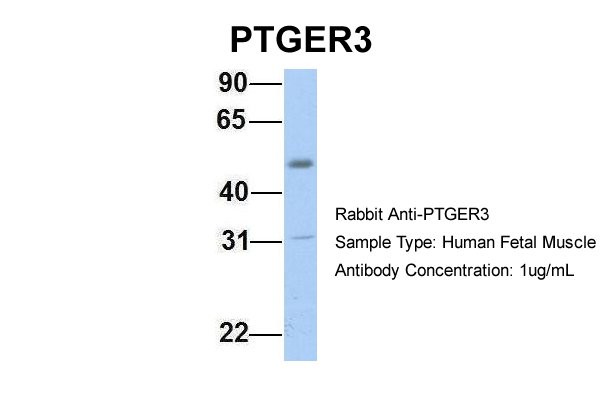
Antibody used in WB on Hum. Fetal Muscle at 1 ug/ml.Application
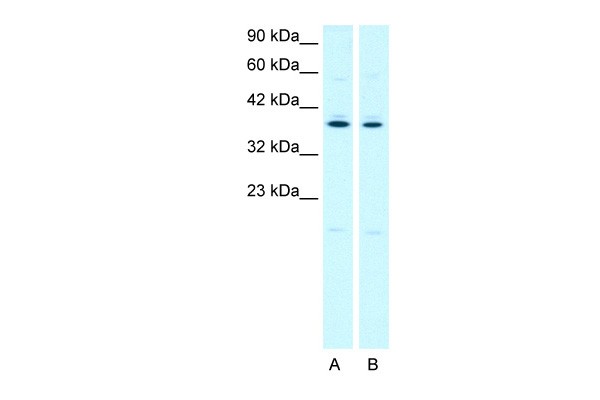
Antibody used in WB on Human Jurkat 2.4 ug/ml.| Product Name | PTGER3 Antibody |
|---|---|
| Antibody Type | Primary Antibodies |
| Antigen Alias | PTGER3, EP3, EP3e, EP3-I, EP3-II, EP3-IV, PGE2-R, EP3-III |
| Product description | PTGER3 is a member of the G-protein coupled receptor family. This protein is one of four receptors identified for prostaglandin E2 (PGE2). This receptor may have many biological functions, which involve digestion, nervous system, kidney reabsorption, and uterine contraction activities. Studies of the mouse counterpart suggest that this receptor may also mediate adrenocorticotropic hormone response as well as fever generation in response to exogenous and endogenous stimuli.1) Bilson, H.A., et al., (2004) FEBS Lett. 572 (1-3), 271-275. |
| Immunogen | Antibody produced in rabbits immunized with a synthetic peptide corresponding a region of human PTGER3. |
| Clonality | Polyclonal |
|---|---|
| Host Species | Rabbit |
| Tested Applications | ELISAWB |
| PTGER3 antibody can be used for detection of PTGER3 by ELISA at 1:62500. PTGER3 antibody can be used for detection of PTGER3 by western blot at 2.4 μg/mL, and HRP conjugated secondary antibody should be diluted 1:50,000 - 100,000.: |
|
| Species Reactivity | Human |
| Concentration | 1mg/ml |
| Purification | Protein A |
| Gene Symbol | PTGER3 |
|---|---|
| Alternative Names | PTGER3 EP3 EP3e EP3-I EP3-II EP3-IV PGE2-R EP3-III |
| Molecular Weight(MW) | 43 kDa |
| Sequence Similarities | 2) Cat. No. 1211 - HepG2 Cell Lysate |
Application
Antibody used in WB on Hum. Fetal Muscle at 1 ug/ml.
Application
Antibody used in WB on Human Jurkat 2.4 ug/ml.| Positive Control | 1) Cat. No. 1205 - Jurkat Cell Lysate |
|---|---|
| Application Notes | PTGER3 antibody can be used for detection of PTGER3 by ELISA at 1:62500. PTGER3 antibody can be used for detection of PTGER3 by western blot at 2.4 μg/mL, and HRP conjugated secondary antibody should be diluted 1:50,000 - 100,000.: |
| Form | Liquid |
|---|---|
| Storage Instructions | For short periods of storage (days) store at 4˚C. For longer periods of storage, store PTGER3 antibody at -20˚C. As with any antibody avoid repeat freeze-thaw cycles. |
| Storage Buffer | IgG in phosphate buffered saline , pH 7.4, 150mM NaCl, 0.02% sodium azide and 50% glycerol.Store at -20 °C.Stable for 12 months from date of receipt |


