Application
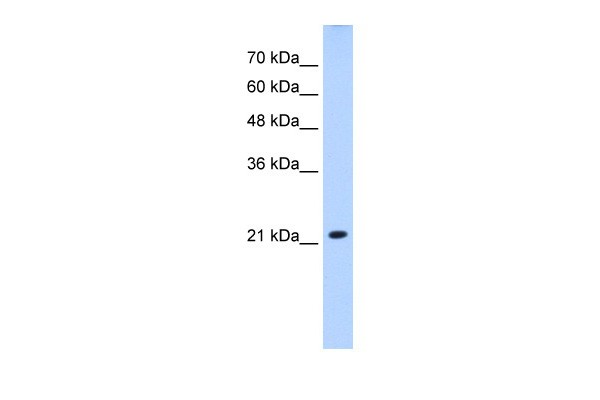
Antibody used in WB on Human Jurkat 2.5 ug/ml.| Product Name | SLC25A14 Antibody |
|---|---|
| Antibody Type | Primary Antibodies |
| Antigen Alias | SLC25A14, UCP5, BMCP1 |
| Product description | Mitochondrial uncoupling proteins (UCP) are members of the larger family of mitochondrial anion carrier proteins (MACP). UCPs separate oxidative phosphorylation from ATP synthesis with energy dissipated as heat, also referred to as the mitochondrial proton leak. UCPs facilitate the transfer of anions from the inner to the outer mitochondrial membrane and the return transfer of protons from the outer to the inner mitochondrial membrane. They also reduce the mitochondrial membrane potential in mammalian cells. Tissue specificity occurs for the different UCPs and the exact methods of how UCPs transfer H+/OH- are not known. UCPs contain the three homologous protein domains of MACPs. SLC25A14 has an N-terminal hydrophobic domain that is not present in other UCPs. |
| Immunogen | Antibody produced in rabbits immunized with a synthetic peptide corresponding a region of human SLC25A14. |
| Clonality | Polyclonal |
|---|---|
| Host Species | Rabbit |
| Tested Applications | ELISAIHCWB |
| SLC25A14 antibody can be used for detection of SLC25A14 by ELISA at 1:62500. SLC25A14 antibody can be used for detection of SLC25A14 by western blot at 2.5 μg/mL, and HRP conjugated secondary antibody should be diluted 1:50,000 - 100,000.: |
|
| Species Reactivity | DogHumanMouseRat |
| Concentration | 1mg/ml |
| Purification | Protein A |
| Gene Symbol | SLC25A14 |
|---|---|
| Alternative Names | SLC25A14 UCP5 BMCP1 |
| Molecular Weight(MW) | 21 kDa, 36 kDa, 36 kDa |
Application
Antibody used in WB on Human Jurkat 2.5 ug/ml.| Positive Control | 1) Cat. No. 1205 - Jurkat Cell Lysate |
|---|---|
| Application Notes | SLC25A14 antibody can be used for detection of SLC25A14 by ELISA at 1:62500. SLC25A14 antibody can be used for detection of SLC25A14 by western blot at 2.5 μg/mL, and HRP conjugated secondary antibody should be diluted 1:50,000 - 100,000.: |
| Form | Liquid |
|---|---|
| Storage Instructions | For short periods of storage (days) store at 4˚C. For longer periods of storage, store SLC25A14 antibody at -20˚C. As with any antibody avoid repeat freeze-thaw cycles. |
| Storage Buffer | IgG in phosphate buffered saline , pH 7.4, 150mM NaCl, 0.02% sodium azide and 50% glycerol.Store at -20 °C.Stable for 12 months from date of receipt |


