Application
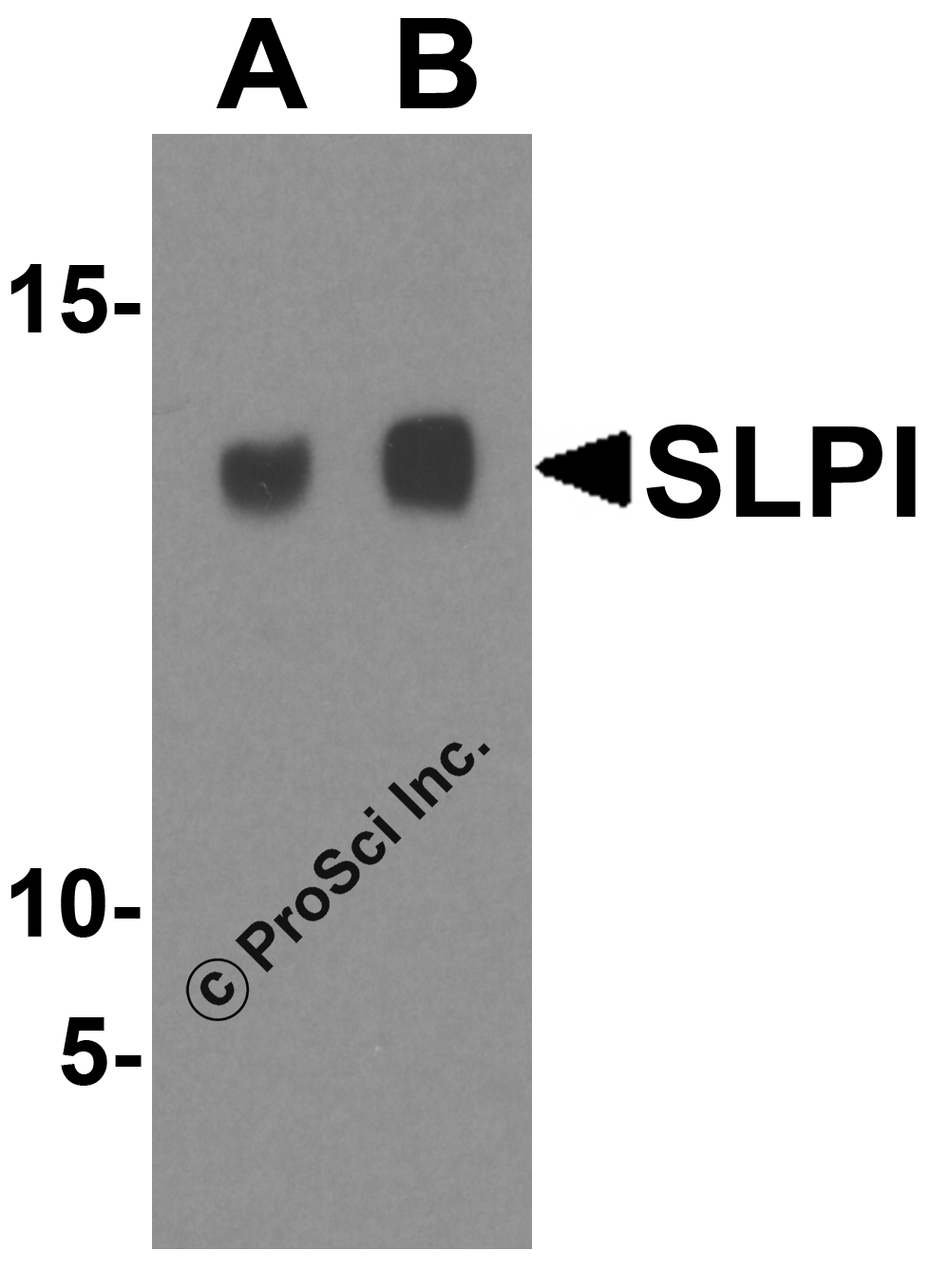
Western blot analysis of SLPI in A-20 cell lysate with SLPI antibody at (A) 1 and (B) 2 μg/mL.| Product Name | SLPI Antibody |
|---|---|
| Antibody Type | Primary Antibodies |
| Antigen Alias | SLPI Antibody: ALP, MPI, ALK1, BLPI, HUSI, WAP4, WFDC4, HUSI-I, Antileukoproteinase, ALP |
| Product description | SLPI Antibody: Secretory leukocyte protease inhibitor (SLPI) is produced at mucosal surfaces, primarily the upper respiratory tract and is thought to play an important role in the antiprotease defense mechanism of the lung. SLPI forms inhibitory complexes with numerous proteolytic enzymes such as neutrophil elastase, and has been shown to possess anti-inflammatory, anti-viral, and antibacterial activities. Its expression in oral epithelial cells is stimulated by HIV-1 gp120, suggesting that SLPI is a component of the oral mucosal response to HIV-1. In peripheral blood monocytes, SLPI can inhibit NF-κB activation by inhibiting IκB degradation in the cytoplasm and competing for NF-κB binding sites in the nucleus. This attenuation of the inflammatory response may also act to suppress liver metastases and other cancer cell invasions, but promote blood-borne metastasis via an invasion-independent pathway.1) Abe T, Kobayashi N, Yoshimura K, et al. Expression of the secretory leukoprotease inhibitor gene in epithelial cells. J. Clin. Invest.1991; 87:2207-15. |
| Immunogen | SLPI antibody was raised against a 17 amino acid synthetic peptide from near the center of mouse SLPI. The immunogen is located within amino acids 60 - 110 of SLPI. |
| Clonality | Polyclonal |
|---|---|
| Isotype | IgG |
| Host Species | Rabbit |
| Tested Applications | ELISAWB |
| SLPI antibody can be used for detection of SLPI by Western blot at 1-2 μg/mL.: |
|
| Species Reactivity | Mouse |
| Concentration | 1mg/ml |
| Purification | Affinity purified |
| Gene Symbol | SLPI |
|---|---|
| Alternative Names | SLPI Antibody: ALP MPI ALK1 BLPI HUSI WAP4 WFDC4 HUSI-I Antileukoproteinase ALP |
Application
Western blot analysis of SLPI in A-20 cell lysate with SLPI antibody at (A) 1 and (B) 2 μg/mL.| Positive Control | 1) Cat. No. 1288 - A20 Cell Lysate |
|---|---|
| Application Notes | SLPI antibody can be used for detection of SLPI by Western blot at 1-2 μg/mL.: |
| Form | Liquid |
|---|---|
| Storage Instructions | SLPI antibody can be stored at 4˚C for three months and -20˚C, stable for up to one year. As with all antibodies care should be taken to avoid repeated freeze thaw cycles. Antibodies should not be exposed to prolonged high temperatures. |
| Storage Buffer | SLPI Antibody is supplied in PBS containing 0.02% sodium azide. |


