Application
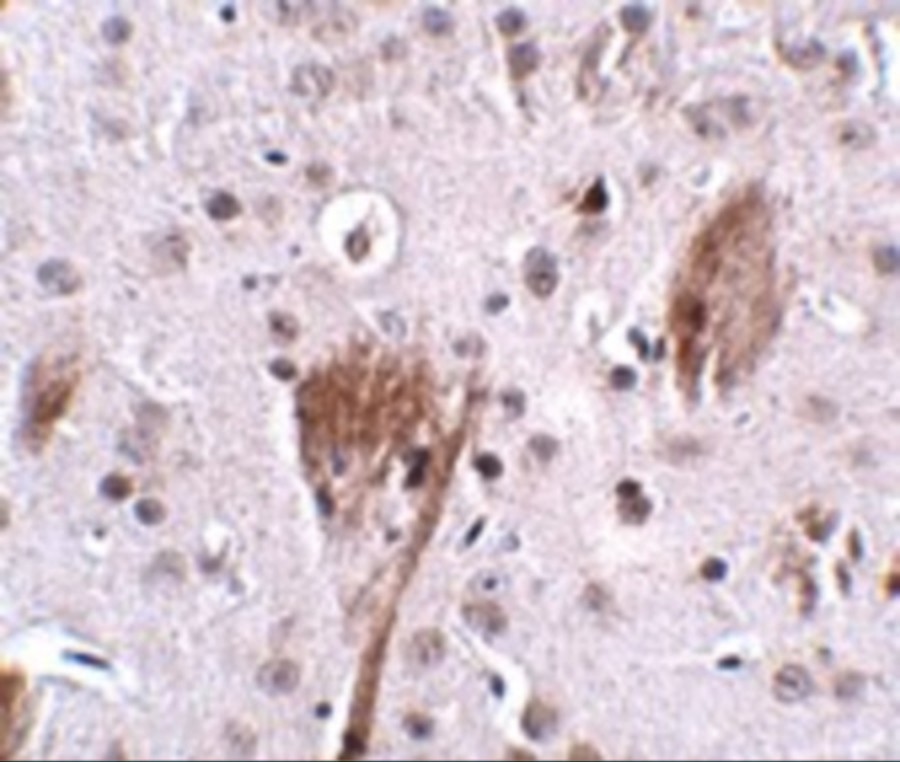
Immunohistochemistry of SPG11 in mouse brain tissue with SPG11 antibody at 2.5 μg/mL.Application
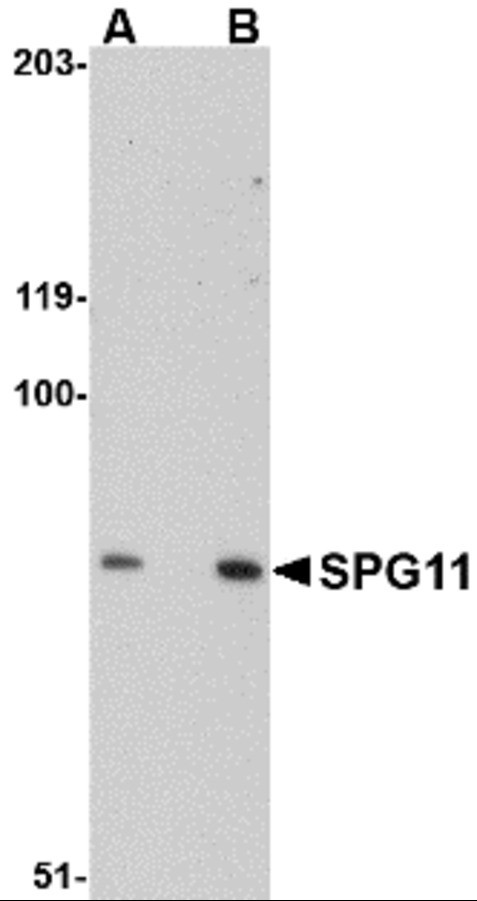
Western blot analysis of SPG11 in mouse heart tissue lysate with SPG11 antibody at (A) 0.5 and (B) 1 μg/mL.| Product Name | SPG11 Antibody |
|---|---|
| Antibody Type | Primary Antibodies |
| Antigen Alias | SPG11 Antibody: KIAA1840, KIAA1840, Spatacsin, Colorectal carcinoma-associated protein |
| Product description | SPG11 Antibody: Hereditary spastic paraplegias (HSPs) are genetically and phenotypically heterogeneous disorders. Spastic paraplegia with thinning of the corpus callosum (ARHSP-TCC) is a relatively frequent form of complicated hereditary spastic paraplegia (cHSP) in which mental retardation and muscle stiffness at onset are followed by slowly progressive paraparesis and cognitive deterioration. Mutations of the SPG11 gene encoding the spatacsin protein have been identified as a major cause of HSP-TCC. Spatacsin is a potential transmembrane protein that is phosphorylated upon DNA damage. It is expressed in all structures of the brain, with a high expression in the cerebellum. SPG11 mutations may occur more frequently in familial than sporadic forms of cHSP without TCC. Kjellin syndrome is found to be associated with mutations in not only the SPG15 gene but also SPG11 gene. Recent studies show Parkinsonism may initiate SPG11-linked HSP TCC and that SPG11 may cause juvenile Parkinsonism.1) Stevanin G, Azzedine H, Denora P, et al. Mutations in SPG11, encoding spatacsin, are a major cause of spastic paraplegia with thin corpus callosum. Nature Gen.2007; 39:366-372. |
| Immunogen | SPG11 antibody was raised against a 15 amino acid synthetic peptide near the carboxy terminus of human SPG11. The immunogen is located within amino acids 2360 - 2410 of SPG11. |
| Clonality | Polyclonal |
|---|---|
| Isotype | IgG |
| Host Species | Rabbit |
| Tested Applications | ELISAIHC-PWB |
| SPG11 antibody can be used for detection of SPG11 by Western blot at 0.5 - 1 μg/mL. Antibody can also be used for immunohistochemistry starting at 2.5 μg/mL.: |
|
| Species Reactivity | HumanMouseRat |
| Concentration | 1mg/ml |
| Purification | Affinity purified |
| Gene Symbol | SPG11 |
|---|---|
| Alternative Names | SPG11 Antibody: KIAA1840 KIAA1840 Spatacsin Colorectal carcinoma-associated protein |
Application
Immunohistochemistry of SPG11 in mouse brain tissue with SPG11 antibody at 2.5 μg/mL.
Application
Western blot analysis of SPG11 in mouse heart tissue lysate with SPG11 antibody at (A) 0.5 and (B) 1 μg/mL.| Positive Control | 1) Cat. No. 1401 - Mouse Heart Tissue Lysate |
|---|---|
| Application Notes | SPG11 antibody can be used for detection of SPG11 by Western blot at 0.5 - 1 μg/mL. Antibody can also be used for immunohistochemistry starting at 2.5 μg/mL.: |
| Form | Liquid |
|---|---|
| Storage Instructions | SPG11 antibody can be stored at 4˚C for three months and -20˚C, stable for up to one year. As with all antibodies care should be taken to avoid repeated freeze thaw cycles. Antibodies should not be exposed to prolonged high temperatures. |
| Storage Buffer | SPG11 Antibody is supplied in PBS containing 0.02% sodium azide. |


