Application
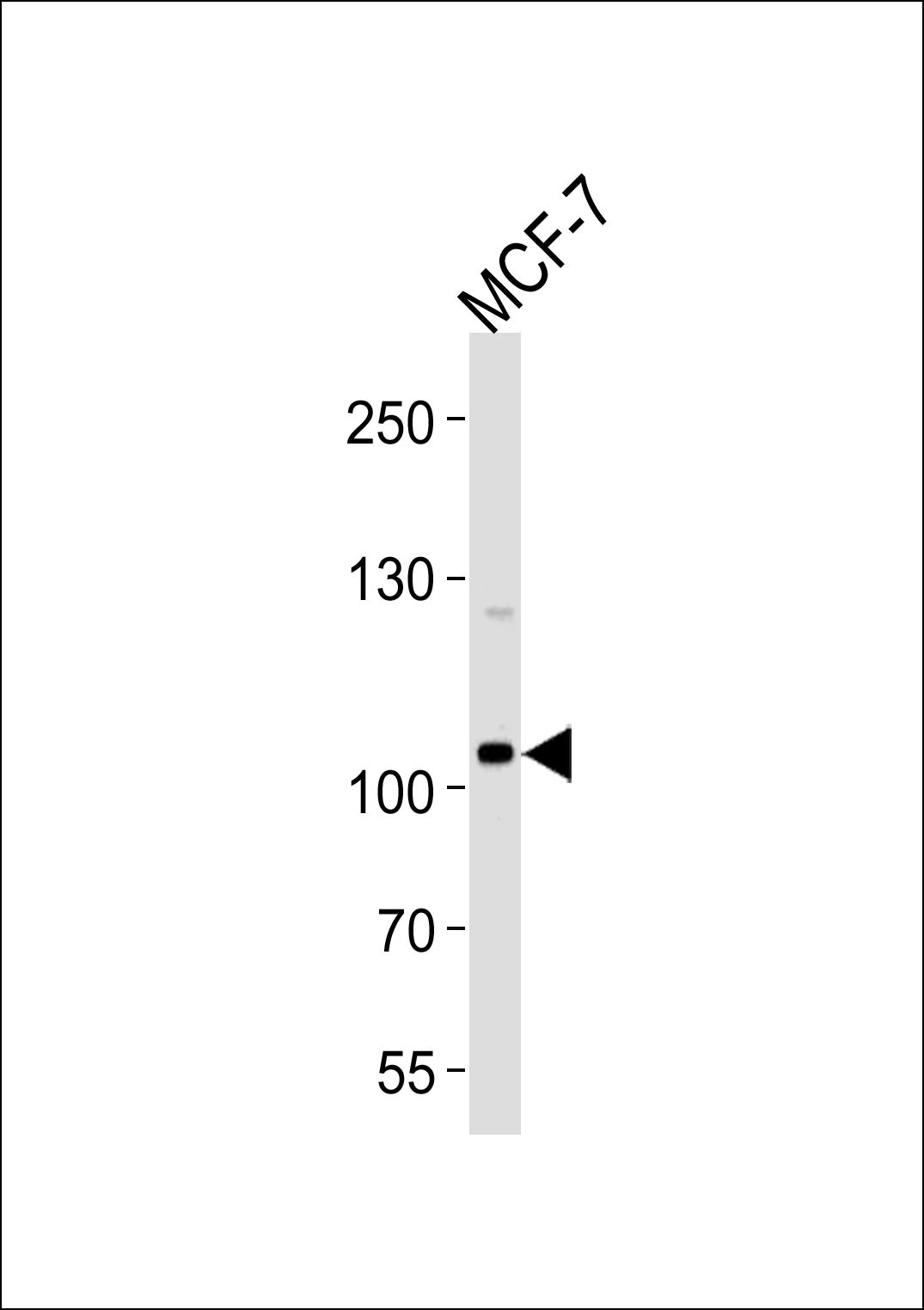
Western blot analysis of lysate from MCF-7 cell line, using SULF2 Antibody at 1:1000 at each lane.| Product Name | SULF2 Antibody |
|---|---|
| Antibody Type | Primary Antibodies |
| Antigen Alias | Extracellular sulfatase Sulf-2, hSulf-2, 316-, SULF2, KIAA1247 |
| Product description | Heparan sulfate proteoglycans (HSPGs) act as coreceptors for numerous heparin-binding growth factors and cytokines and are involved in cell signaling. Heparan sulfate 6-O-endosulfatases, such as SULF2, selectively remove 6-O-sulfate groups from heparan sulfate. This activity modulates the effects of heparan sulfate by altering binding sites for signaling molecules (Dai et al., 2005 [PubMed 16192265]).1) Lai, J.P., et al. Hepatology 52(5):1680-1689(2010) Ellinor, P.T., et al. Nat. Genet. 42(3):240-244(2010) Lemjabbar-Alaoui, H., et al. Oncogene 29(5):635-646(2010) Tang, R., et al. J. Biol. Chem. 284(32):21505-21514(2009) Chau, B.N., et al. Cancer Res. 69(4):1368-1374(2009) |
| Immunogen | This SULF2 antibody is generated from rabbits immunized with a KLH conjugated synthetic peptide between 824-852 amino acids from the C-terminal region of human SULF2. |
| Clonality | Polyclonal |
|---|---|
| Isotype | Ig |
| Host Species | Rabbit |
| Tested Applications | WB |
| For WB starting dilution is: 1:1000: |
|
| Species Reactivity | Human |
| Concentration | 1mg/ml |
| Purification | Affinity purified |
| Gene Symbol | SULF2 |
|---|---|
| Alternative Names | Extracellular sulfatase Sulf-2 hSulf-2 316- SULF2 KIAA1247 |
| Molecular Weight(MW) | 100 kDa |
| Sequence Similarities | Predicted species reactivity based on immunogen sequence: Mouse |
Application
Western blot analysis of lysate from MCF-7 cell line, using SULF2 Antibody at 1:1000 at each lane.| Application Notes | For WB starting dilution is: 1:1000: |
|---|
| Form | Liquid |
|---|---|
| Storage Instructions | Store at 4˚C for three months and -20˚C, stable for up to one year. As with all antibodies care should be taken to avoid repeated freeze thaw cycles. Antibodies should not be exposed to prolonged high temperatures. |
| Storage Buffer | Supplied in PBS with 0.09% (W/V) sodium azide. |


